
EcoLur
EcoLur has received letters from Georgian colleagues. The letters represent NACRES – Centre for Biodiversity Conservation and Research and Green Alternative organizations statements on allowing Hunting of Endangered Species.
NACRES – Centre for Biodiversity Conservation and Research
Position Statement
on
Lifting the Ban on Hunting of Red List Species in Georgia
On 10th January 2012 the Georgian Ministry of Energy and Natural Resources published the following annual hunting quotas: Coypu – 194, Hare – 615, Badger – 168, Pine marten – 157, Stone marten – 157, Grey wolf – 120, Golden jackal – 1453, Red fox – 162, Wild cat – 77, Wild boar – 189, Roe deer 417, Racoon – 96, Pheasant 416, Chukkar partridge – 713, Black francolin - 50.
In our opinion, the above hunting quotas lack any scientific background because there have been no nationwide assessments of these species in Georgia and their population numbers are not known. It is also unclear what methods have been used to calculate the above numbers with such a peculiar accuracy (e.g. Wild boar – 189). It is extremely difficult to see any logic in those numbers e.g. a very high level harvest quota is set on golden jackal (1453), while only 96 is set on the raccoon, an alien and highly invasive species in Georgia.
Inadequate hunting quotas may be just as harmful to the wildlife as is illegal hunting especially in the situation where the quotas are not allocated by district. However with the recent governmental decision to lift the ban on red list species hunting, should the hunting quotas be set in the same manner, the consequences will be far more devastating – certain species may simply go extinct in Georgia!
Statement by Green Alternative
on Allowing Hunting of Endangered Species
At the end of December 2011, just a couple of days before the New Year the Georgian Government issued a number of legal acts allowing the hunting of endangered species included in the Red List.
This decision is alarming especially as the government has not developed any mechanisms for law enforcement, monitoring, combating poaching, protection and reproduction of animals on the territories allowed for hunting; there are no data about the number and populations of the species included in the list of hunting species.
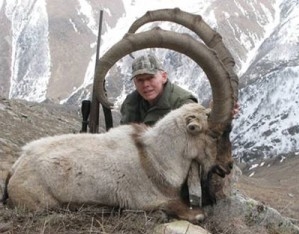
Such decision will cause an irreversible harm to Georgia’s unique biodiversity; the populations of wild goat, eastern and western Caucasian tur, chamois and brown bear may decrease to a critical level in the near future.
Besides, this decision strikes a serious blow to the successes achieved by the country in developing the system of protected areas and ecotourism during past years. Millions of dollars spent by donors on biodiversity conservation will be in vain. Such decision is irrelevant to a civilized state oriented to western values; it will damage the international reputation of our country, since it radically contradicts the key principles of international environmental agreements.
The decision allowing the hunting of endangered species included in the Red List was taken hastily and non-transparently, without any involvement of stakeholders. This raises a serious doubt that the decision serves the financial interests of a particular group having close ties with the authorities. We suppose that this doubt will be justified in the near future, when it becomes clear who purchased the right of killing the endangered species from the Ministry of Energy and Natural Resources of Georgia. It will be yet another documentary confirmation of elite corruption in our country.
January 25, 2012 at 16:02