
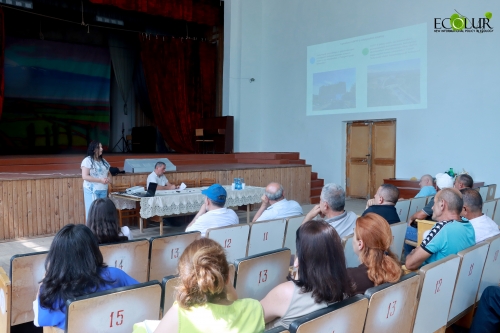
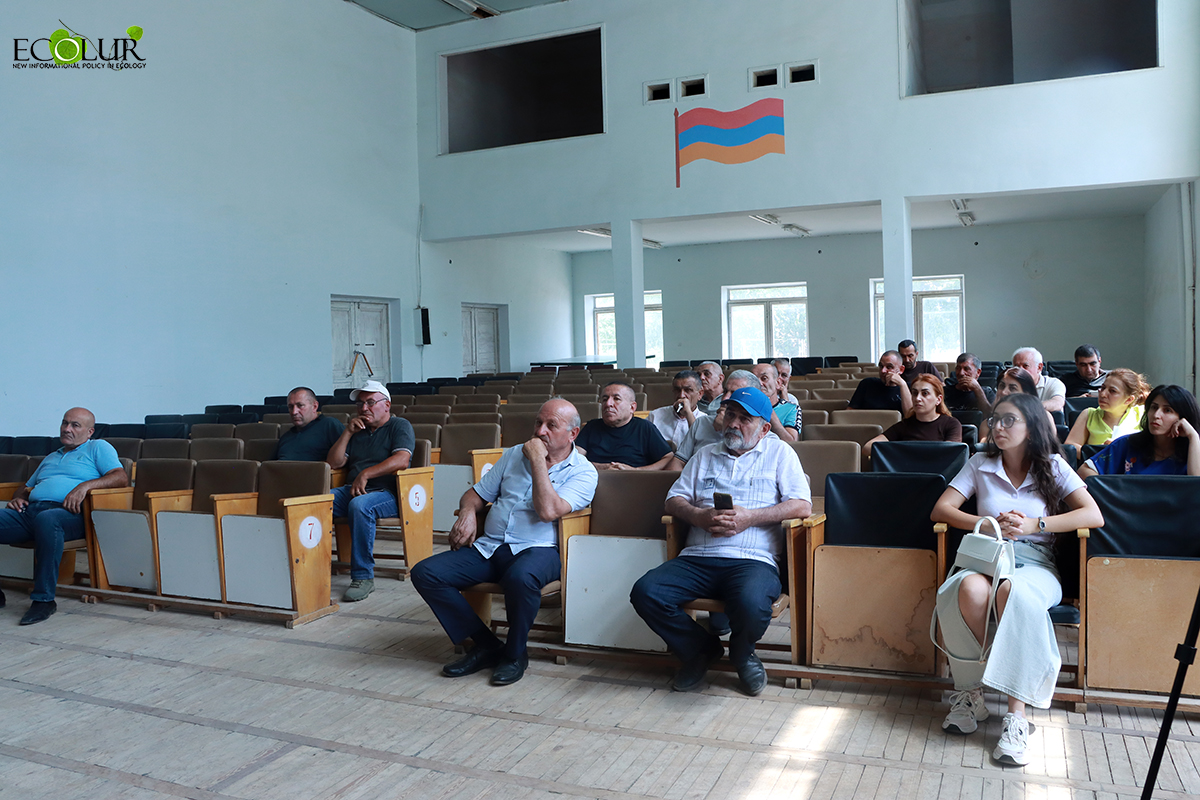
On 3 August 2026, EcoLur Informational NGO held an awareness-raising meeting in Vernashen settlement of Yeghegnadzor Community, Vayots Dzor Region, ahead of COP17. The meeting aimed to discuss opportunities for community residents and local institutions to participate in the 17th Conference of the Parties to the UN Convention on Biological Diversity (COP17), as well as to identify the issues and proposals that the community could present at the international level.
The meeting was attended by representatives of the Vayots Dzor Regional Administration, the local self-government bodies of Yeghegnadzor community, civil society representatives, and active local residents. During the discussion, it was emphasized that the community’s participation in COP17 should not be limited to presenting existing problems. It was proposed that international organizations should also be presented with possible solutions to these problems, the community’s experience, and concrete proposals for cooperation.
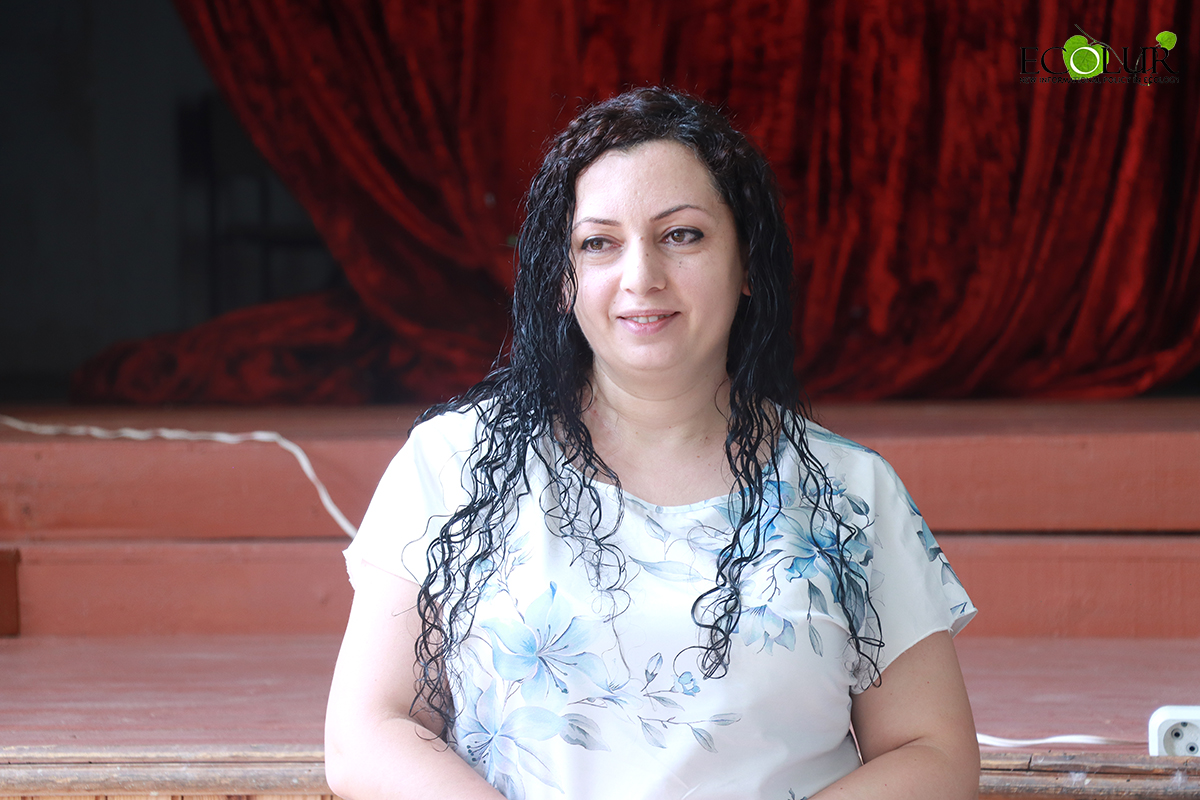
Victoria Burnazyan, Deputy President of EcoLur Informational NGO presented the idea of holding a community event in the Green Zone of COP17. The platform is intended to showcase communities’ experiences of how they conserve and use nature, the challenges they face, and the solutions they propose. International organizations and decision-making bodies are also expected to be invited to the event. The communities’ proposals are to be consolidated into a declaration, which will be submitted to the COP17 Secretariat and to the international organizations participating in the conference.
What Could Yeghegnadzor Present at COP17?
During the meeting, the following were proposed as preliminary topics: biodiversity conservation and sustainable use in Yeghegnadzor, human–nature relations, the impacts of climate change on biodiversity, community participation in environmental decision-making processes, and agrobiodiversity in Yeghegnadzor.
Victoria Burnazyan placed particular emphasis on agrobiodiversity, noting that Yeghegnadzor has considerable experience in the development of viticulture and winemaking, livestock farming, and other agricultural sectors. “We have seen that you have vineyards growing wine grapes, and we have seen the cheese factory. Livestock farming is also well developed here. These are things that can be showcased to demonstrate how people use this area, which is rich in biodiversity, while also highlighting the challenges they face and how the community is working to overcome them,” she noted.
During the meeting, one of the residents raised the issue of irrigation of agricultural land in Vayots Dzor and proposed discussing the possibility of constructing a reservoir near Teqsar. According to the resident, the construction of a reservoir could facilitate the irrigation of hundreds of hectares while also having a positive impact on agriculture, tourism, environmental protection, and the well-being of local residents.
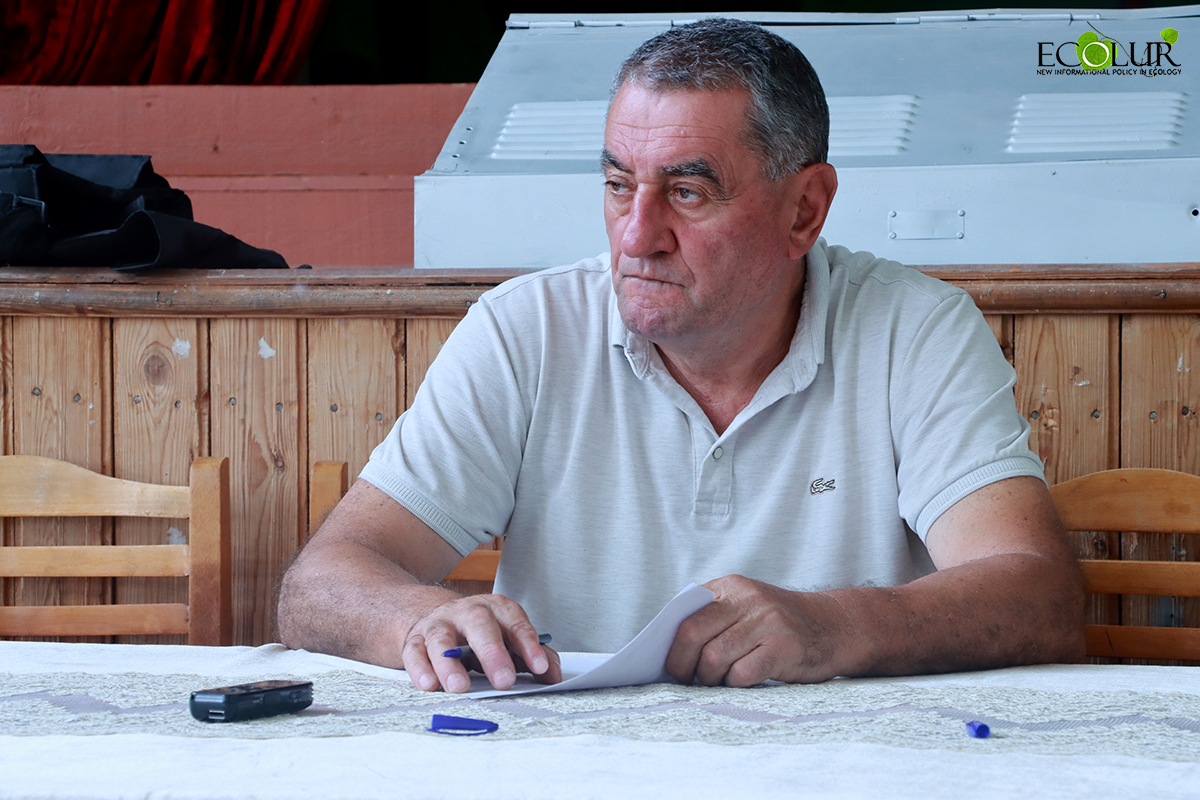
Gegham Margaryan, Head of Department of Agriculture and Environmental Protection of Vayots Dzor Regional Administration, presented the challenges related to the region’s water resources and the irrigation of agricultural land. According to him, Vayots Dzor is one of the most climate-vulnerable of Armenia’s ten regions. He identified Azatek, Zedea, Gladzor, Vernashen, Malishka, and Yelpin as particularly vulnerable settlements which, according to the assessment presented, could face a serious risk of desertification in 2035–2040.
He also noted that Vernashen and Karmrashen are among the settlements in Vayots Dzor where the proportion of irrigated arable land is zero. At the same time, he stressed that constructing a reservoir would be a complex and costly project and that the development of drip irrigation would also be necessary to ensure the efficient use of water resources. According to him, drip irrigation could reduce water consumption by around 70 percent.
Gegham Margaryan also presented the differences in the proportion of irrigated land among Armenia’s regions. According to him, irrigated land accounts for 84 percent in Ararat Regions, 91 percent in Armavir, 71 percent in Kotayk, and only 17 percent in Vayots Dzor. “In Vayots Dzor—17 percent,” he emphasized.
According to Gegham Margaryan, a significant portion of Vayots Dzor’s water resources is not used to meet the province’s agricultural needs, while thousands of hectares of land in the province remain unirrigated. For the participants, the issue of water is linked not only to agriculture but also to biodiversity conservation, the sustainability of settlements, and people’s ability to remain in their communities. “Malishka is a settlement of 5,000 households that for many years was the second- or third-largest settlement in the republic. Today, three out of every five houses are closed; there are no people there. For people to live, they need to cultivate the land—otherwise, what are they supposed to do to make a living? That is why the land has remained uncultivated and people have left,” he said.
Hayk Isakhanyan, a resident of Vernashen, emphasized that the biodiversity of Vayots Dzor is threatened both by natural disasters and by human activities. According to him, the conservation of water sources is a key issue for Vayots Dzor. “We have three water sources. There can be no biodiversity without water. If these three water sources are endangered, we cannot talk about biodiversity at all,” he said.
According to Hayk Isakhanyan, international documents also contain important references to the biodiversity of the areas adjacent to Teqsar. He noted that the area is important for the conservation of rare butterflies and migratory birds. “I have seen thousands, even millions, of butterflies moving from this area to other areas. We live in Vernashen and Gladzor, yet we are unaware that such a thing exists,” he said.
The discussion also addressed environmental education and the need to foster a responsible attitude towards nature within the community. One of the residents noted that when discussing environmental problems, people should also acknowledge their own responsibility. “We are always complaining, but we also need to do something ourselves. When I walk down the street and see children breaking off tree branches instead of simply picking the fruit from them, it already hurts me. That is why we need to be able to teach our children to protect nature,” the resident said.
A representative of “Du Menak Ches” (“You Are Not Alone”), an organization working on women’s support issues, highlighted the importance of community participation in COP17 and emphasized that biodiversity conservation is not merely an environmental issue. According to the representative, it is also a human rights issue, and environmental policy cannot be comprehensive without the participation of women and children. “I believe that we definitely need to present ourselves at the conference. Biodiversity conservation is not only an environmental issue; it is a human rights issue,” she said. She also offered the support of the organization she heads in organizing further awareness-raising activities in the community and participating in work related to COP17.
At the end of the discussion, Gegham Margaryan proposed establishing an initiative group to coordinate preparations for Yeghegnadzor’s representation at COP17.

“Strengthening Civil Society Leadership and Biodiversity Governance Ahead of COP17 in Armenia” project is implemented by EcoLur Informational NGO with the support of Heinrich Boell Foundation Yerevan Office - South Caucasus Region.
The views expressed in this article are those of the author and do not necessarily reflect the views of Heinrich Boell Foundation Yerevan Office - South Caucasus Region.
August 24, 2026 at 13:48