
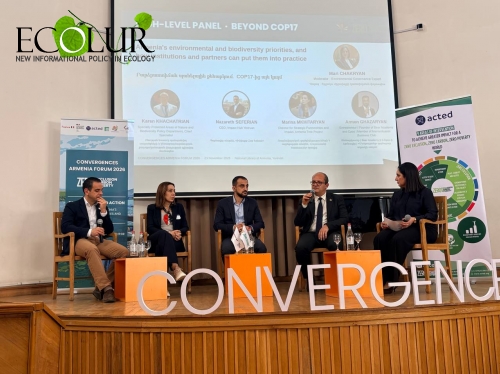
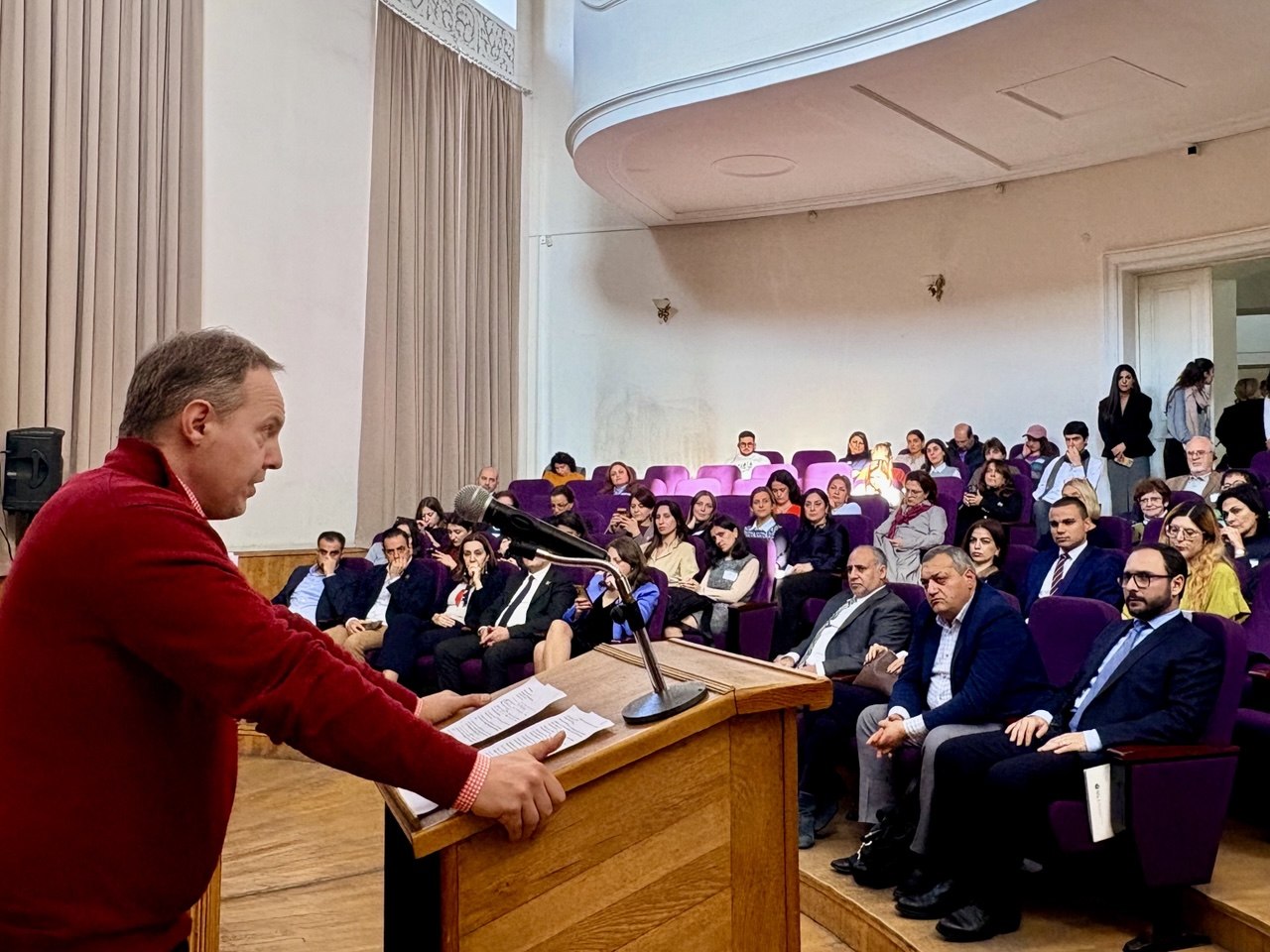
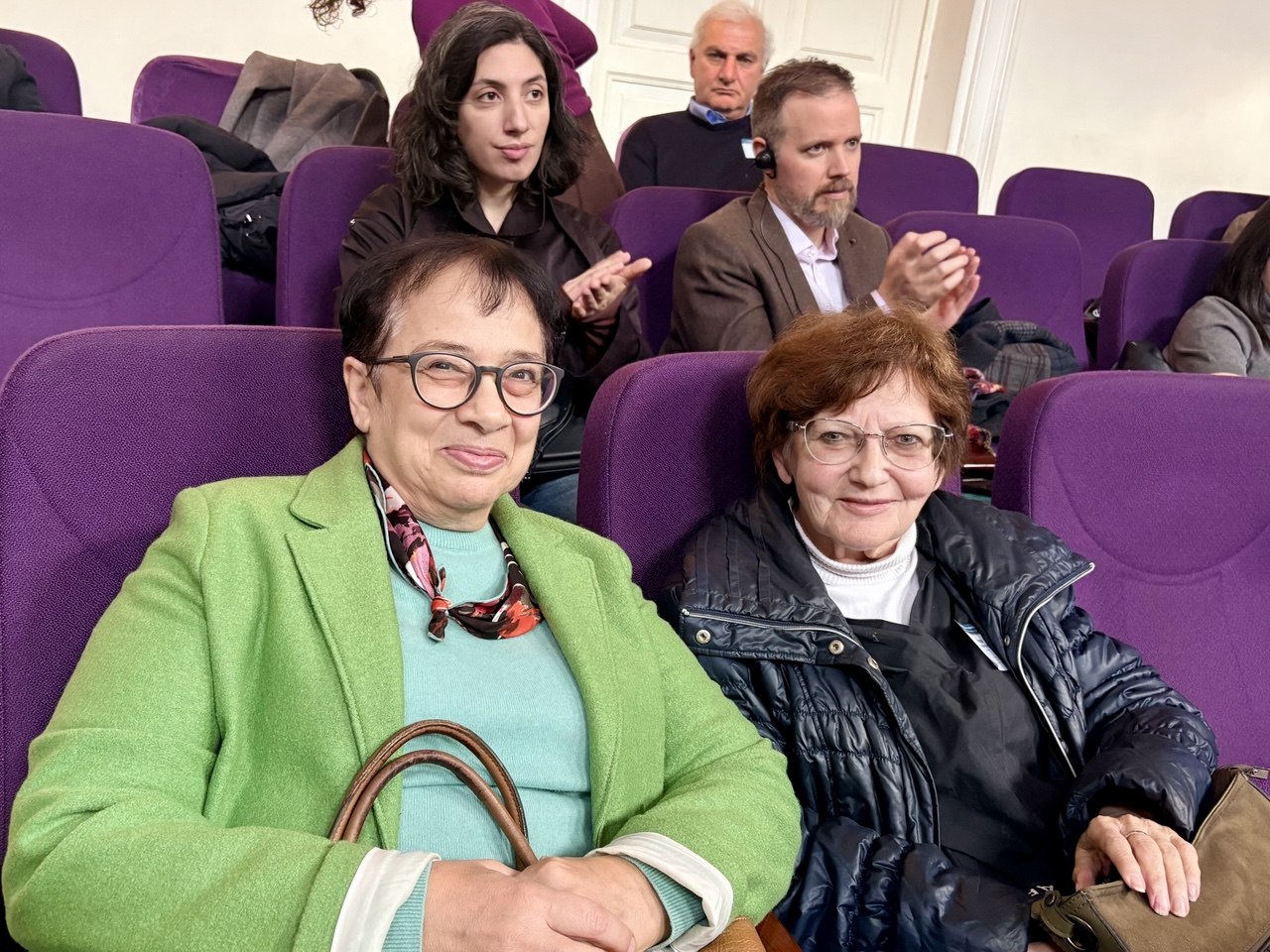
On November 23, the inaugural Convergences Armenia Forum was held at the National Library of Armenia. The event was organized by Convergences and Acted Armenia with the support of the French Embassy in Armenia. It brought together representatives of government agencies, diplomatic missions, international organizations, civil society, academia, and the business community to discuss Armenia’s post-COP17 environmental agenda and avenues for cooperation.
The forum built on the outcomes of three regional dialogues previously held in Yerevan, Gyumri, and Kapan, as well as two panel discussions on biodiversity organized by Acted Armenia during COP17.
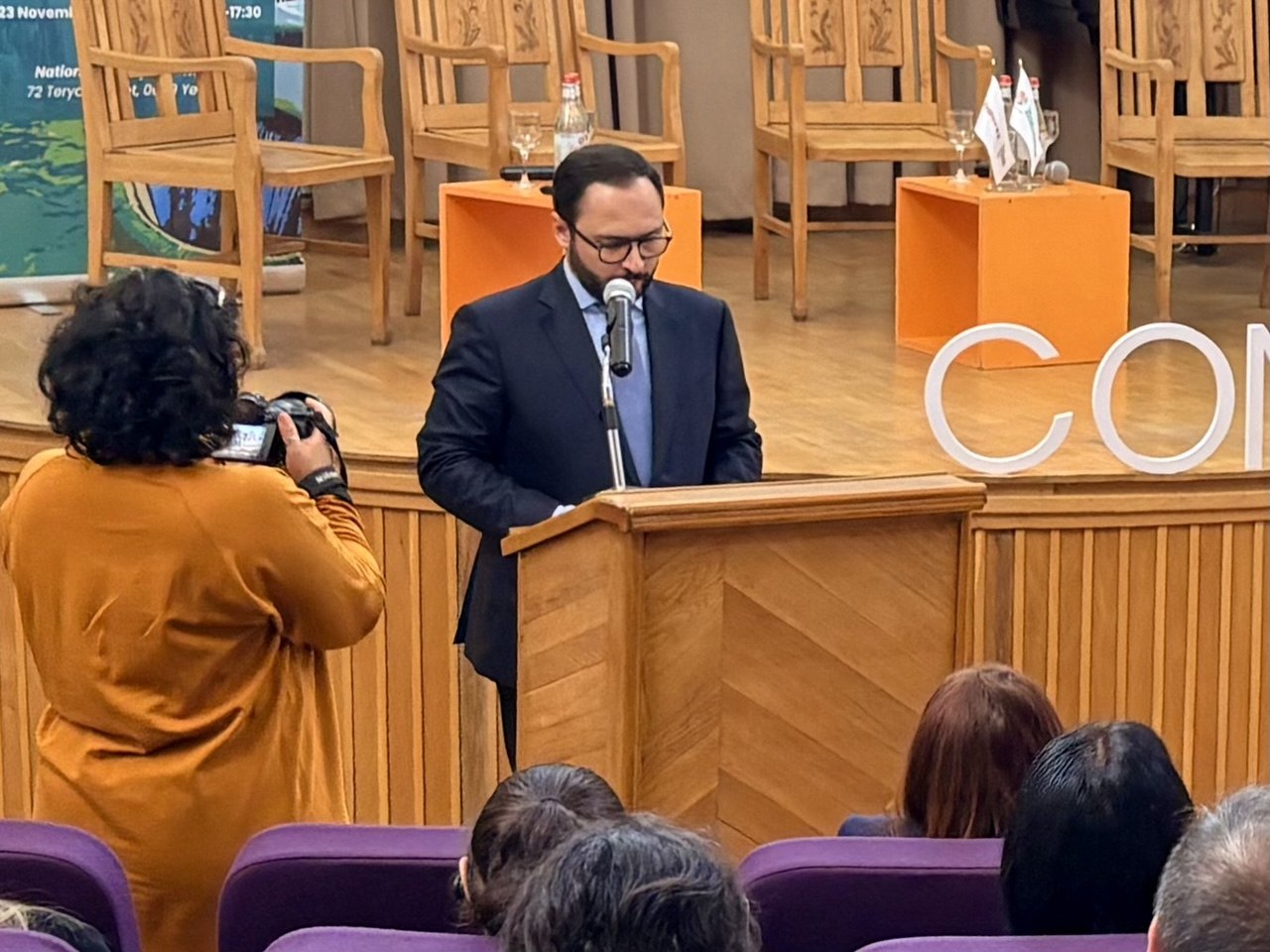
Armenian Deputy Environment Minister Hayk Arakelyan delivered welcoming remarks at the opening of the event. The Deputy Minister emphasized that biodiversity loss, climate change, increasing pressure on water resources, and ecosystem degradation are interconnected challenges that require a coordinated approach involving national and local authorities, the scientific community, the private sector, and civil society. According to him, the key message of COP17 is to translate international commitments into concrete action at the national and local levels. Nature conservation should be regarded not as an obstacle to development but as a fundamental prerequisite for long-term economic and social progress.
Julie Faure, First Counsellor at the French Embassy in Armenia, highlighted the importance of the commitments undertaken by Armenia during COP17, noting that they should be reflected in national policies and local decision-making. Addressing existing environmental challenges, the diplomat pointed to deteriorating air quality in Yerevan and the vulnerability of Lake Sevan, emphasizing that France would continue to support Armenia in implementing concrete projects in water, energy, natural resource management, and waste management.
Pascal Bernard, Deputy Executive Director of Acted, presented the organization's strategic vision of “Zero Exclusion, Zero Carbon, and Zero Poverty.” He emphasized that environmental sustainability cannot be achieved without addressing poverty and inequality, and that Armenia’s scientific potential and active civil society should be brought together through sustainable partnerships.
One of the highlights of the forum was the high-level panel discussion entitled “Beyond COP17.” The panelists included Karen Khachatryan, Chief Specialist at the Department of Specially Protected Nature Areas and Biodiversity Policy of the RA Ministry of Environment; Nazareth Seferian, Executive Director of Impact Hub Yerevan; Marina Mkhitaryan, Director of Strategic Partnerships and Impact at Armenia Tree Project; and entrepreneur Armen Ghazaryan, founder of Beer Academy and Epos. The discussion was moderated by environmental governance expert Mari Chakryan.
The speakers addressed Armenia’s environmental and biodiversity priorities, exploring how strong partnerships, institutional cooperation, and community engagement could help translate commitments into practical action.
The event also featured an exhibition showcasing local initiatives and environmental solutions. The forum continued with two parallel thematic workshops entitled “Nature and Territorial Resilience” and “Energy and Resource Efficiency,” as well as a youth session entitled “Green Talks: Generation for Change.” The outcomes and key conclusions of these sessions were summarized at the close of the forum.

November 25, 2026 at 12:47