

EcoLur
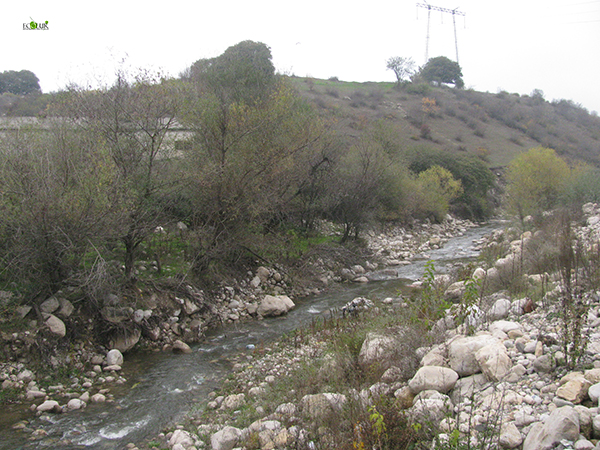
In the framework of the project entitled “Support to SHPP-relating Reforms Through the Dialogue of Public and RA Nature Protection Ministry for Sustainable Use of River Ecosystems” the expert group visited “Khachaghbyur” SHPP. “Khachaghbyur” SHPP is located in Tavush Region, in the administrative area of Geghhovit community. The SHPP is constructed on the Paghjur River (length – 31 km). It’s operated by “ENERGY KOK” LLC.
As a result of the monitoring, the expert group found out:
· The SHPP has been operating since 2013.
· According to the project, the static pressure of the SHPP is 69.1 m, according to the certificate issued by the Public Services Regulatory Committee on 1 October 2015 and the project, the estimated pressure of the SHPP is 55.50 m. According to PSRC certificate and the project, the estimated yield used by the SHPP is 3.0 m3/s. According to the project and PSRC certificate, the projected capacity is 1292 kW. According to the PSRC, as of October 2015 the factual useful delivery of the electricity is 5.1 million kWh, duration of license - 24.12.2013-24.06.2029, water usage permit 20.06.2014- 20.06.2017.
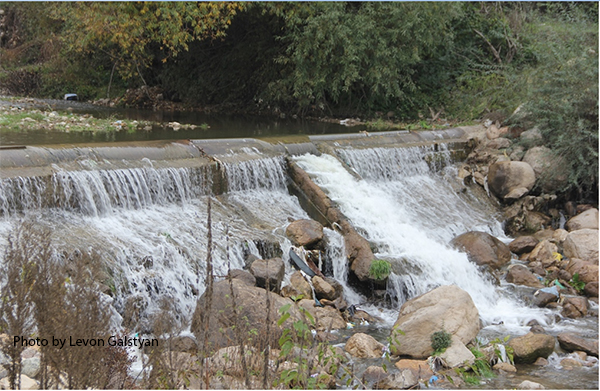
· In the head section of “Khachaghbyur” SHPP there is a concrete dam finishing with metallic semi- cylindric pipe. The length off the dam is 18 m, its height is 2.5 m. The project planned to have a concrete dam of 2 meters high and 18.6 meters long.
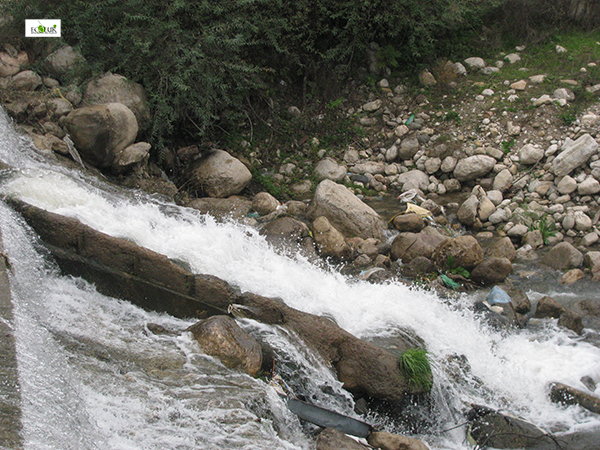
· There is a concrete stair-like worn out fish passway constructed in the central part of the dam – around 6.5 meters high and 1.2 meters wide.
· The fish passway consists of 8 stairs, and the lowest on is higher than the water surface of the river by over 60-70 cm. The fish passway with such a structure and the abundant river flowing in it make the migration of most fish living in the river almost impossible. The brown trout will be the one to overcome it most easily.
· There is a long sand trap, which finishes with a garbage-collecting net 2.3 meters long and having bars 2.5-3.0 cm. Such distance between the bars can’t be an obstacle for the small fish up to 8 cm long to appear in the pressure pipeline.
· You can meet the following fish species in the section of the Paghjur River, where the SHPP head section is constructed inherent to the Aghstev River: the brown trout, the Sevan khramulya (these fish species are red-listed in Armenia), Kura barbel, South Caucasus Sprilin, Kura loach etc. It should be mentioned that November is the season of brown trout reproduction (the monitoring visit was carried out on 7 November 2015), while the structure of the fish passway of the Paghjur River, on one hand and the small aount of water in the riverbed, on the other hand, don’t promote ensuring the reproduction of these valuable fish species.
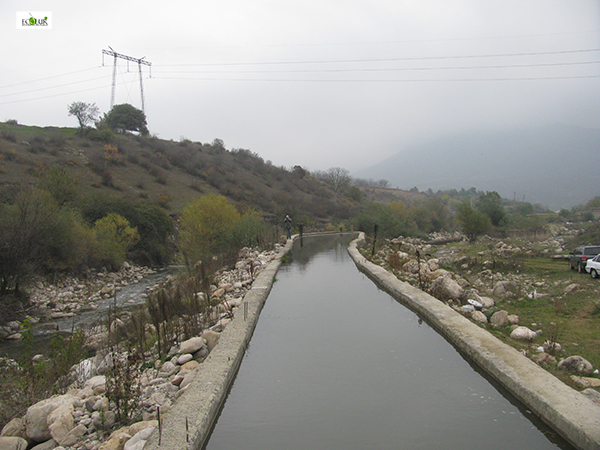
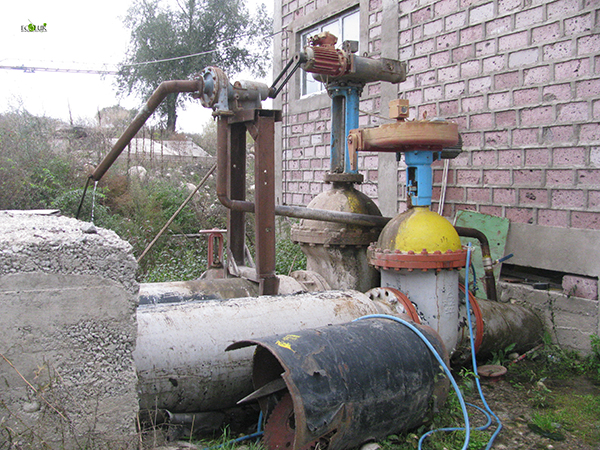
· The length of the steel pipeline is 1430 m and its diameter is 1.2 m, according to the project.
· Percentage correlation of aggregate length of SHPP derivation pipelines (6630 meters) of “Khachaghbyur SHPP 1” SHPP (the length of the derivation pipeline is 1800 meters, according to the project), “Khachaghbyur” SHPP (according to the project, it’s length is 1430m), “Khachaghbyur 2” SHPP (the length of the derivation pipeline is 3400meters, according to the project), with the length of Paghjur River (31 km) makes up 21.38 %.
· According to the water usage permit, “Khachaghbyur” SHPP can take water in all months, annually 78840.0 cum ensuring 0.15 cum/s environmental flow in the river. The project sets an environmental flow of 0.1 cum/s.
· According to “Computation Center” CJSC data, in 2014 “Khachaghbyur” SHPP operated for 12 months in 2014 and produced 899483 kW electricity.
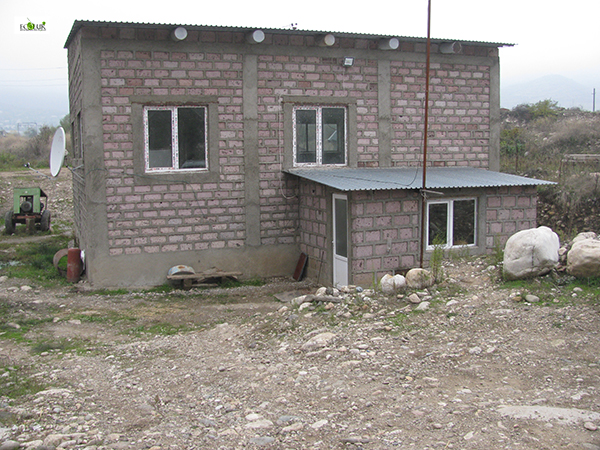
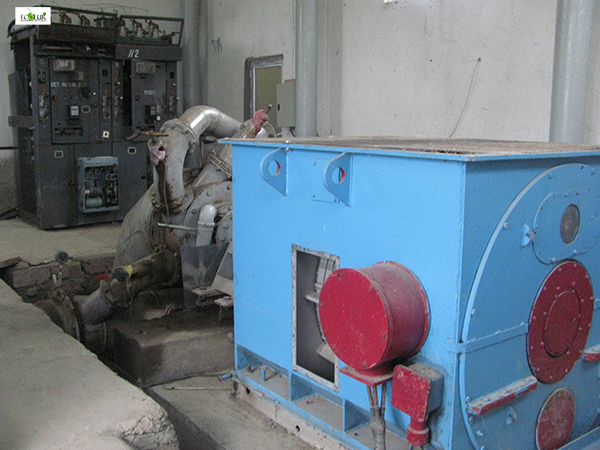
· There are two aggregates of local “Tsatryan” production installed in the SHPP building, and only one was operating. It was a low-water season and the turbine ensured 100 kW projected capacity with 300 l/s water amount. According to the SHPP employee, the economic profitability of the SHPP is too low and the SHPP can’t ensure its projected capacity.
· Two hydroaggregates operate only in April-May-June months and ensure 600 kW capacity instead of projected 1290 kW. The maximum water aount used by the SHPP makes up 1.8 cum/s instead of projected 3.0 cum/s.
· There is no transformer substation in the station area.
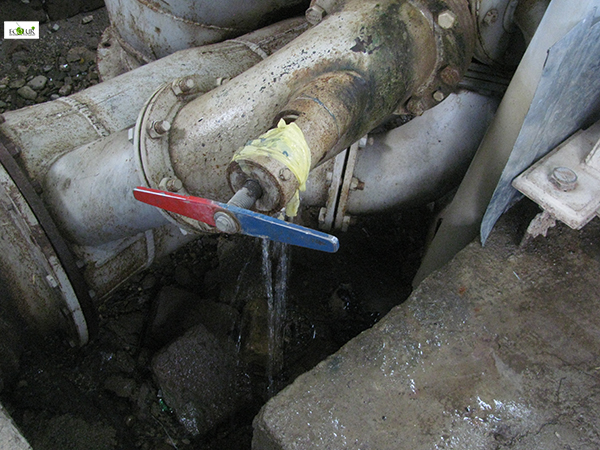
· Automatic management and recording of water intake and environmental flow is not ensured.
· There is no entire automatic management system in the station.
· No improvement and greening measures have been carried out in the station area.
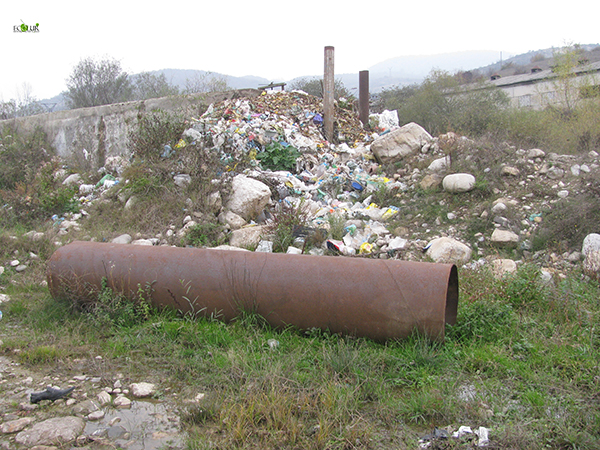
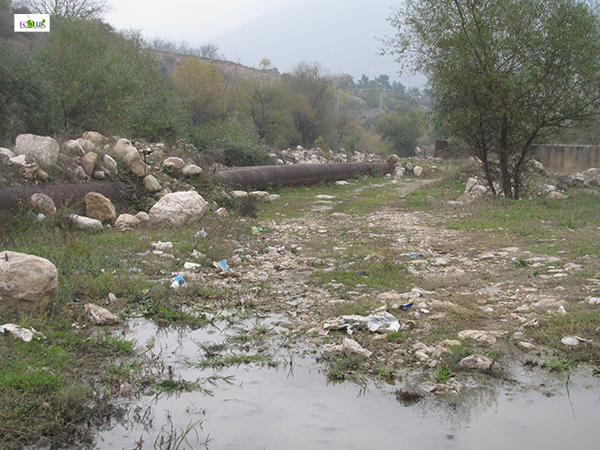
· At the moment of observation there was antihygienic state at the beginning and end of the sand trap because of collected garbage. Under the SHPP employee, this garbag has gathered from the sediment load. There are no solutions for the discharge of household wastewater.
· The SHPP infrastructures are close to “Arjatkhleni” reserve.
Conclusion
In low-water season the SHPP factually deprives the river of the water. All the SHPPs constructed on such water regie can be developed only in full-water season. All the aggregates installed in the station can’t ensure optial use of the water reserve.
Proposals
· To entirely reconstruct the SHPP for its further operation.
· To ensure automatic management of environmental flow in the head section, installation of water-measuring devices and online control.
· To reconstruct the fish passway.
· The dam blocking the riverbed may be blocked.
· To re-equip the SHPP with new and up-to-date hydroaggregates having high efficiency to have entirely automated management system, to operate with little water amount and to ensure the projected capacity.
· To review the hydroeconoic estimates, as the SHPP can’t ensure its project indicators.
· To ensure solutions to the discharge of the wastewater through a water-proof well or “mini” cleaning station.
· To organize the discharge of the garbage accumulated in the water intake section.
 |
 |
 |
 |
 |
 |
 |
 |
 |
 |
The material was developed in the frames of “Supporting reforms in the sector of small hydro power plants through enabling a dialogue between civil society and the Ministry of Nature Protection for sustainable use of river ecosystems” supported by UNDP/GEF Small Grants Programme".
April 06, 2016 at 11:28