
EcoLur
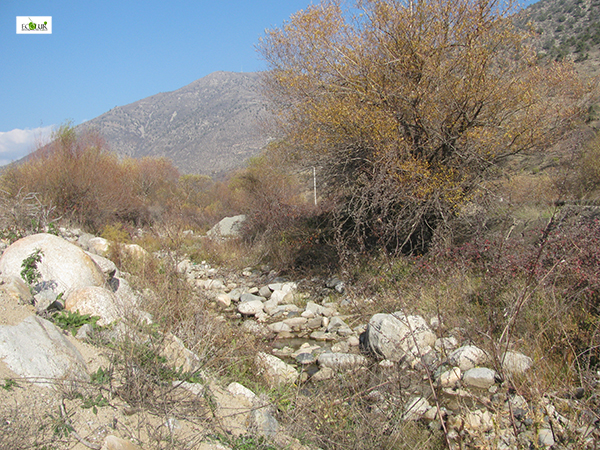
In the framework of the project entitled “Support to SHPP-relating Reforms Through the Dialogue of Public and RA Nature Protection Ministry for Sustainable Use of River Ecosystems” the expert group visited “Nzhdeh” SHPP. “Nzhdeh” SHPP is located in Syunik Region, in the administrative area of Lehvaz comunity. The SHPP is constructed on the Meghri River (length – 36 km). It’s operated by “Sar-Rub” LLC.
As a result of the monitoring, the expert group found out:
- The SHPP has been operating since 2012.
- According to the certificate issued by the Public Services Regulatory Committee on 1 January 2016 and the project, the static pressure of the SHPP is 85 m, according to the certificate issued by the Public Services Regulatory Committee on 1 January 2016 and the project, the estimated yield used by the SHPP is 3.4 m3/s. According to the PSRC certificate, the projected capacity is 1732 kW, while the project says it’s 1730 kW. According to the PSRC, as of 01.01.2016 the factual useful delivery of the electricity is 6.54769 million kWh. According to the project, the estimated production is 7.86 million kWh, duration of license - 24.10.2012- 24.10.2027, water usage permit - 27.08.2012 - 27. 08.2015.
- The real coordinates of the SHPP don’t comply with the water usage permit laid down in the water usage permit.
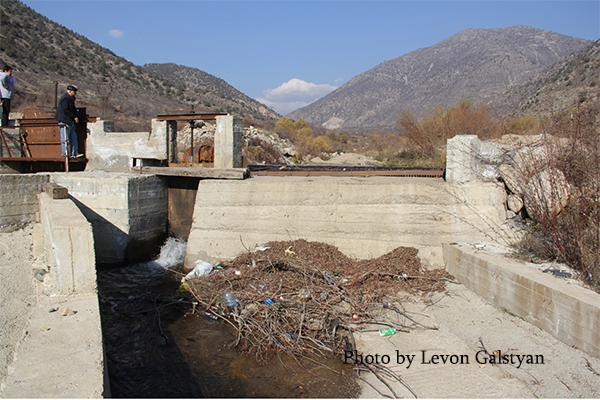
- The length of the SHPP dam is 7 m, its height is 2 m.
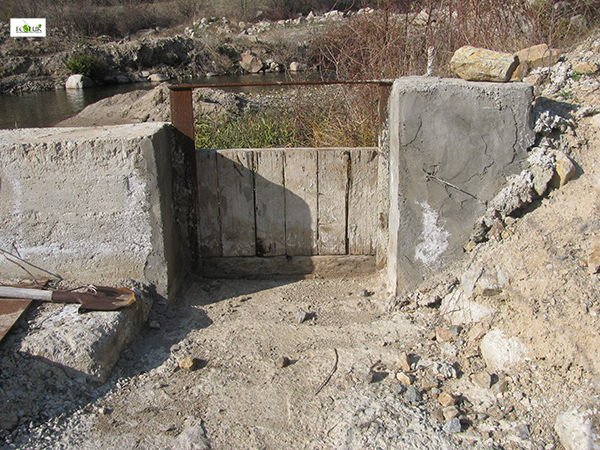
- There is concrete-made area of 4.2 meters long available in the SHPP head section, which has an entrance of 1 m long in the beginning of the structure, which is closed with wooden logs. Such a structure can’t serve as a fish passway. The project planned to have a stair-like concrete fish passway of 13.3 m long.
- There is no cellular net at the entrance part of the pressure pipeline.
- You can meet the following fish species in the section of the Meghri River, where the SHPP head section is constructed – brown trout, Kura barbell and South Caucasus Sprilin. The availability of fishing rods in the head section shows that small fish is fished her.
- According to the project, the length of SHPP pipeline is 2020, while its diameter is 1.2 m.
- The aggregate percentage correlation of the SHPP derivation of Meghri SHPP (the length of the pipeline is 135 m, according to the PSRC) and Nzhdeh SHPP (the length of the pipeline is 2020, according to the project) makes up 5.98% with the river length.
- Immediately after the water discharge of “Nzhdeh” SHPP water intake for “Meghri” gravity irrigation system is carried out, while immediately after the water intake the construction works of “Meghri 1” SHPP water intake are carried out. This section of the river is going to be environmentally overloaded, as the water intakes for irrigation system and later for “Meghri 1” SHPP will be carried out in this section.
- According to the water usage permit, water intake of 52347.6 cum water may be implemented in 12 months ensuring an environmental flow of 0.08 cum/s in the Meghri River.
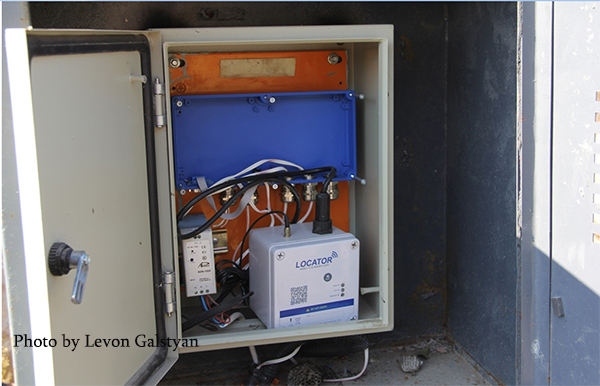
- The automated management and recording of the environmental flow is not ensured.
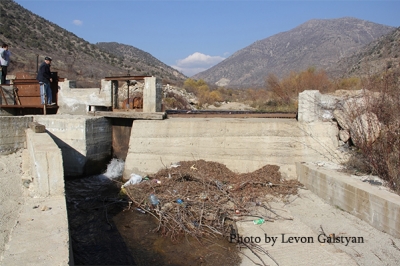
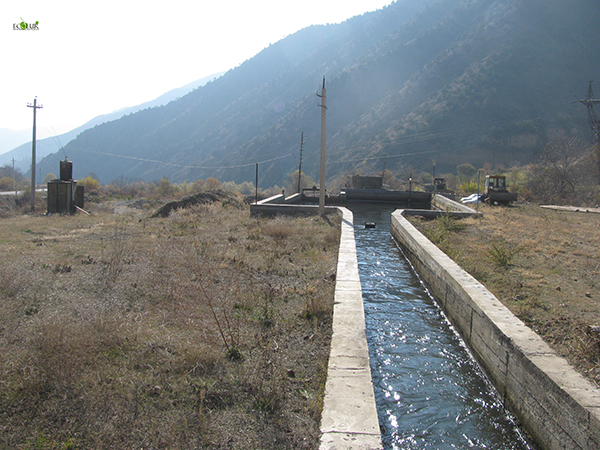
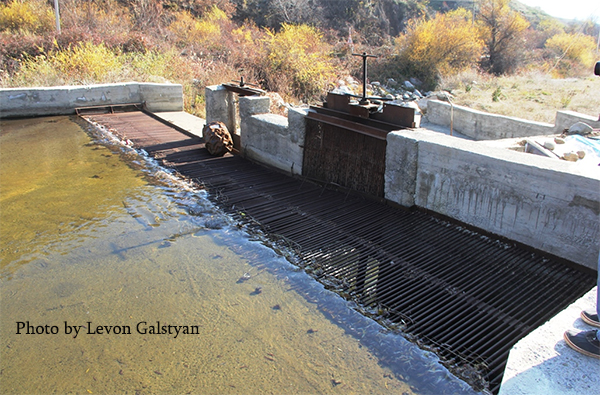
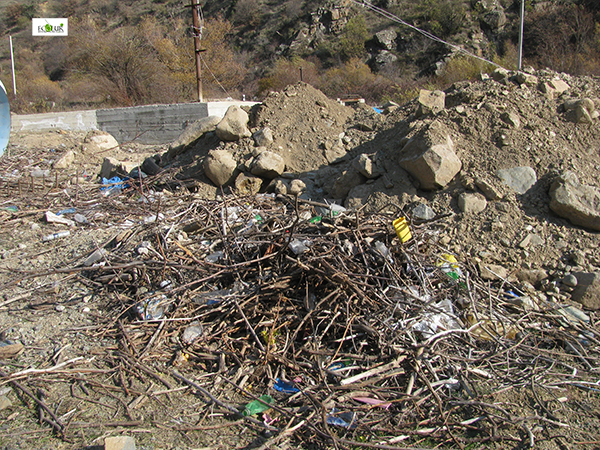
- A part of the water collected in the drainage basin after being cleaned in the garbage-collecting cage net is directed to the sand trap and then to the pressure pipeline. The section, which ensured letting out of environmental flow into the river, was filled with different sorts of garbage.
- At the moment of observation there was a non-working water measure installed on the pressure pipeline.
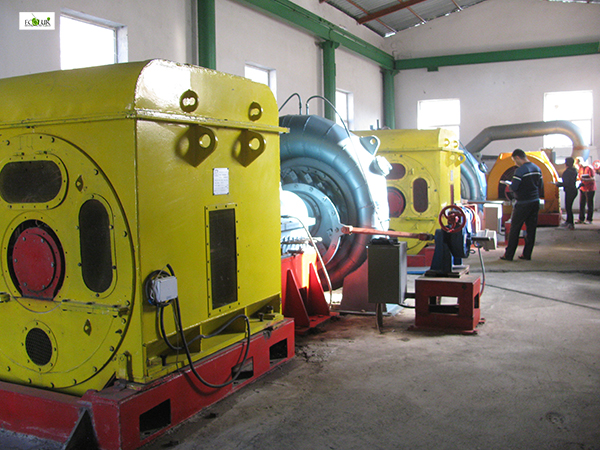
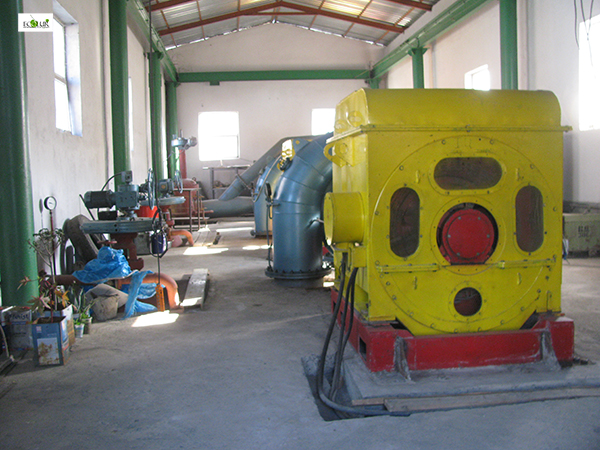
- There are 3 hydroaggregates of local “Khorda” make installed in the SHPP building, each of which has 630 kW projected capacity. At the moment of observation, only one was operating, which ensured 300 kW projected capacity. The aggregates don’t have entirely automated management system.
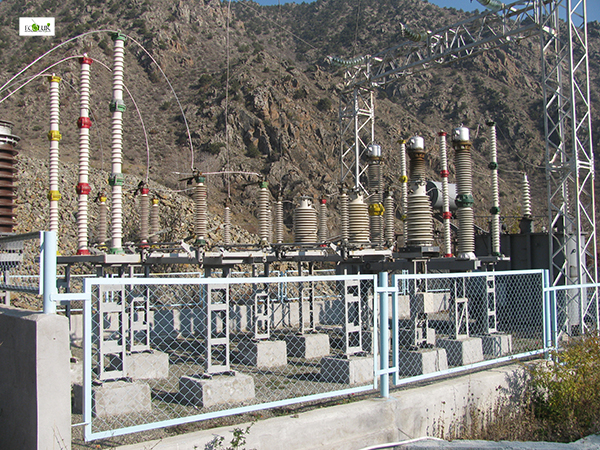
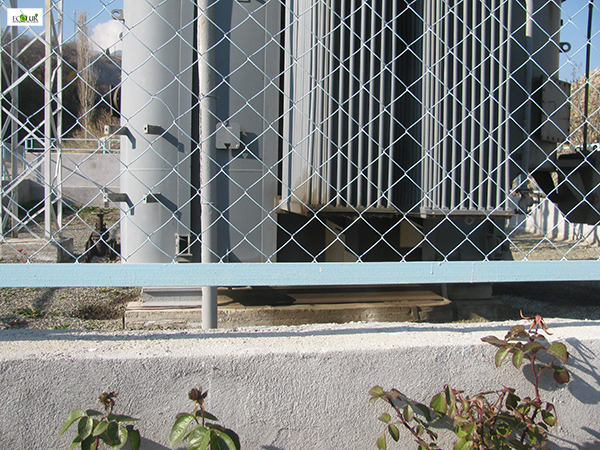
- The transformer substation is fenced, the transformers are not equipped with oil-collecting system.
- According to “Computation Center” CJSC data, in 2014 “Meghri” SHPP operated for 10 months and produced 6180887 kW electricity.
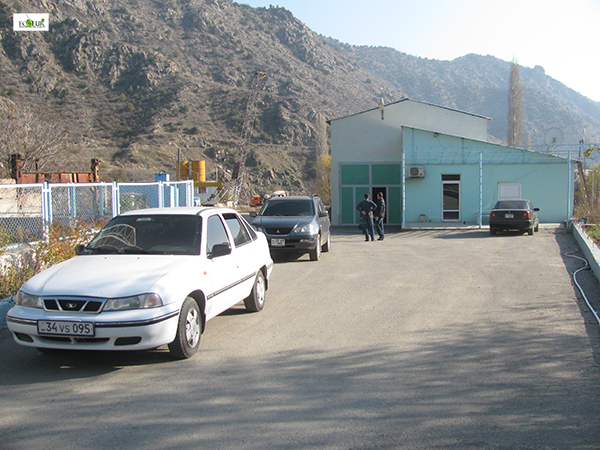
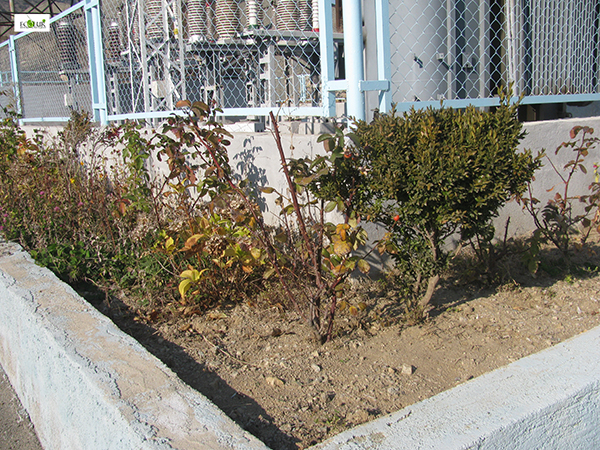
- The station area is improved and greened.
- The nearby specially protected area of nature is “Arevik” National Park.
Conclusion
The observations showed that water intakes for different purposes are carried out in the given section of the Meghri River (“Meghri” gravity irrigation system and “Meghri 1” SHPP), for which different hydrotechnical structures have been and are being constructed. All this will cause environmental overload on the Meghri River. There is strong need for the review and exercise of control of the environmental flow with relevant measures.
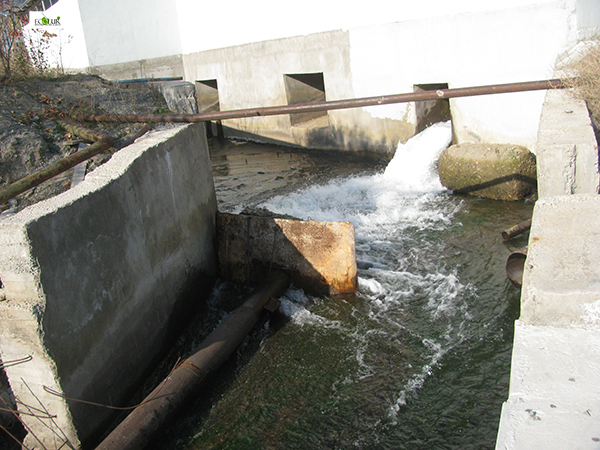
The water in the head section of “Nzhdeh” SHPP flows down over the height of 1.8-2 m into the sand trap. The SHPP doesn’t have a fish passway. As a matter of fact, it has a hole closed with wooden door and located above the water intake point. There were construction garbage, plastic and glass bottles, and sediment load taken out of the cage net and sand trap in the riverbed. The water intake amounts are not measured.
Proposals
1.To entirely reconstruct the fish passway to ensure the natural migration of the fish.
2. The use of the dam may be refused and to carry out the water intake in another way without blocking the riverbed.
3. To review the environmental flow To ensure automatic management of environmental flow in the head section, installation of water-measuring devices and online control.
4. Environmental flow of 0.08 m3/s set in the water usage permit, which is too small and can’t ensure the natural state of the Meghri River and its biodiversity.
5. To entirely stop the SHPP operation in low-water season.
6. To re-equip the SHPP with new and up-to-date hydroaggregates having high efficiency to have entirely automated management system, to operate with little water amount and to ensure the projected capacity.
7. To equip the transformers with oil-collecting system.
8. To find out the reasons for the incompliance of the SHPP coordinates and to correct them.
 |
 |
 |
 |
 |
 |
 |
 |
 |
 |
 |
 |
 |
 |
|
The material was developed in the frames of “Supporting reforms in the sector of small hydro power plants through enabling a dialogue between civil society and the Ministry of Nature Protection for sustainable use of river ecosystems” supported by UNDP/GEF Small Grants Programme". |
April 25, 2016 at 15:42