
EcoLur
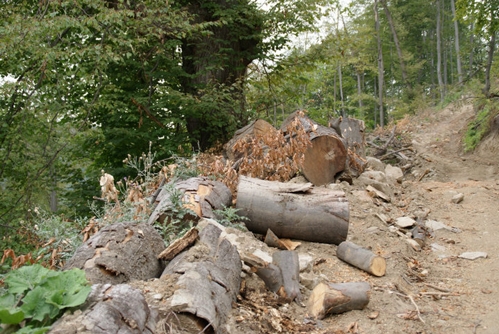
The State Environmental Inspection cut the factual amount of felling in Gougark by dozen times, insist green movement activists Vahe Vardoumyan and Mariam Sukhudyan who took part in the monitoring in illegal felling together with the State Center for Forest Monitoring on 9 September.
“The Inspection marked 11 stumps of newly cut down trees, but it didn’t mark 116 more newly cut stumps which we pointed out,” said activists. “Forest is examined, when public raises alarm signals, though everybody knows about illegal felling, including forestry officers, environmental inspection, forest monitoring and police representatives. They all know and support each other,” Mariam Sukhudyan said, “it’s hard to conduct public monitoring under such conditions, as they exercise pressure in you as a team.”
Withstanding pressure, including psychological, is not easy. Mariam tells: “At 12 a.m. they demanded from us to meet face to face with local law enforcement bodies, they admitted how they had been persuading us to cut the number of felling, they demanded from us to tell them what they had particularly told us. I couldn’t stand it any longer. It was already a midnight and I told them to leave us alone, we had already shown you where and what had been cut down. We are not going to take part in confrontation. Send us home.”
Vahe Vardoumyan adds: “I think nobody expected me to arrive alone. Maybe they thought it would be easy to persuade me alone. But as I wasn’t alone, they started exercising psychological pressure on the local journalist.
Locals know this is one system and keep silence even when they themselves see how the forest is being cut. For example, the administration of “Lori” rest House obviously saw the forest cut down, but kept silence.”
They kept on cutting down the forest even when the inspection started conducting examinations in the area. This witnesses our forest is almost not guarded.
“My aim is not to imprison anybody, though if a crime is committed, let them bear responsibility. My aim is regular control over forest, and not public monitoring one after another. We want our law enforcement bodies, forestry officers and inspection to do their job,’ says Mariam. Vahe adds: “We need a network of public groups, and I think the youth in forest regions will support us.”
September 14, 2010