
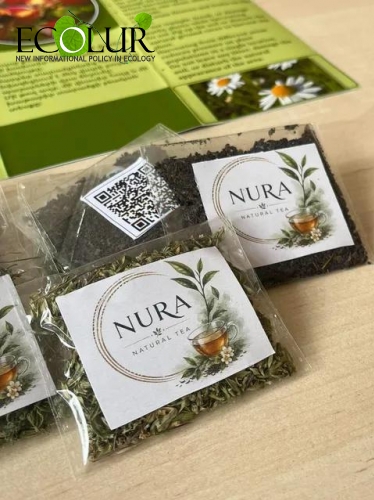
When taking from nature becomes a process of giving back: the NURA initiative demonstrates how local harvesting can go hand in hand with nature conservation.
Thyme, mint, rosehip, and chamomile growing on Armenia’s mountain slopes have been part of our tables and herbal remedies for centuries. However, when wild plants are harvested without following rules, the practice itself becomes a threat to these plants. A plant uprooted or cut down entirely will not grow back the following year, while trampled and polluted areas recover slowly. In one of the communities in Tavush, an attempt has been made to address this problem by making harvesting knowledge-based and managed.
Concept: “From Forest to Production, and from Production Back to Forest”
The NURA initiative was established through the efforts of students from Tavush Secondary School in Tavush Region and their teachers, Hasmik Baghdasaryan and Mary Babasyan, within the framework of the Ashkharhatsuyts educational platform. NURA’s philosophy is simple: if we benefit from nature, we have an obligation to give back some of what we take. Guided by this principle, the initiative has established small-scale production of teas made from local medicinal plants, with the proceeds from sales to be directed toward addressing environmental issues in the community.
The students of Tavush first mapped the village’s natural environment and then established tea production.
Start with Map
Mapping lies at the heart of the initiative. Before harvesting, it is essential to know what grows where, which areas are rich in vegetation, and which are already polluted or under threat. Thanks to mapping carried out through the Ashkharhatsuyts educational platform, the village’s areas rich in vegetation and those at risk have been documented. Wooden signs have been installed in threatened areas. By scanning the QR code, visitors can access the map, allowing information to reach its intended beneficiary directly—the person out in nature.
Rules for Responsible Harvesting
The initiative’s guidelines, published in Armenian and English, set out simple rules that anyone can follow:
· Harvest only the part of the plant that is needed, leaving the root in the soil.
· Do not pull plants out; cut stems and branches with clean, sharp scissors or a knife.
· Leave some flowers and fruits on the plant so it can regenerate.
· Avoid trampling neighboring plants, digging up the soil, or damaging the natural ground cover.
· Harvest from different areas to reduce pressure on the resources of any single location.
· Do not leave litter or alter the natural appearance of the area.
Giving Back to Nature
The second component of the initiative is restoration. Seedlings grown in a mini-garden on the school windowsill will be transplanted into damaged natural areas in spring. This completes the cycle: local plants become tea, tea generates income, and the income and seedlings help restore natural areas.
The results of the fieldwork launched by NURA on August 15 were first submitted to “Smart Screens for Ashkharhatsuyts Schools 2026” competition. The initiative was subsequently presented at “Agro-Berd” interschool competition.
The team plans to expand the mini-garden.
Why Does This Matter?
Initiatives like this are important not because of their scale, but because of the approach they embody. They demonstrate that:
· Local natural resources can become a source of income without being depleted, provided harvesting is properly regulated.
· Environmental knowledge is more effective when communicated through simple guidelines directly in the places where they are needed.
· Nature conservation challenges can be addressed from within the community, through the efforts of local people.
The same approach could be applied in other regions of Armenia where wild plant harvesting is a tradition but is often irregular and uncontrolled.
October 20, 2026 at 20:36