
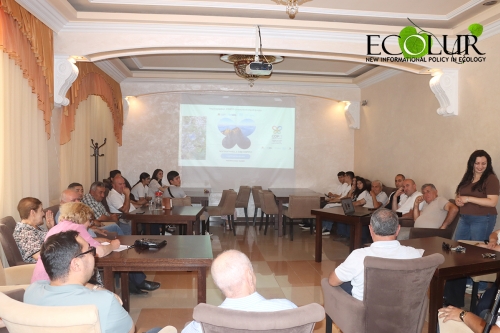
In Jermuk community, Vayots Dzor Region, EcoLur Informational NGO held an awareness-raising meeting dedicated to the 17th meeting of the Conference of the Parties to the UN Convention on Biological Diversity (COP17), which will take place in Yerevan from October 19 to 30. Representatives of the Vayots Dzor Regional Administration, the local self-government body of Jermuk community, civil society, and local residents participated in the meeting.
Deputy President of EcoLur Informational NGO Victoria Burnazyan presented the main objectives of COP17, the targets of Armenia’s National Biodiversity Strategy and Action Plan, and the significance of Jermuk in the context of implementing Armenia’s biodiversity conservation commitments.

Victoria Burnazyan emphasised the role of communities in achieving the objectives of the Convention on Biological Diversity. Local communities are important stakeholders in biodiversity conservation: they are not only direct users and managers of natural areas, but also custodians of local knowledge. Their full participation in decision-making, implementation, and monitoring processes is therefore essential.
Victoria Burnazyan noted that 21 of the 30 targets of Armenia’s National Biodiversity Strategy and Action Plan are relevant to Jermuk. She referred to Target 3, which concerns the expansion of the network of protected areas. Armenia has set a target of effectively conserving 20% of the country’s terrestrial and freshwater ecosystems by 2030. To achieve this target, the establishment of the Jermuk and Tatev National Parks and the Dilijan Biosphere Area is planned.
The Jermuk National Park is planned to be established on the basis of the Jermuk Hydrological Sanctuary, Jermuk Forest Sanctuary, Herher Sparse Forest Sanctuary, and community lands.
For the purpose of conserving biodiversity in the Jermuk area, a 33,015-hectare Jermuk Emerald candidate site has been designated under the Convention on the Conservation of European Wildlife and Natural Habitats (Bern Convention). The area is home to the Persian leopard, bezoar goat, grey wolf, brown bear, Armenian mouflon, European wildcat, bearded vulture, golden eagle, and Eurasian griffon vulture.
However, under the EU4Environment programme, a 5.6% reduction of the Jermuk Emerald candidate site was subsequently proposed. This has raised concerns among international and local experts and civil society organisations, who associate the proposed change with providing the green light for the development of the Amulsar gold mine. As a result of the reduction, the Jermuk candidate site would be excluded from part of the Jermuk Emerald candidate area.
This proposed change has caused concern among civil society and environmental organisations.
The Bern Convention Secretariat called on the Armenian authorities to establish the Jermuk National Park before COP17 in Yerevan, thereby demonstrating a clear and strong commitment to biodiversity conservation.
The authorities were also called upon to conduct a new Environmental Impact Assessment (EIA) for the Amulsar project before the commencement of mining activities.
Civil society participation in consultations on the revision of the Emerald Network should be meaningful, and the proposals and comments submitted should be duly considered and reflected in the decisions adopted.

Victoria Burnazyan noted that COP17 provides a unique opportunity to raise issues concerning the conservation of Jermuk’s rich biodiversity. A dedicated space known as the Green Zone has been designated to facilitate the participation of broad sections of the public in COP17. It will be located at the Karen Demirchyan Sports and Concert Complex.
Viktorya Burnazyan presented the formats for civil society participation in the Green Zone. She noted that the community could present the topics of greatest interest to it, including the conservation and sustainable use of Jermuk’s biodiversity, the role of ecosystem services in tourism development, the impact of climate change on biodiversity, and community participation in environmental decision-making processes.
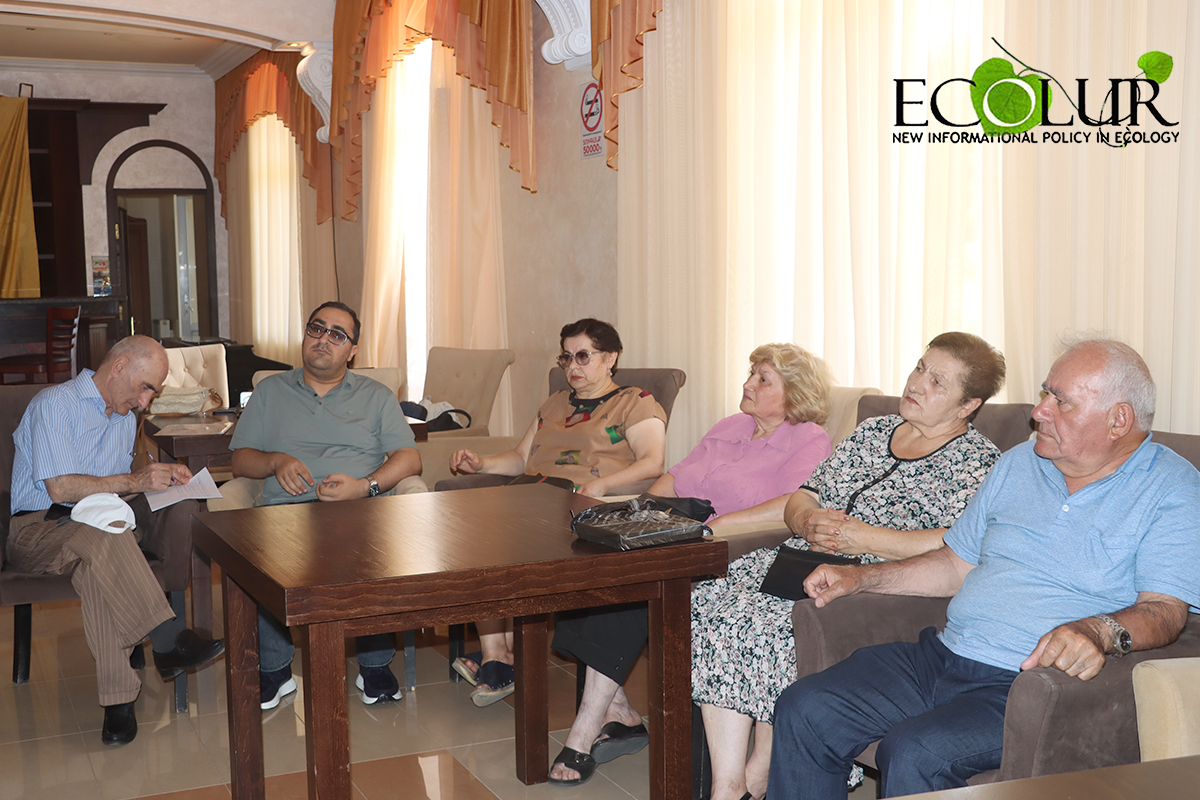
The meeting participants decided to establish a working group comprising active community residents. Together with EcoLur, they will determine which issues should be prioritised for the community.


The project “Strengthening Civil Society Leadership and Biodiversity Governance Ahead of COP17 in Armenia” is implemented by EcoLur Informational NGO with the support of the Armenia office of the Heinrich Boell Foundation.
The views expressed in this article are those of the author and do not reflect the views of the Heinrich Boell Stiftung Yerevan Office – South Caucasus Region.
August 28, 2026 at 18:50