
A team from the international environmental network CEE Bankwatch Network visited Armenia to examine the progress of projects financed by development banks.
For more than 30 years, CEE Bankwatch Network has monitored projects financed by international financial institutions, assessing their compliance with environmental, social and human rights standards. The network attaches particular importance to transparency in financing processes, public participation and accountability.
In Yerevan, the CEE Bankwatch Network team met with representatives of the Asian Development Bank (ADB) and the European Bank for Reconstruction and Development (EBRD). At the EBRD office, discussions focused on waste management projects financed by the bank, as well as issues related to the Amulsar project.
Until 2020, the EBRD was a shareholder in Lydian International, holding a 6.5% stake. At the time, Lydian International had only one project among its assets: the Amulsar gold mine development project. In 2020, the EBRD terminated its financial interest and exited the project during Lydian International’s restructuring and insolvency.
Although the EBRD currently has no direct financing in the Amulsar project, it holds a 10% stake in Ameriabank, the bank that provided a USD 150 million loan to the Amulsar project in 2025. In the same year, the EBRD approved a financing package of up to EUR 150 million for Ameriabank for on-lending to Micro, Small, and Medium Entereprises.
According to Fidanka Bacheva-McGrath, Strategic Area Leader - Cities for People at CEE Bankwatch Network, the network is involved in a number of complaint processes concerning Amulsar, including a compliance review at the EBRD’s accountability mechanism and a “stand-by” active observation by the Convention on the Conservation of European Wildlife and Natural Habitats (Bern Convention).
“It is important to note that the Secretariat of the Bern Convention has issued a recommendation calling for a new Environmental Impact Assessment (EIA) for the Amulsar mine. In its latest communication, the Secretariat called on Armenia to ensure that progress on the mine development project is suspended until such an assessment is carried out. Unfortunately, this has not yet been done,” she said.
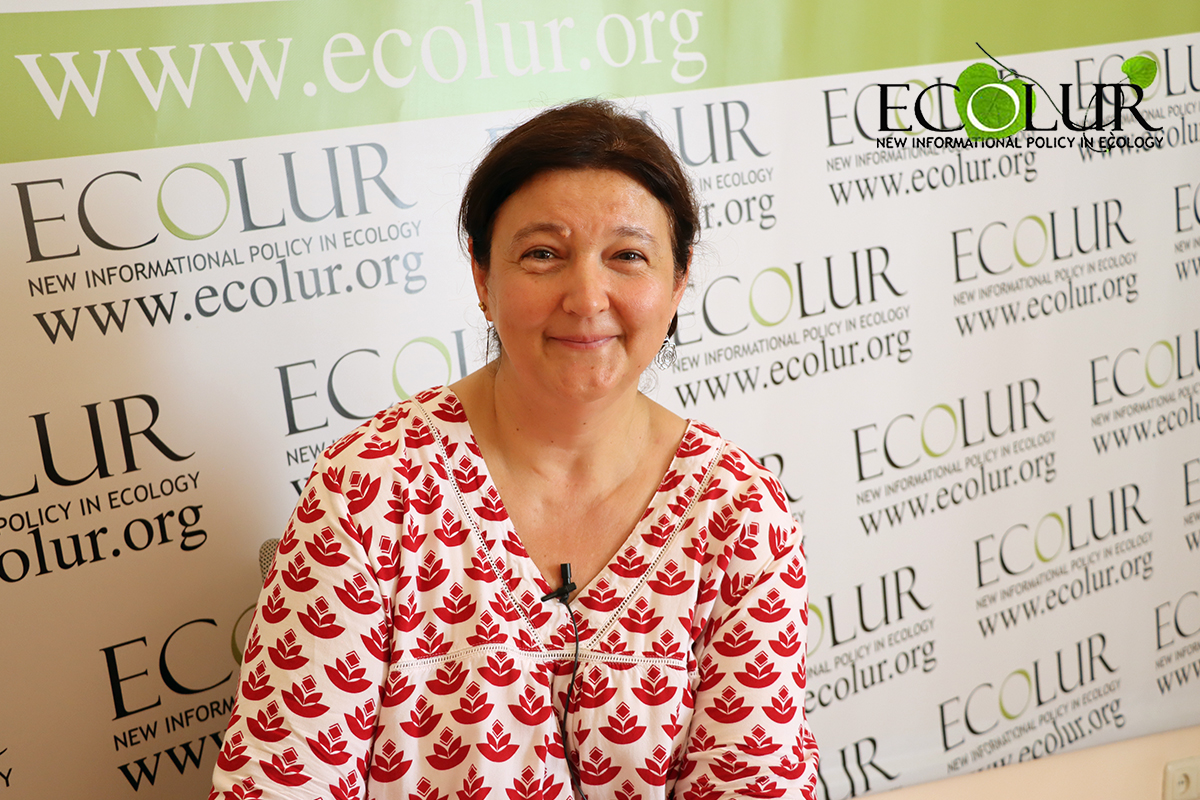
Fidanka Bacheva-McGrath
According to Bacheva-McGrath, Ameriabank’s financing of the Amulsar project requires an assessment of the associated risks.
“Ameriabank is now the investor in Amulsar, and the state has guaranteed this investment. We understand that, given the state guarantee, there appears to be little financial risk. However, we believe that environmental, social and human rights risks also need to be taken into account,” she said.
According to Bacheva-McGrath, as a financial intermediary, Ameriabank should apply the relevant standards of development banks, which include the assessment of impacts and risks, mitigation measures, stakeholder engagement, and issues related to labour and land rights, as well as livelihoods.
“There has not been sufficient transparency on these issues to date,” she noted, adding that CEE Bankwatch Network is seeking to establish a dialogue with Ameriabank to understand how the environmental and social risks of the Amulsar project are being managed.
“We requested a meeting with the bank, but it did not take place,” Bacheva-McGrath said.
CEE Bankwatch Network biodiversity expert Andrey Ralev has examined the potential impact of the Amulsar gold project on biodiversity and Emerald Network candidate sites in Armenia.
On behalf of CEE Bankwatch Network, EcoLur Informational NGO, Forests of Armenia NGO and Green Armenia NGO, Ralev submitted a complaint to the Secretariat of the Bern Convention.
Complaint to the Bern Convention concerning Amulsar
The complaint states that the Armenian Government failed to take into account data presented in the Amulsar project’s EIA indicating the potential for significant impacts on the flora and fauna of the Emerald candidate sites of special conservation interest - Jermuk, Gorayk and Sevan.
According to Ralev’s assessment, mining operations could have adverse impacts on more than 70 protected animal species, dozens of endemic plant species, as well as Lake Sevan.
In 2016, Armenia proposed 23 Emerald candidate sites, which together covered 34.8% of the country’s territory, or 1,033,719.5 hectares. Following a review of the sites in 2023, 30 candidate sites were proposed, but covering a smaller total area of 707,739.22 hectares, or 23.8% of the country’s territory.
Representatives of CEE Bankwatch Network also visited Jermuk Community, which is affected by the Amulsar project, and met with local residents.
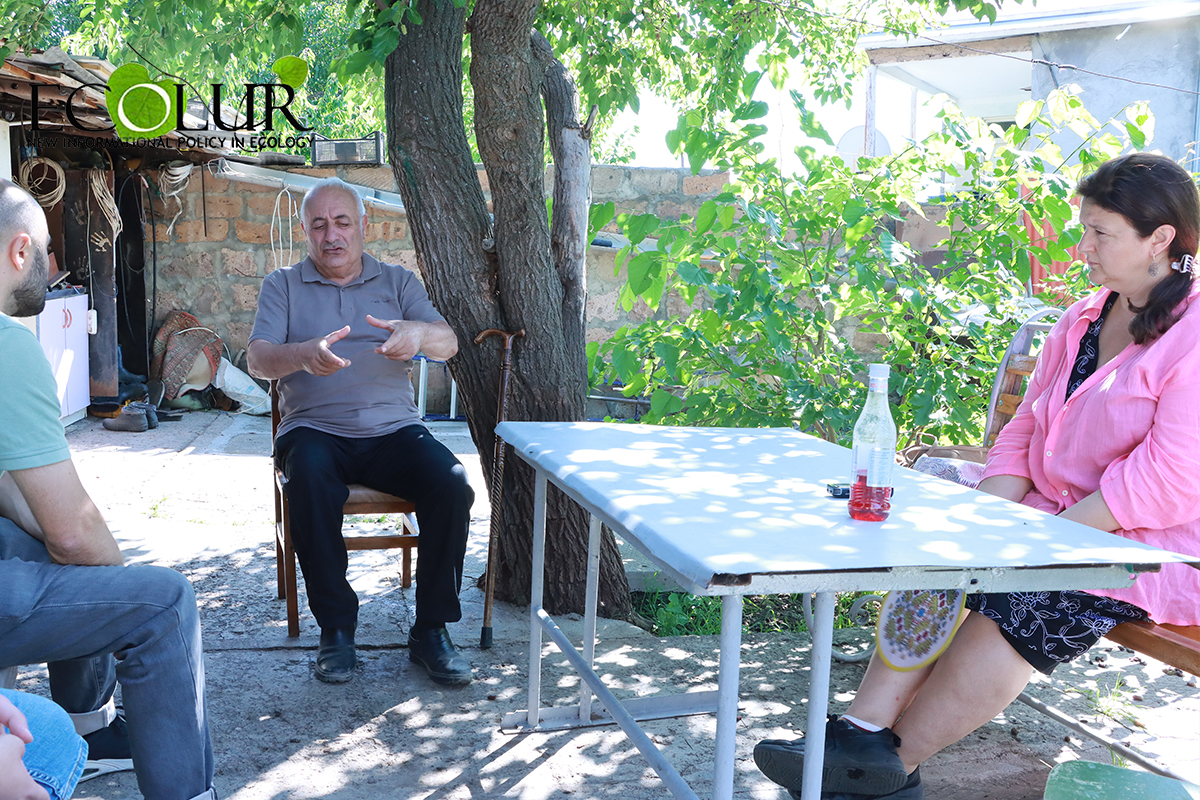
Gndevaz settlement
Mihrdat Nersisyan, a Gndevaz resident who has opposed the Amulsar project for years, says that preparatory work for the mine has intensified considerably over the past year. According to him, roads, a platform and a reservoir have been constructed, while rock removal activities are being carried out in the mine area.
“There is disappointment among people because the state authorities are doing nothing. What we need is for all the risks to be discussed with us. The Arpa River is just a few hundred metres from their platform, and an entire region depends on this water. This is a major threat. There are other risks as well - dust and the use of cyanide. Around 1,000 tonnes of sodium cyanide are expected to be brought here and stored. We see major risks,” the Gndevaz resident noted, adding that opinions within the community are divided. Some residents expect the mine to create jobs, while others are concerned about the environmental consequences.
“I personally think this is a major disaster, and I expect support from international organisations and ministries so that our struggle can become stronger. We are still demanding a new EIA today. Let them prove that it is safe, but we know that this is impossible to prove,” Nersisyan noted.
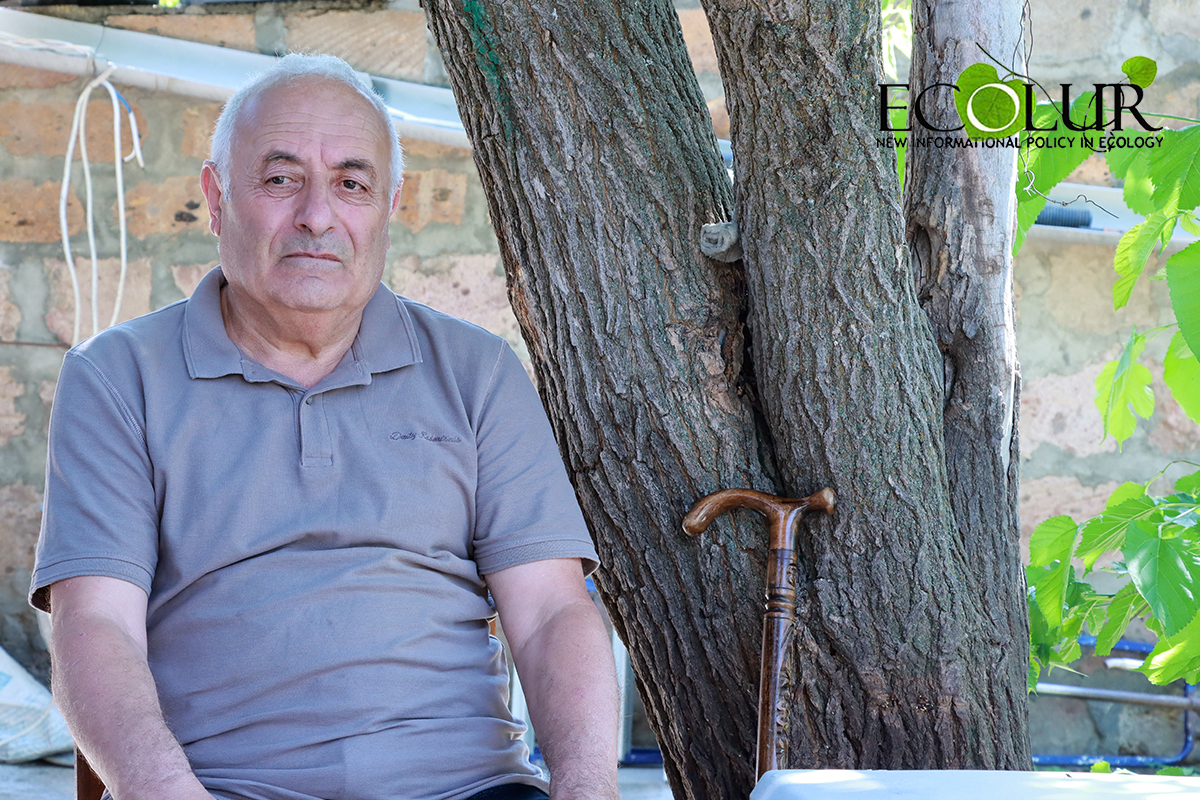
Mihrdat Nersisyan
Other residents note that people in the village have traditionally been engaged in agriculture, but consider the future of agriculture uncertain under conditions of mining operations. According to them, the mine may create jobs temporarily, but once mining operations end, the community will face the challenge of finding new sources of income.
Residents say that those who are in the most vulnerable position are people who have neither sold land for the mining project nor obtained employment. They are concerned about environmental pollution and note that, under such conditions, it is difficult to envision the continued development of agriculture.
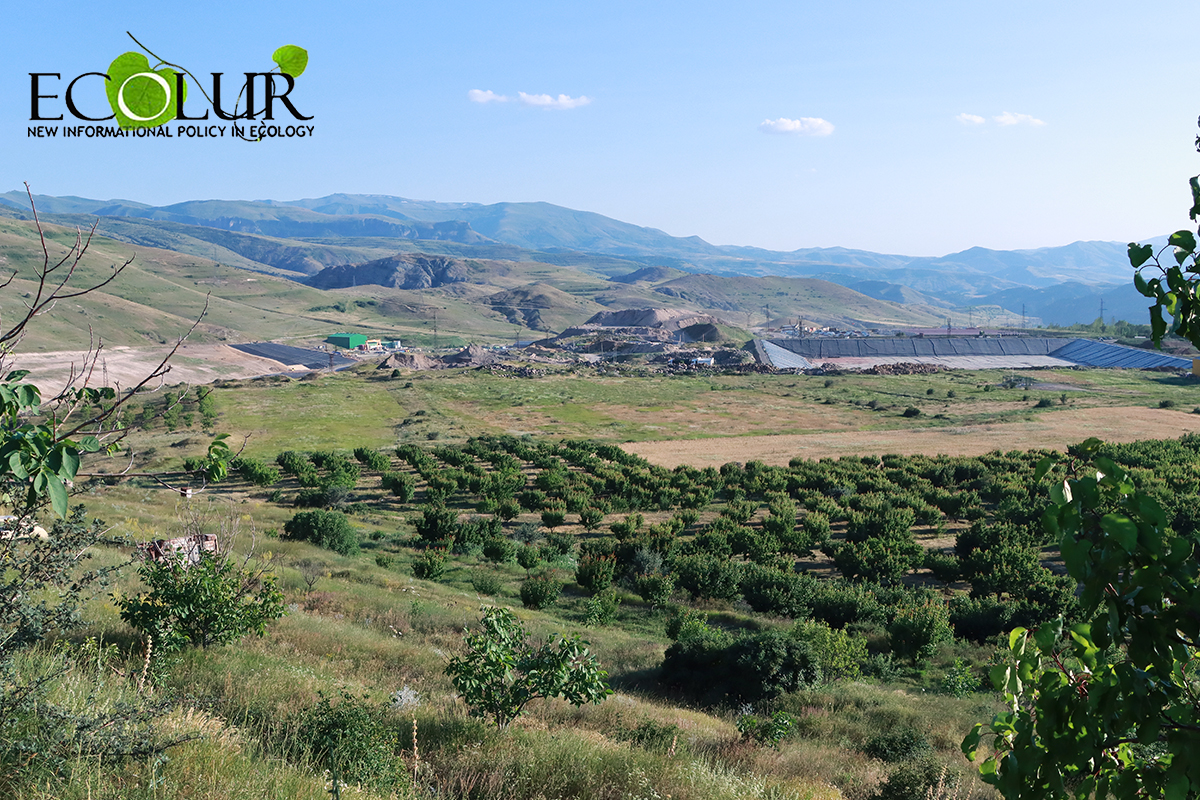
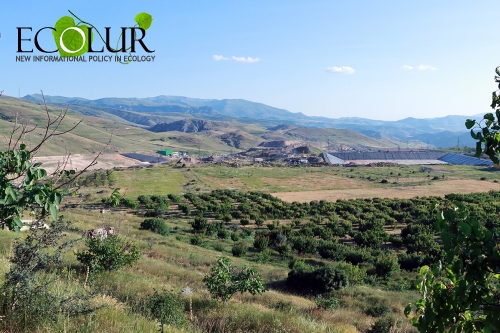
The Amulsar Project Area and Orchards
There are also concerns about the future of Jermuk as a tourism and spa destination. According to residents, the tourism sector that has developed in the region could be adversely affected by the environmental risks associated with mining operations.
According to Bacheva-McGrath, the documents assessing the environmental and social impacts of the Amulsar project are already several years old, making their review all the more important.
“It is impossible to properly discuss these issues without reviewing the EIA. And we know that problems will emerge sooner or later. There will be issues related to workforce reductions, because it is well known that the construction phase generally requires more labour than the operational phase.
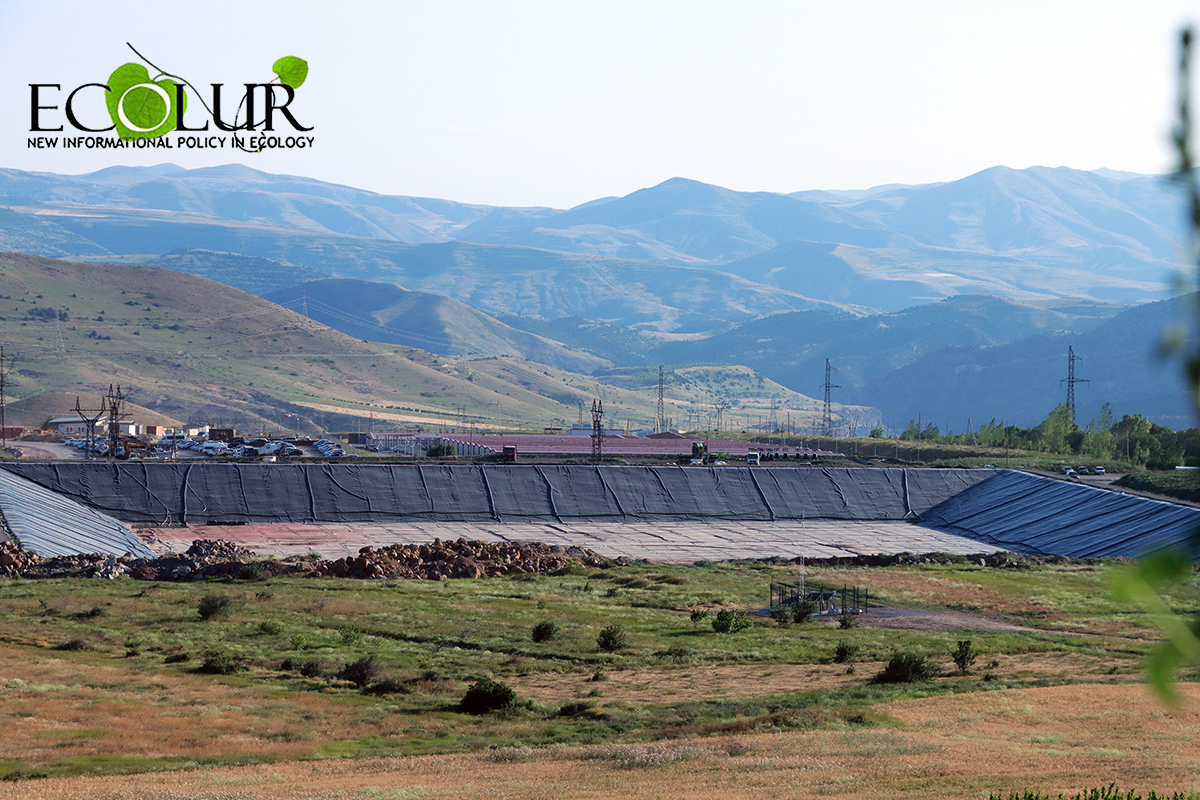
The Amulsar Project Area
“There is also an issue related to waste-rock storage areas and the acid drainage resulting from them. This was one of the issues identified in the report by the international organisation ELARD, which conducted an assessment of the Amulsar project. However, there has been no update on this issue as to whether additional measures are planned to manage this problem,” Bacheva-McGrath said.
In her assessment, it is also necessary to properly respond to the recommendations of the Secretariat of the Bern Convention, continue public consultations, and ensure a comprehensive process for managing environmental impacts.
September 18, 2026 at 19:20