
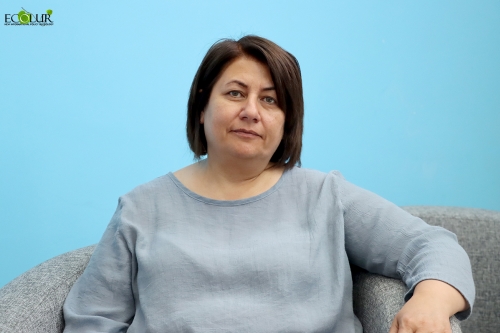
Ahead of the 17th meeting of the Conference of the Parties to the UN Convention on Biological Diversity (COP17), to be held in Yerevan in October 2026, EcoLur Informational NGO held an awareness-raising meeting on July 29 in Sevan Community, Gegharkunik Region.
The participants in the awareness-raising meeting in Sevan discussed biodiversity conservation challenges, opportunities for communities to participate in COP17, and ways to present their initiatives at the conference.
In this publication, we present initiatives of the Center for Territorial Development and Research NGO that could be showcased at COP17.
According to Satik Badeyan, President of Center for Territorial Development and Research NGO, COP17 could provide communities with an opportunity to present their experience, initiatives, and pilot projects on an international platform. She emphasized the importance of EcoLur Informational NGO’s awareness-raising meetings in communities and of community participation in the conference. According to her, many local NGOs and community-based initiatives may already have ideas and projects but do not yet know how they can present them within the framework of COP17.
For Sevan, Badeyan believes that COP17 represents a particularly important opportunity to present the community’s vision developed through a participatory process. One of the key priorities of Sevan community’s cultural development strategy is its environmental component. Sevan aims to become a community that develops and promotes a culture of ecologically responsible living and environmentally sustainable economic activity.
“Especially because we are located on the shores of Lake Sevan, the community’s environmental awareness is very closely linked to the ecological condition of the lake. Therefore, our next step will be to make Lake Sevan a showcase lake on a global scale, and COP17 is a tremendous opportunity to talk about this, raise the issue, demonstrate it, and also attract resources so that we can turn these dreams into reality,” Badeyan noted.
According to her, the goal is not simply to raise environmental awareness. It is important to link environmentally responsible behavior with sustainable local economic development, so that people organize their everyday lives and livelihoods in ways that do not harm nature but instead contribute to its conservation.
The Center for Territorial Development and Research NGO was established back in 2002 with the aim of protecting Lake Sevan. Over time, however, the organization came to the conclusion that the conservation of the lake cannot be separated from the socio-economic well-being of people living in its surrounding communities.
“The Sevan ecosystem is not just the water basin. It also includes the people living around the lake, who have lived in close interaction with it for centuries. But when Sevan began to be perceived simply as a ‘resource,’ that relationship changed, and the overexploitation of resources led to serious environmental problems,” Badeyan noted.
In this context, she stressed that the solution is not to demand that people abandon particular ways of using natural resources, but rather to create alternative livelihood opportunities.
“If you tell someone, ‘Don’t catch fish,’ but fishing has been their main occupation and only source of income for centuries, what are they supposed to do? In other words, you need to offer an alternative if you want to protect nature,” she said.
It is with this approach that the organization began looking for existing but underutilized resources in lakeside communities that could become alternative sources of income for local residents.

One such initiative is Etiuni Museum-Guesthouse in Lchashen. It is based on the village’s exceptional cultural heritage. According to Badeyan, the Bronze Age necropolis uncovered as the water level of Lake Sevan fell yielded archaeologists an extraordinary body of material of global significance for studying the everyday life, customs, and rituals of people of that period.
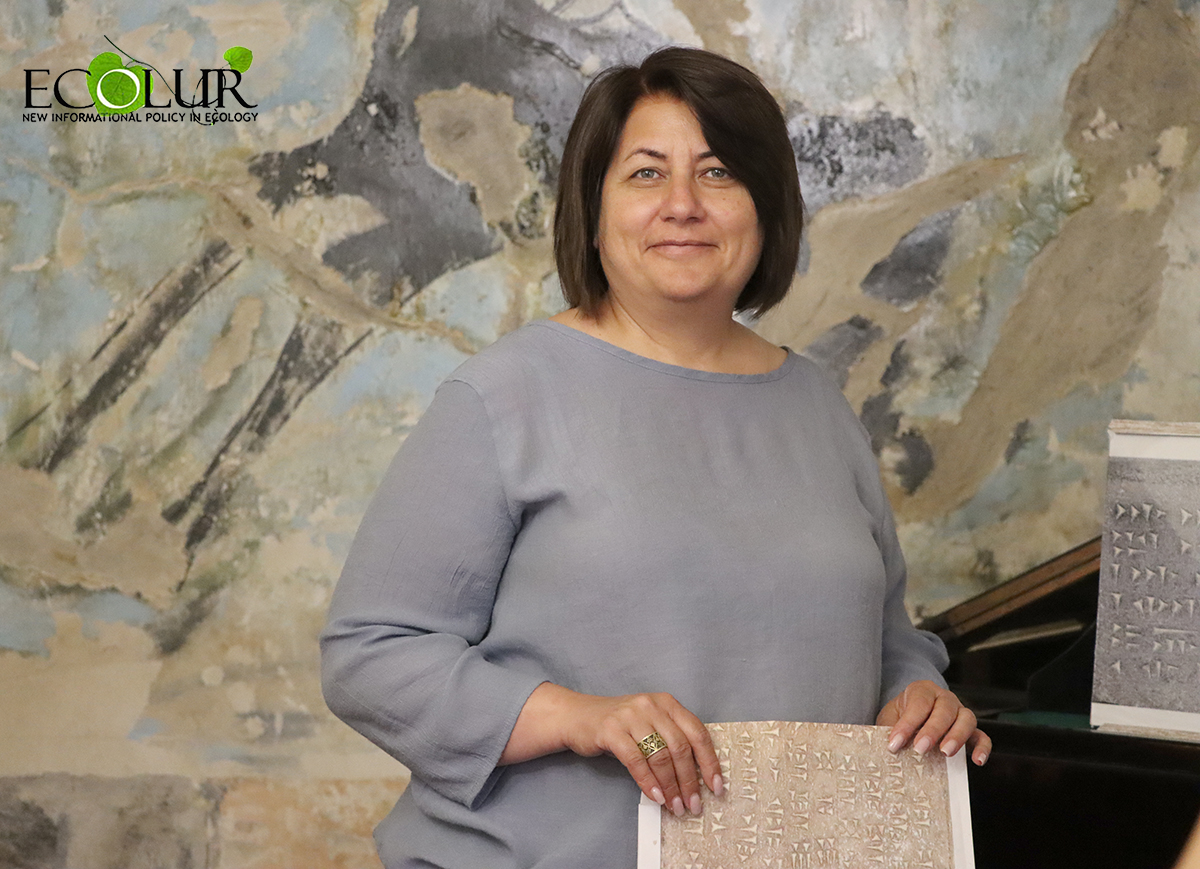
For a long time, however, this heritage contributed little to the socio-economic development of the community. As in other communities around Lake Sevan, fishing was one of the main occupations in Lchashen.
“We decided to change people’s livelihoods,” Badeyan said.

Etiuni Museum-Guesthouse presents Lchashen’s historical and cultural heritage while also making use of modern technologies. The organization transfers genuine archaeological finds to the museum, while the objects displayed for visitors are replicas. According to Badeyan, this approach also serves as a means of combating looting and illicit trafficking of cultural heritage.
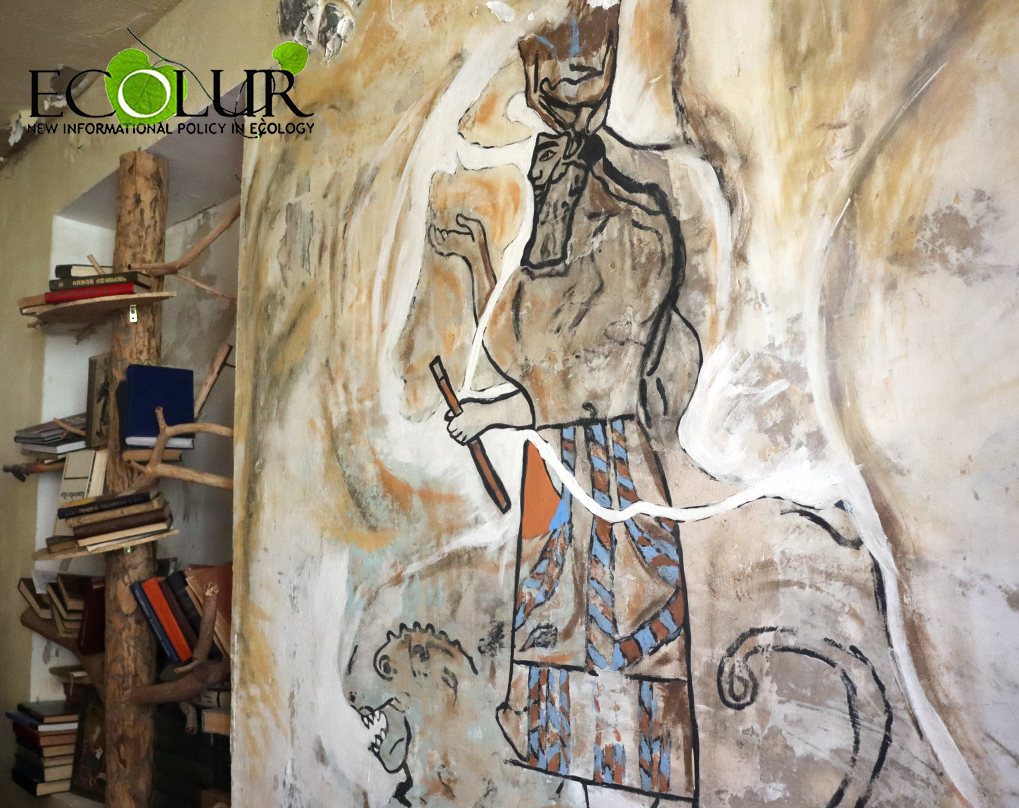
If locals see that preserving and showcasing cultural heritage and developing tourism services around it can generate income, this may prove more beneficial than selling archaeological finds. “We wanted to demonstrate through our own example that even if you keep these things with you, in your home, and display them, you can earn much more from them than if you take them and sell them for pennies,” she said.
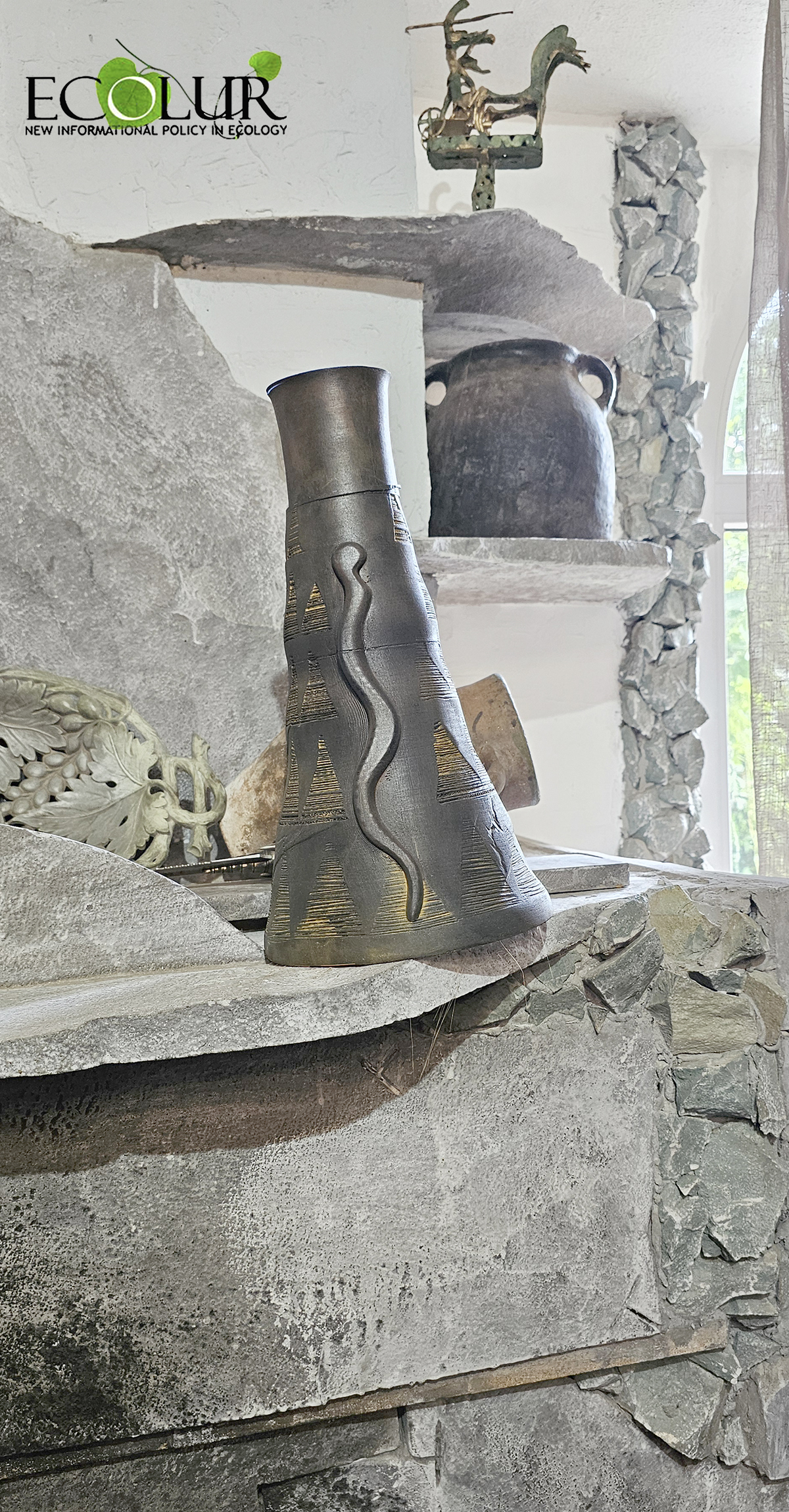
The Etiuni Museum-Guesthouse is also an example of applying circular economy principles. Solar energy is used on the premises. Instead of purchasing new furniture, old furniture was restored and given a new lease of life.
Modern technologies are also used to present the history of Lchashen. A holographic pyramid has been installed in the museum, displaying images of archaeological finds from Lchashen.
The organization has also involved young people in 3D modeling and 3D printing. Based on photographs of genuine archaeological finds, 3D models are created, printed, and presented as replicas. Plastic waste is used as a source material for producing the filament required for 3D printing.
The museum-guesthouse also features replicas of royal thrones made from old doors, while tables and chairs have been produced using upcycled furniture.
Circular economy principles are also being promoted among community residents. According to Badeyan, the organization’s staff, women, and young people from the village have participated in various training courses. As a result, some participants have started producing different items from waste paper, including lamps, and have built their own businesses around these products.
The organization also plans to develop food-waste composting. According to Badeyan, the initiative is intended to be implemented not only at the guesthouse but also at other food-service establishments in the community. They will be provided with composting containers and training on the proper management of food waste.
The guesthouse also collects used cooking oil and transfers it to a specialized organization. A grease trap has been installed in the kitchen to prevent oils from entering the sewer system. A septic system is also used, with bacteria applied as part of the wastewater treatment process.
Another initiative of the organization operates in Tsovagyugh, where a youth center has been established as a social enterprise. The center is developing ecotourism infrastructure, including a glamping facility, and organizes cycling and hiking tours and receives tourists. The profits generated by the center’s activities are reinvested in the operation of the youth center.
This material was prepared “Support to Armenia’s Presidency of CBD COP and Its Domestic Implementation” project implemented by EcoLur Informational NGO in cooperation with the Fridtjof Nansen Institute, with the support of the Norwegian Agency for Development Cooperation (Norad).
The views expressed within the framework of the project do not necessarily reflect the views of the Fridtjof Nansen Institute.
August 24, 2026 at 12:13