
EcoLur
The hunt for the animals registered in the Red Book in Armenia is not just a pastime, but serious business. Armenian Mouflon Sheep and Bezoar Ibexes are particularly famous. Potential hunters are willing to pay from 5 to 7 thousand Euros for each killed animal.
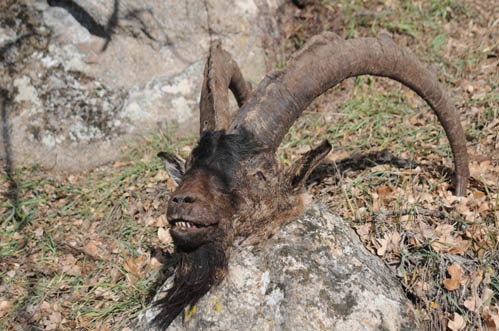
If to take into consideration other expenses these hunters run up for their accommodation in Armenia, one may say that poaching is a new type of tourism flourishing in Armenia. More new international websites substantiate this fact by inviting to hunt in Armenia for the animals registered in the Red Book. The websites display photos of successful hunters with their trophies. The reality is much more scaring: these are dismembered animal carcasses which are shred; horns cut off to decorate their lodgings (see photo report). These photos will hardly be displayed in the advertisements of Safari International, Ararat Safari, Ibex Hunt Club, Hunt in Europe and other still unknown hunting organizations.
Parallel to advertisements the Ministry of Nature Protection receives applications on arranging households dealing with the support of these animals, for example, additional nutrition. You have got the impression the issue of Bezoar goats and Mouflon sheep conservation is not poaching, but the lack of grass in the alpine meadows.
EcoLur applied for comments to the specialists of World Wildlife Fund Armenia. According to the observations made by Alexander Malkhasyan, the Expert of WWF Armenia, who carried out an investigation in Syunik, he on his own registered more than 40 cases of illegal hunting prevalently in the border territories of the Meghri and Zangezour Mountain Ranges only during the last year and a half. In all the cases an alarm was given. “Poachers are very difficult to stop. They have their own people everywhere, even in those bodies designed for fight against poaching. We can only guess who exactly warn the poacher about the roundup and the measures to be taken are kept secret. Only then we are able to do anything, for example, this year we managed to stop 4 poachers,” Malkhasyan said.
Head of WWF Armenia Karen Manvelyan thinks that poaching is the most important scourge in the conservation of red-booked animals. The population of Armenian Mouflon sheep, only 250 head, is under the danger of complete extinction. “This number is already not sufficient for the normal recruitment of the population, not to speak about its development,” Manvelyan thinks. When Head of WWF Armenia Karen Manvelyan was asked what to do, he replied, “There is a solution. First of all, we need to develop the chain of protected areas where special projects can be implemented. An example of this is the government decision on founding “Zangezour” and “Arevik” Wildlife Preserves in Syunik which is the most perspective region for the conservation of red-booked animals. Our experience also allowed us to work out certain mechanisms for the fight against poachers. We won’t reveal these mechanisms, but I think that the outcomes will be appreciable in several months.”
October 23, 2009