
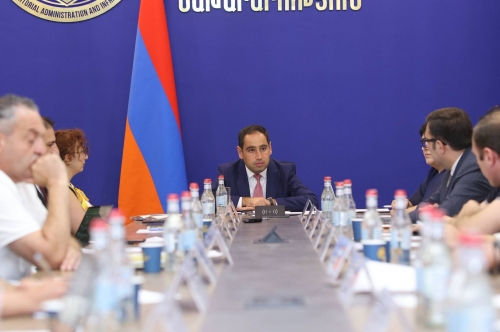
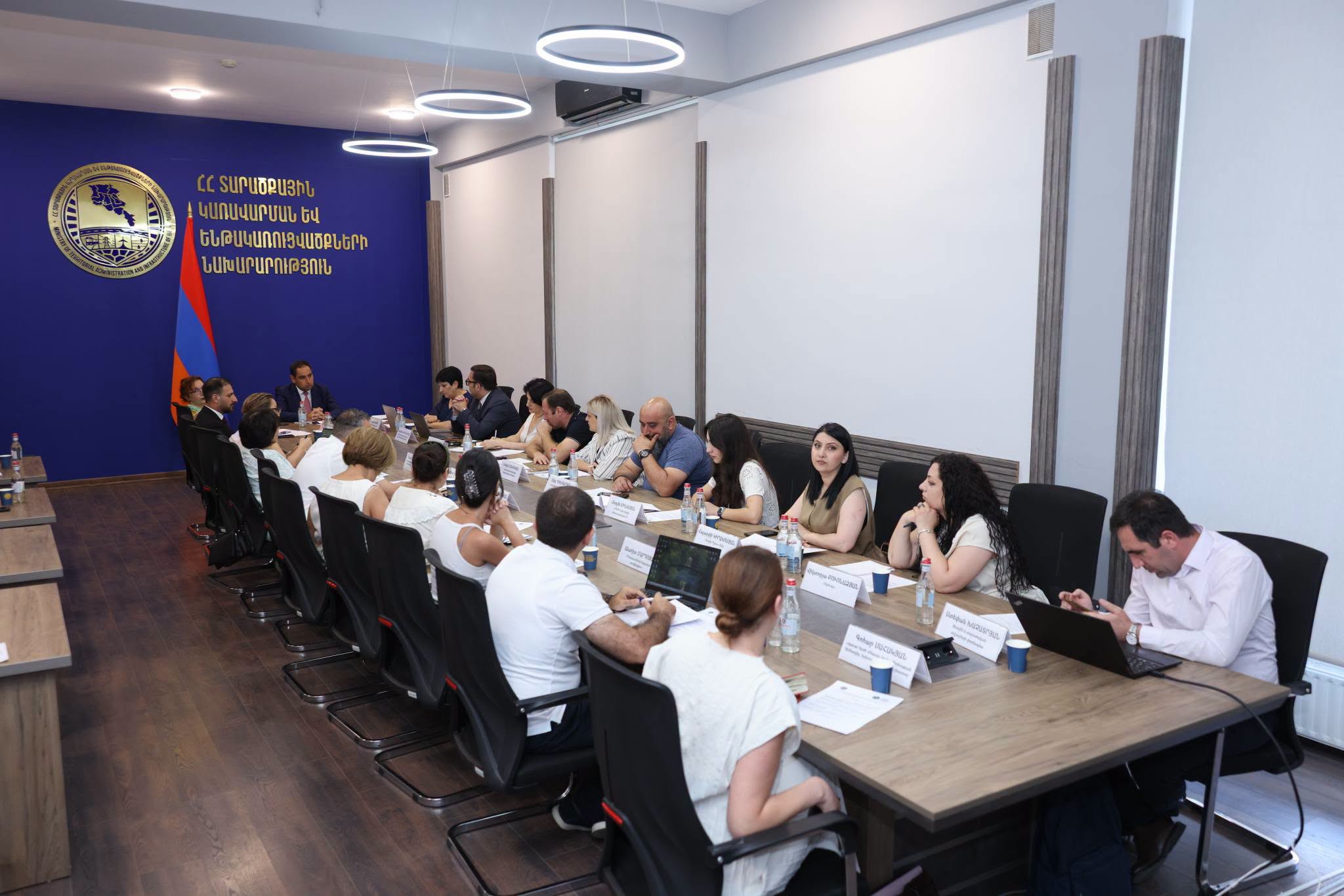
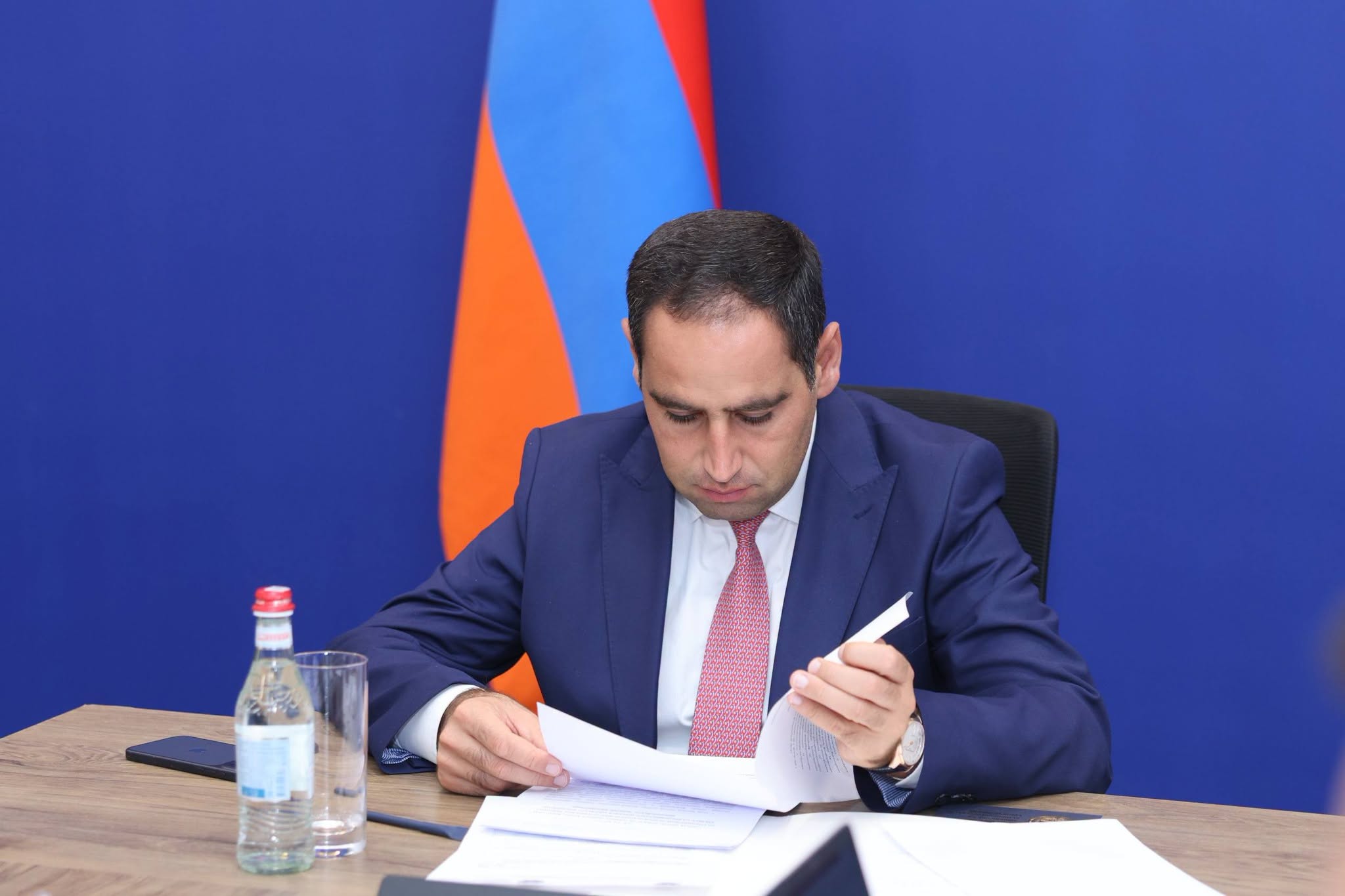
On July 30, 2026, the regular meeting of the Public Council under the Minister of Territorial Administration and Infrastructure of the Republic of Armenia discussed the draft entitled “Healthy Roof” Program, ongoing work in the areas of renewable energy and energy efficiency, and progress in introducing an integrated waste management system.
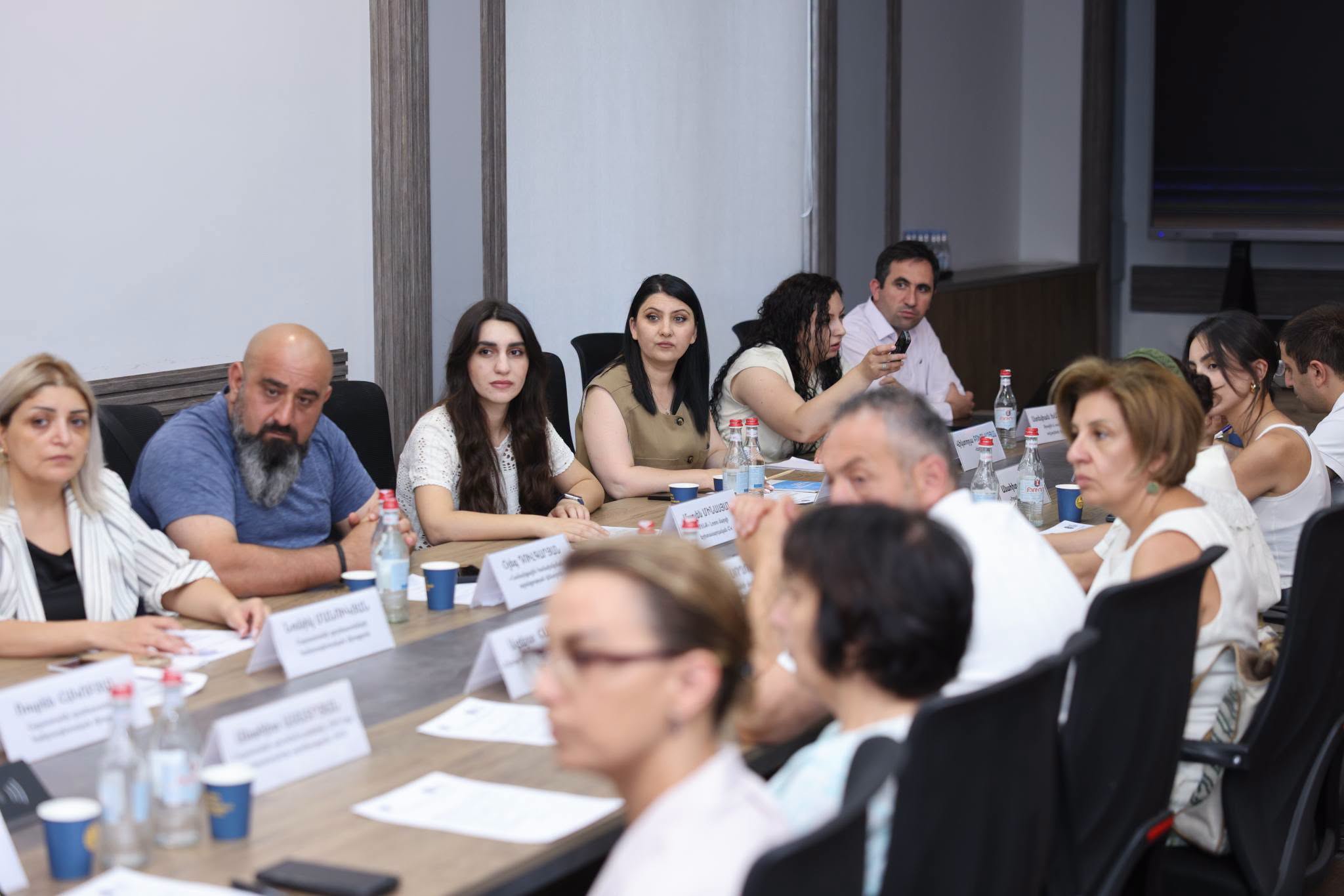
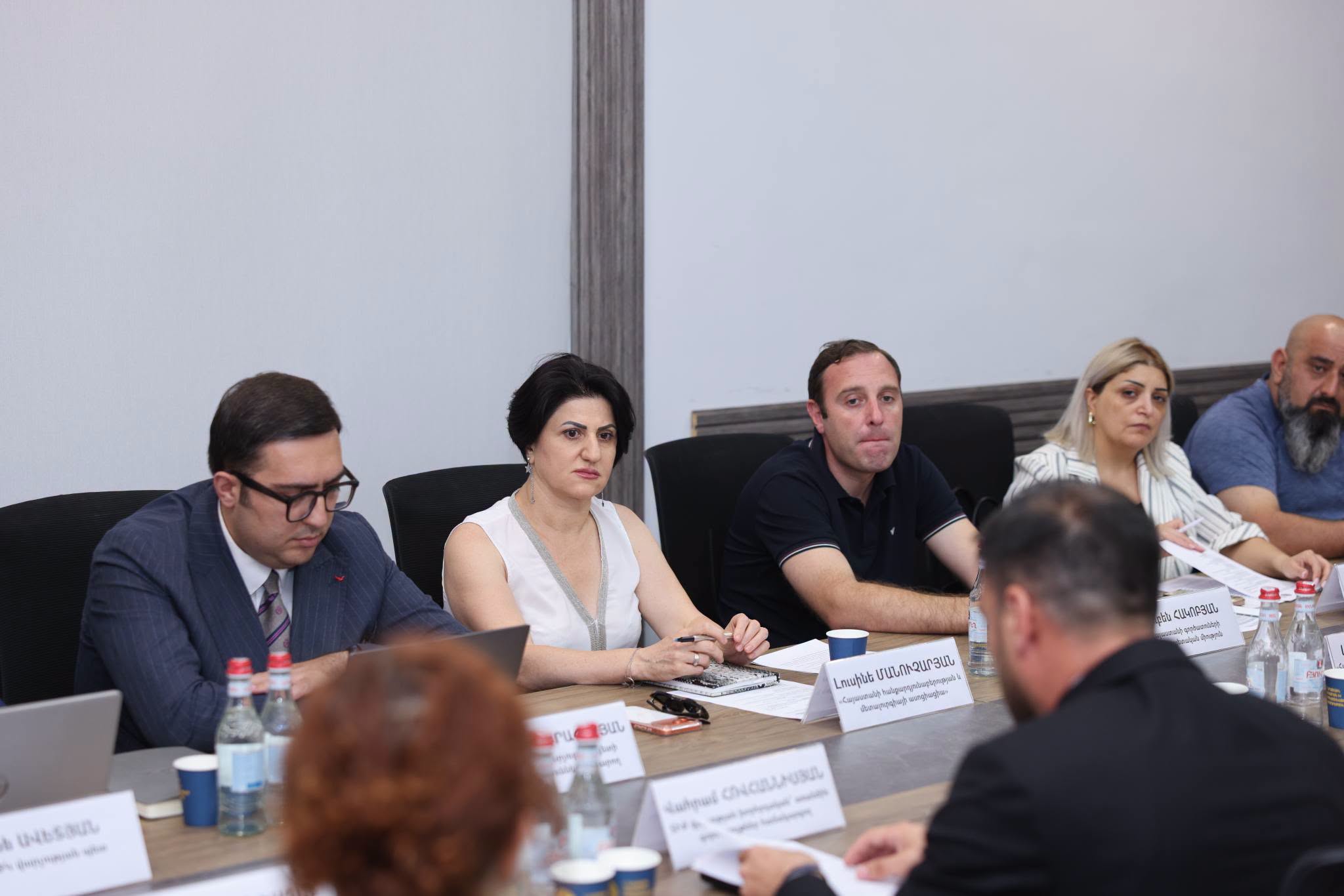
Representatives of organizations and experts involved in the Public Council participated in the meeting. Victoria Burnazyan, Deputy President of EcoLur Informational NGO, also attended the meeting.
Opening the meeting, Minister of Territorial Administration and Infrastructure Davit Khudatyan noted that a number of issues on the agenda had been included based on proposals from Public Council members. According to him, the Ministry’s objective is to establish practical cooperation with the Council so that discussions contribute to improving the programs under development.
The draft “Healthy Roof” Program was presented by Vahram Hovhannisyan, Advisor to the Territorial Infrastructure Department of the Ministry of Territorial Administration and Infrastructure and Coordinator of Specific Functions.
He noted that the program is planned to be implemented in several areas. The first component is the provision of state support for replacing asbestos roofs of individual residential houses. The second direction concerns support for replacing roofs of buildings and structures owned by individuals and legal entities, other than individual residential houses. The third component is the replacement of asbestos roofs of apartment buildings and buildings and structures owned by communities. It is planned that these works will be carried out within the framework of subvention programs or environmental programs.
The fourth direction concerns measures to replace roofs of buildings and structures owned by the state. According to him, in the case of replacing asbestos roofs of individual residential houses, support will be provided through a lending mechanism. Under the proposed option, support of up to AMD 10 million is envisaged, with a repayment period of 84 months.
Hovhannes Abrahamyan, Acting Head of the Energy Department of the Ministry of Territorial Administration and Infrastructure, delivered a report on ongoing work and development prospects in the energy sector, particularly in renewable energy and energy efficiency.
He noted that the Ministry is actively working on legislation in the energy sector. “As regards strategic documents, six major strategies are currently being developed by the Government of the Republic of Armenia,” Hovhannes Abrahamyan noted.
According to him, the strategic program for the energy sector through 2040 will also be revised following the adoption of the new strategies.
The current status of the introduction of an integrated waste management system throughout the Republic was presented by Narine Avetian, Head of the Territorial Development and Solid Waste Management Department of the Ministry of Territorial Administration and Infrastructure. She noted that waste management and solid waste management remain among the areas requiring urgent solutions.
“Over the years, efforts have been made to improve the institutional and legislative framework, and it has now been improved. Clear actions now need to be implemented,” Narine Avetian said.
According to her, waste collection services are still not provided in all settlements. This is due to a number of factors, including the terrain of settlements, sparsely populated areas, as well as the involvement of non-specialized organizations.
Narine Avetian noted that there are approximately 100–110 dumpsites in the country that do not comply with environmental, urban planning, and sanitary standards. There are no weighing systems at the dumpsites, and the quantities of waste deposited are calculated based on established norms. “Based on these norms, approximately 2,100 tons of waste are generated daily in the country, and about 770,000 tons annually,” she said.
According to her, recycling processes are not systematic, and there are currently small-scale, separate recycling companies, mainly engaged in recycling plastic, paper, and glass.
The country’s first sanitary landfill was opened in Hrazdan community and has been operational since July 2025. It is intended to serve all settlements in Kotayk and Gegharkunik Regions. At present, approximately 200 tons of waste are disposed of there daily. “This is the first program for introducing waste management in accordance with European standards,” Narine Avetian said.
According to her, given the urgency of the issue, measures have been initiated to introduce an integrated system throughout the country.
In 2023–2024, a preliminary study on introducing an integrated waste management system was carried out with the support of the European Bank for Reconstruction and Development (EBRD). Based on the study, it was decided to divide the territory of the Republic into zones, taking geographical characteristics into account.
According to Narine Avetian, the Waste Management Strategic Program was adopted in 2021 and was primarily aimed at applying the principles of a circular economy and efficient resource use. These approaches were subsequently enshrined in amendments to the Law on Waste Management and Sanitary Cleaning adopted by the National Assembly of the Republic of Armenia in 2023.
According to her presentation, the program envisages the construction of at least three sanitary landfills in the Republic, according to the designated zones, as well as transfer stations. These will make it possible to organize waste transportation more efficiently and reduce financial costs.
The EBRD, Asian Development Bank (ADB), World Bank, and French Development Agency have expressed their willingness to support the program. The EBRD will carry out the feasibility study, while implementation of the investment programs is planned with the support of donor organizations.
During the meeting, Liana Hovhannisyan, Assistant to the Minister and Council Coordinator, proposed establishing temporary working groups in order to develop expert opinions.
She proposed establishing three main working groups:
- energy and natural resources,
- transport and road infrastructure,
- territorial administration and local self-government.
During the meeting, Council members and experts presented a number of proposals and observations concerning the programs under discussion.
Water and spatial data expert Stepan Khachatryan presented the results of science-based modeling carried out for waste management in Stepanavan community, including Gyulagarak and Lori Berd communities, based on urban planning standards.
He noted that efforts had been made to identify the most suitable site for a landfill in the community, taking into account urban planning standards, environmental safety, and legislative restrictions.
A total area of 580 sq. km was studied. The study examined settlements located at elevations of 1,250–1,650 meters, as well as the Bazum and Virahayots mountain ranges, which include the gorges of the Dzoraget and Gargar rivers.
Stepan Khachatryan noted that a multi-criteria analysis had been conducted, resulting in the selection of the most suitable location.
Astghine Pasoyan, a representative of the Energy Efficiency Support Fund organization, noted that the draft Law on Renewable Energy and Energy Efficiency should have been posted on the e-draft platform, but due to a technical problem, it is unavailable and cannot be found.
She also proposed organizing a thematic discussion with representatives of the Transparent Energy Coalition, during which the draft law could be presented to the other Council members and subjected to public review.
In response to the proposal, Hovhannes Abrahamyan noted that similar proposals had also been received from other organizations. “We will consider it in the format of public hearings and implement it with the relevant authorities,” he said.
Albert Haroyan, a representative of “Ecopolis Environmental Center” NGO for Community Development and Security, drew attention to the fact that asbestos pipes, in addition to asbestos roofs, are also widespread in Armenia.
He proposed developing an asbestos waste management and support program that would examine subsequent steps in detail. He also stressed the importance of complying with technical requirements when removing asbestos coverings from buildings, avoiding breaking and crushing the material.
Responding to the issues raised, Vahram Hovhannisyan noted that there are different types of asbestos with varying degrees of hazard. “There is currently not enough scientific capacity to inventory them according to their level of hazard from a scientific perspective,” he said.
According to him, as noted at the beginning of the meeting, the program will involve various government agencies and the scientific community in order to build the necessary capacities.
During the meeting, Victoria Burnazyan, Deputy President of EcoLur Informational NGO, addressed the National Climate Change Adaptation Program.
She noted that the National Climate Change Adaptation Program had been adopted several years ago and envisaged the adoption of a climate change adaptation program for the energy sector as well.
“The draft was developed but was not adopted. The question arises as to whether adaptation will be incorporated into the new documents currently being developed,” Victoria Burnazyan said.
She also expressed concern about the operational lifespan of the Hrazdan sanitary landfill. According to Victoria Burnazyan, its planned eight-year operational period could be shortened if waste sorting is not properly organized.
“It could fill up much sooner, for example, within five years, and the problem largely stems from improper waste sorting,” she said.
She asked whether there is a policy to develop a culture of waste sorting in communities and whether it would be possible to introduce a waste sorting system more rapidly.
Responding to the question, Narine Avetyan noted that waste sorting at source is one of the priorities of the policy. “First and foremost, civil society support is needed here, because this cannot be done alone,” she said.
According to her, a program proposal has been developed and submitted to the Office of the Deputy Prime Minister of the Republic of Armenia and is expected to be discussed in the near future.
The program includes secondary sorting, separation of biodegradable and construction waste, as well as possibilities for their subsequent recycling and use.
Narine Avetyan noted that Swedish organizations are involved in the program, while its implementation is planned with the support of the EBRD.
She emphasized that, in the case of the Hrazdan sanitary landfill, taking into account the planned sorting programs, it is estimated that the landfill will operate for 25 years or more.
In response to the question concerning climate change adaptation, Hovhannes Abrahamyan noted that the program and related processes are primarily under the purview of the Ministry of Environment of the Republic of Armenia. “Nevertheless, energy has its own distinct role, and we are closely cooperating with the Ministry of Environment on this issue,” he said.
Oleg Dulgaryan, a representative of the “Community Mobilization and Support Center” community-based NGO, drew the Ministry’s attention to local democracy and decision-making processes.
He noted the importance of ensuring the decentralized operation of local self-government bodies and an objective approach by the Ministry.
Oleg Dulgaryan expressed concern about the mechanisms for organizing public hearings, citing as an example a public hearing held in Stepanavan community in January.
According to him, the general public did not participate in that hearing, with mainly representatives of the municipality and project proponents in attendance. “After that, there was a Council of Elders meeting, and consent was given during the meeting. The legitimacy of the decision adopted raises questions,” he said.
Davit Khudatyan responded that he agreed with the issue raised. “We need to understand whether the requirements of the law were complied with, because in many cases the requirements are formally met, but they do not generate interest and citizen participation is not ensured,” the Minister said.
According to him, there are cases when public hearings take place without informing citizens, resulting in participation only by people who were previously informed or already held a particular position.
Davit Khudatyan proposed that relevant information be provided so that the issue could be examined and possible solutions identified.
At the end of the meeting, it was decided to increase the number of expert working groups and establish them in the following areas:
- energy,
- water sector and subsoil management,
- transport and road infrastructure,
- territorial administration and local self-government, including solid waste management.
The groups will be established according to these areas, allowing Council members to participate in no more than two working groups.
It was also decided during the meeting to include the issue of vehicle technical inspection stations on the agenda of the next discussion.
It was further decided that the agendas of subsequent meetings would include no more than two issues, allowing them to be discussed in greater depth and detail.
.jpeg)
.jpeg)
August 06, 2026 at 13:59