
EcoLur
The UN Climate Change Conference opened on 1 December in Lima, Peru will seek to find an answer to the question whether the world will be able to proceed to low-carbon development and to refuse from overconsuming economy. The conference will be held from 1 December to 12 December. If the governments are not able to reach an agreement this time, we will face a disaster. Already now the world annually emits around 50 billion tons of СО2 and other greenhouse gases. At least 40 billion are “extra”, which case global warming. The consequences are evident know, especially in the countries located on the coasts of the ocean: typhoons, floods and thousands of tolls and millions of people left without any shelter.
So far the world society didn’t manage to form a single attitude towards combating global climate changes. Depending on the arrangements in Lima, the text of a new protocol will be formed, which shall be adopted in Paris late in 2015.
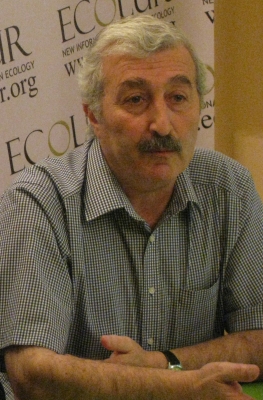
EcoLur had an interview with Aram Gabrielyan, the National Focal point of the UN Convention on Climate Change, about the Armenian attitude before the conference in Lima.
A.G.: Nobody wants to allow temperature increase by 2 degrees. If it happens the temperature in Armenia will increase by 3 degrees, as we are ahead of the rates of global warming.
EcoLur: What are the consequences?
A.G.: Disastrous consequences. For example, we will lose almost 30% of the water resource, and we shall be prepared to it now and to take measures on adaptation and mitigation (alleviation) of these consequences.
Our approach is as follows: to set a norm of emissions per capita in the world and to make fees in line with the norm. If the country exceeds the norm, it must compensate and pay for exceeding. This mechanism is constructed on the principle of justice prescribed in Article 3 of the Climate Change Convention. We formed a group of countries, which don’t have any access to the sea. Besides Armenia, the group includes Kyrgyzstan, Tajikistan and probably Afghanistan and Mongolia. These countries are extremely vulnerable to climate changes and we protect our common interests.
December 11, 2014 at 15:20