
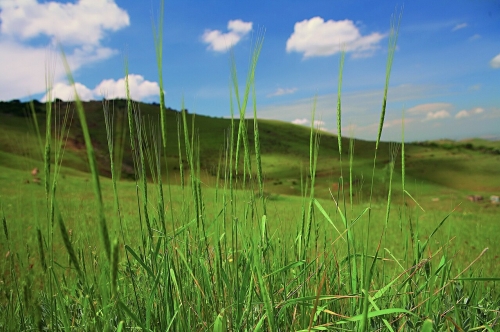
One of Armenia’s most exceptional biodiversity treasures-the wild wheat reserve-is located within the territory of the Erebuni State Reserve. The reserve preserves unique species considered the ancestors of cultivated wheat, including Urartian Wild Wheat, Wild Einkorn Wheat, and Araratian (or Khaldian) Wheat.
The Erebuni State Reserve plays an important role in conserving plant genetic diversity, studying the origin and evolution of agricultural crops, and conducting scientific research. The reserve protects xerophytic and rare plant species characteristic of the Ararat Plain, carries out continuous monitoring of the growth and development of wild wheat species, and conducts conservation studies of species listed in the Red Book of Armenia.
The reserve’s rich biological diversity and the importance of its conservation were presented by Hayarpi Grigoryan, an expert from the NGO Armenian Women for Health and Healthy Environment, during a working meeting held in Yerevan. The expert paid particular attention to one of the most serious environmental challenges facing the reserve-the Nubarashen pesticide burial site located nearby. Approximately 600 tonnes of obsolete pesticides were initially buried there. The amount of contaminated soil in the surrounding area is estimated at approximately 1,100 tonnes. The pesticide burial site may pose a threat to ecosystems and biodiversity.
“The Erebuni State Reserve is one of Armenia’s most important protected areas, preserving a globally significant gene pool of wild wheat species. Effective protection and continuous study of the reserve are crucial for biodiversity conservation, as well as for ensuring food and agricultural security,” noted Hayarpi Grigoryan.
According to experts, the genetic diversity of wild wheat species represents an important resource for the future of agriculture and is significant not only for Armenia but also for the conservation of global biodiversity.
June 12, 2026 at 16:20