
EcoLur
The European Bank for Reconstruction and Development, EBRD, intends to allot a loan of 45 million USD to DenoGoldMining owned by Canadian “DundeePreciousMetals” Company. The goal of the loan is to establish higher standards and practices on environment, social conditions, health and safety, as well as the transparency of the operation. The project mentioned countries of Deno Gold Mining operations, including Armenia: “The operations of Deno Gold in Armenia must be accepted and implemented according to the Social and Environmental Action Plan in order to bring Deno Gold in line with the requirements of EBRD,” the project says.
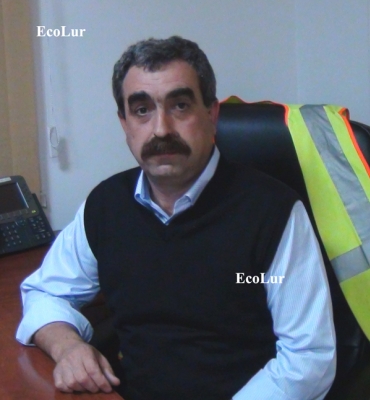
EcoLur has held a number of meetings in Kapan to find out to which extent Deno Gold Mining complies with the requirements of the EBRD. The first meeting was with Ilia Garkov, Director General of Deno Gold. Unfortunately, we can’t bring the full text of the interview, as I. Garkov didn’t permit to record the interview motivating this by not having warned the company in advance.
EcoLur: How do you assess the implementation of “Social and Environmental Assessment and Management System” standard?
I. Garkov:We have moved in the tax payers list from position 43 to position 9 within 3 years due to increasing the mining volume by 1,5 times and effectiveness of management system. We have carried out reconstruction, introduced new equipment and practices for performance improvement. We adhere to different standards, improve efficiency, pay all the insurance policies, pay salaries in proper manner, pay direct and indirect taxes. Increase in royalties also has certain impact.
Note by EcoLur: The volumes of mining industry in Syunik made up US $ 152 billion in price equivalent within recent 10 years. The main specific weight vests on Zangezour Copper and Molybdenum Combine, which mining makes up 12.8 million tons per year. ZCMC holds the second line in the list of tax payers from January to September 2012 by paying 14,797,753,800 AMD (US million). Deno Gold Company extracts 600,00 tons per year, in the same list the company holds the ninth position paying 4,172,727,000 AMD (US ,43).
EcoLur: What is implemented to ensure Standard 3 – “Environmental Pollution Prevention and Abatement”?
I. Garkov: We have introduced an environmental monitoring system in the area of Geghasush tailing dump and Shahumyan mine. Rehabilitation works are carried out in that part of Artsvanik tailing dump, which had been used by the company before constructing Geghanush tailing dump. The works are carried out in two stages. The tailing dump will be covered with layers of barren rocks, nearby drainage system will be laid for rains not wash away tails.
Note by EcoLur: Artsvanik tailing dump belongs to ZCMC. Deno Gold has been using a part of Artsvanik tailing dump up to2007. The tailing dump didn’t meet the safety requirements. In 2006 for dumping in Syunik settlement, Deno Gold Company paid a fine of 10 million AMD (over US ,000). In 2007 the company started using new Geghanush tailing dump. The system of tailing dump functioned without any breakdowns up to 2012. In 2012 three breakdowns occurred in the tailing pipe, while the amount of the fine for the breakdown occurred in November 2012 made up 2,880,000 AMD (US 00). The amount of the fine for the last breakdown is unknown yet.
EcoLur: And what about “Health and Safety of Population” standard?
I. Garkov: We are guided by Environmental Impact Assessment (IEA) approved by Nature Protection Ministry. We held public hearings prescribed by the law and want to comply with international standards. But the projects discussed at the public hearings didn’t have any direct impact on environment.
EcoLur: but the EIA of the company contains no chapter about the state of people’s health…
I. Garkov: We have just launched discussions about the internal standards with EBRD, and for now I can’t say anything about this.
Note by EcoLur: Armenia has RA Law “On Environmental Impact Expert Assessment” in force, which lays down provisions mandatory for implementation, particularly impact on health and welfare of people, environment of settlements, use of natural resources, monuments of history and culture. Nature Protection Ministry of Armenia provided the company the positive opinion of environmental expertise.
EcoLur: If you apply to EBRD for a loan, you must introduce standards.
I. Garkov: So far we haven’t applied for a loan for Armenia. At this moment we can finance our projects by ourselves.
EcoLur: How are you going to combine the project on Shahumyan mine opencast development with the standards concerning the health and environment? Whether the company focuses on this project?
I. Garkov: We started discussing the opencast development of the mine still in 2008. In 2012 the geological prospecting is in progress. The results will be in the 2nd and 3rd quarters in 2013. Only then it will be possible to understand which mode will be viable, opencast, closed or mixed type. Consultations and discussions will be held with the people and public. Each item will be discussed in details. The decision will be adopted depending on to what extent we will be capable of meeting these demands.
EcoLur: If the project of opencast development, the volume of wastes will be increased by many times. Geghanush tailing dump is not capable of containing all this. Where will be tails accumulated?
I. Garkov: Yes, Geghanush tailing dump is not capable of meeting this demand, it’s clear. But we haven’t considered this issue and will consider it when a certain decision is made.
Ecolur: The mine has interstices, which lead to gaps. These gps are already present in the territory of Shahumyan mine...
I. Garkov: Only one gap. The rumours about the other don’t comply with reality, this is just a landslip. There are technologies, which enable solving this problem. For example, to fill dead pits with barren rocks and to carry out a special reinforcement.
EcoLur: And what’s the percentage of gaps or dead pits filled with the barren rocks?
I. Garkov: I don’t know who determines this percentage. Gaps are filled as much as needed, i.e. selectively as needed. We fill in when there is such a need.
EcoLur: Standard 6 “Biodiversity Conservation and Sustainable Management of Living Natural Resources”
I. Garkov: We can recover damage in the project stages, for example, plant trees in other places.
Note by EcoLur. This standard causes doubts whether it’s suitable to apply in regard with soil management as depleted resource. Bringing dead pits, accumulated wastes, tailing dumps to the initial form is practically impossible.
Next we will present public opinion of Kapan Town about the compliance of Deno Gold operations with the standards of environmental and social responsibility.
December 03, 2012 at 11:44