

EcoLur
In the framework of the project entitled “Support to the Reforms of SHPPs through a Dialogue between the Public and The Ministry of Nature Protection of the RA for the Purpose of River Ecosystem Use” the expert group visited “Martziget 2” SHPP. “Martziget 2” SHPP is located in the administrative area of Martz community, Lori Region. The SHPP is constructed on the Martz River (length – 29 km). The SHPP is developed by “Argishti 1” LLC.
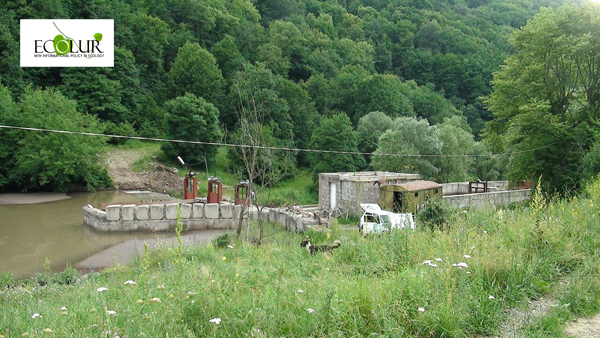
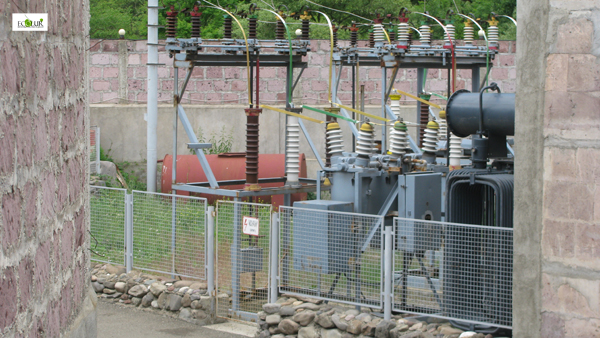
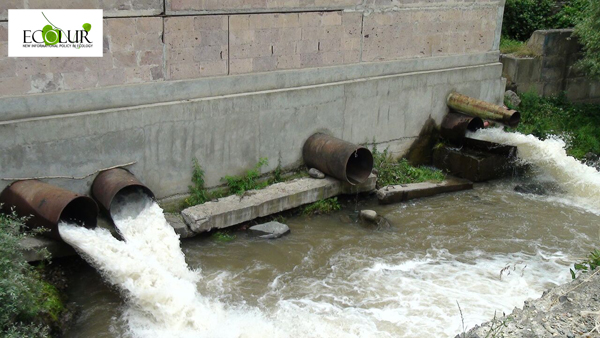
The SHPP administration didn’t want to cooperate with the expert group and didn’t allow the group to enter the area of “Martziget 2” SHPP. Therefore, we present limited data on the water intake section and station.
As a result of the monitoring, the expert group found out:
- The SHPP has been operated since 2011.
- There are certain incompliances between the real coordinates in water intake and discharge sections and the coordinates laid down in the water usage permit.
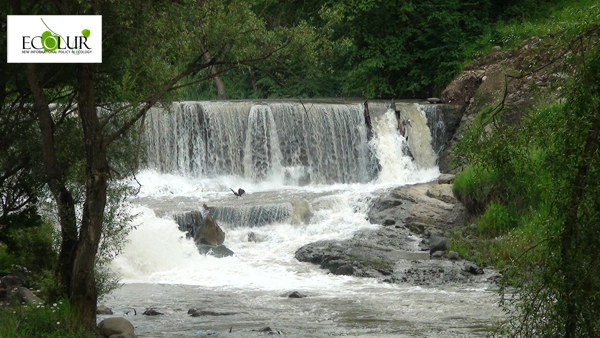
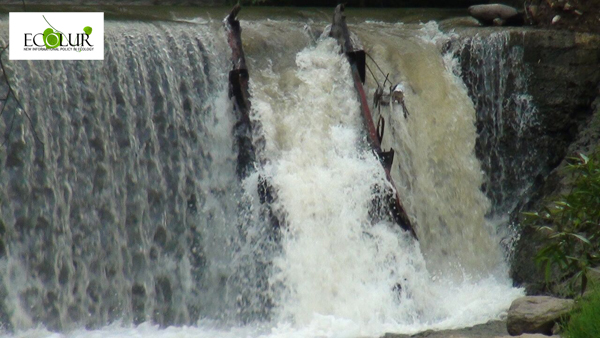
- The water intake section structures don’t comply with project solutions: under the project, the concrete stair-like fish passway should have been 1.2 meters wide and 1.5 meters long, but, as a matter of fact, an uncertain tin structure is installed as a fish passway. Such fish pathway can’t ensure the natural movement of the fish in the river.
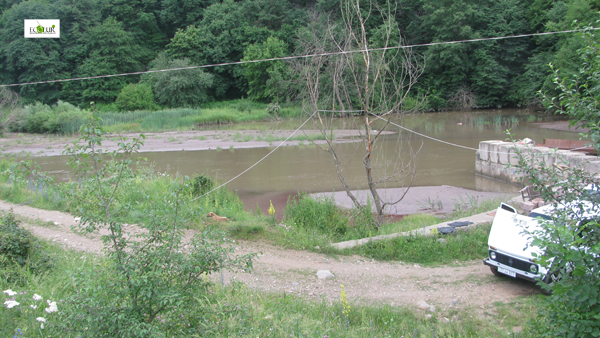
- The construction of the dam caused generating a big lake on the Martz River.
- The fish-protecting net is missing.
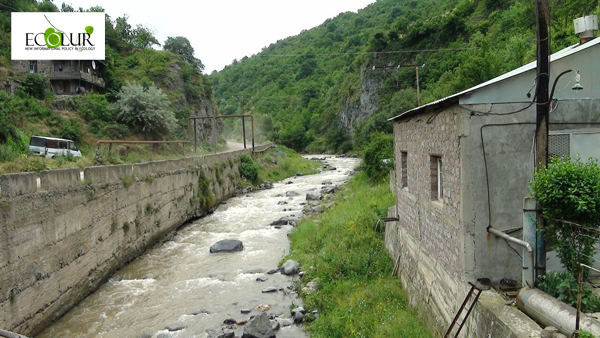
- The river banks are not reinforced, which can cause collapse in future.
- The environmental flow is laid down 0.07 m3/s in the water usage permit of “Martziget 2” and 0.09 m3/s SHPP construction permit.
- The Martz River used to be famous for large reserves of the brown trout, but currently the reserves of this fish species have reduced. More often you can see Kura barbell and the South Caspian sprilin. The head section of “Martziget 2” is a real obstacle for the fish species in the Debed River, which is located in a distance of about 4 km from the SHPP.
- The head section fish passway can’t promote the migration of the fish species flowing from the Debed River. As a result, the fish species flowing from the lower part of the river meet inevitable obstacles. If such a structure has operated for many years, it has significantly promoted the reduction of fish biodiversity in the river.
- There was not water-measuring device in the water intake section.
- Automatic management system of the water level in the water intake is missing.
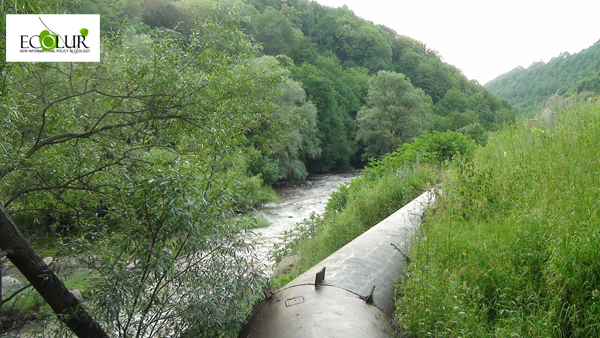
- The length of derivation pipeline is 4000 meters, which runs along the Martz River. Tree felling has been carried out for the construction of “Martziget -2” SHPP.
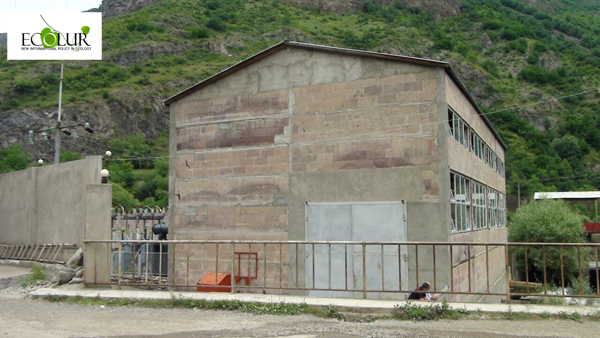
- SHPP station is located in the immediate proximity to the gas station, so urban development and safety standards are not complied to.
- The projected capacity of “Martziget 2” is 5134 kW, according to Public Services Regulatory Committee.
- The factual production of electricity is 9.592 million kWh.
- According to the data by “Computation Center” CJSC, in 2014 “Martziget 2” SHPP produced 7653646 kW electricity.
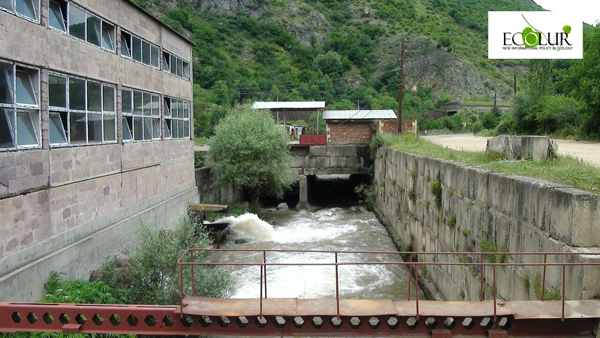
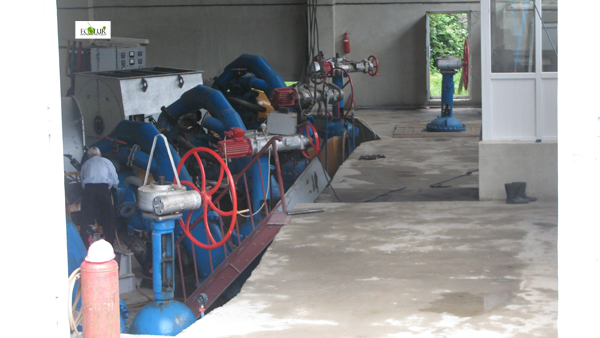
- Three turbines were operating on the day of the visit.
- The noise was loud and it disturbed Tumanyan community residents.
Proposals
1. To solve the problem with SHPP and gas station safety by ensuring the implementation of standards.
2. To construct a fish passway relevant to the requirements for living in the Martz River thus ensuring the environmental flow through the fish passway.
3. To install a fish-protecting net to exclude the passage of small fish into SHPP pipeline.
4. To review the limit of the environmental flow laid down in the water usage permit to ensure the environmental balance in the river.
5. To install a water-measuring device and automatic management system of the water level in the water intake section.
6. To install air conditioning system in the SHPP building and sound isolation system for the partial reduction of noise.
 |
 |
 |
 |
 |
 |
 |
 |
 |
 |
 |
 |
The material was developed in the frames of “Supporting reforms in the sector of small hydro power plants through enabling a dialogue between civil society and the Ministry of Nature Protection for sustainable use of river ecosystems” supported by UNDP/GEF Small Grants Programme".
September 01, 2015 at 14:24