

EcoLur
In the framework of the project entitled “Support to SHPP-relating Reforms Through the Dialogue of Public and RA Nature Protection Ministry for Sustainable Use of River Ecosystems” the expert group visited “Varantsov” SHPP. “Varantsov” SHPP is located in Vayots Dzor Region, in the administrative area of Martiros Community. The SHPP is constructed on the Martiros Tributary to the Zaritap River (length – 12 km). It’s operated by “Yerang” LLC. This SHPP has been constructed with the loaning funds provided by KfW Bank.
As a result of the monitoring, the expert group found out:
· The SHPP has been operating since 2015.
· According to the project, the static pressure of the SHPP is 431 m. According to the certificate issued by the Public Services Regulatory Committee on 1 January 2016, the estimated pressure of the SHPP is 377.05 m and according to the project the estimated pressure of the SHPP is 377 m. According to the project and PSRC certificate, the estimated yield used by the SHPP is 1.3 m3/s. According to the PSRC certificate and the project, the projected capacity is 3880 kW. According to the PSRC, as of 01.01.2016 the factual useful delivery of the electricity is 8.01 million kWh. The estimated production of the SHPP is 8.01 million kWh according to the project, duration of license - 26.08.2015- 26.08.2030, water usage permit - 20.06.2014 - 20.10.2014.
· The water intake and discharge coordinates in the water usage permit comply with the real coordinates.
· The length of the concrete dam of the SHPP is 7 m, its height is 3.2 m.
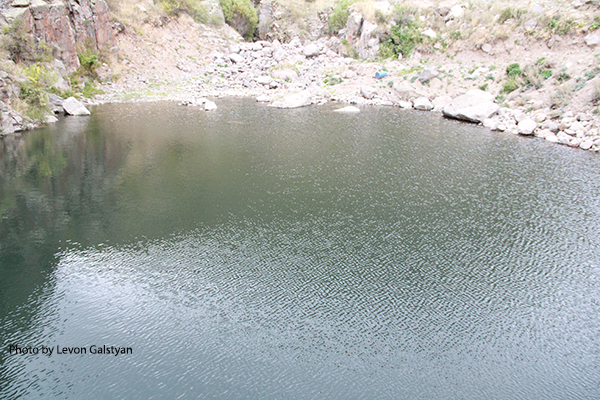
· The fish passway consists of 19 compartments in the right part of the dam, which changes its direction in 360 degrees gwoing down the dam. The compartments have different sizes – 1-1.5 m width and 1-2 m length, through which the water shall pass through holes and grooves. There is a round hole of 20-centimeter diameter made in the concrete of the fish passway to ensure the environmental flow and water flow in the fish passway, which was blocked with a piece of log at the moment of observation and naturally the fish passway was completely dry.
· There is a garbage-collector installed at the end of the sand trap. There is no fish-protecting net.
· You can meet here brown trout, probably also the South Caucasus Sprilin and Kura barbell. Most probably, only the brown trout can fully inhabit here.
· According to the project, the length of the pipeline is 4017 m, its diameter is 800 mm.
· Percentage correlation of aggregate length of SHPP derivation pipeline with the river length makes up 33.47 %.
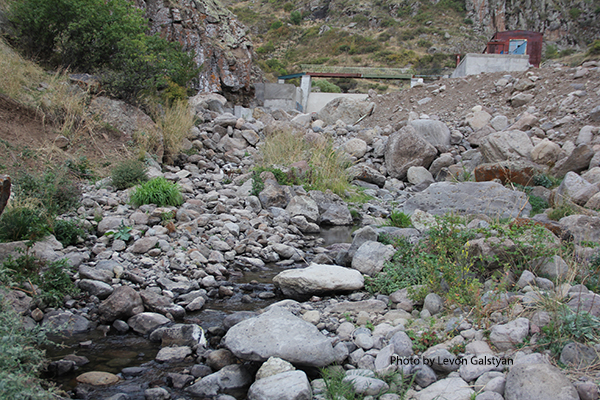
· According to the water usage permit, “Varantsov” SHPP can take water in 11 months, except for September, ensuring 0.05 cum/s environmental flow in the river. The project sets the same environmental flow.
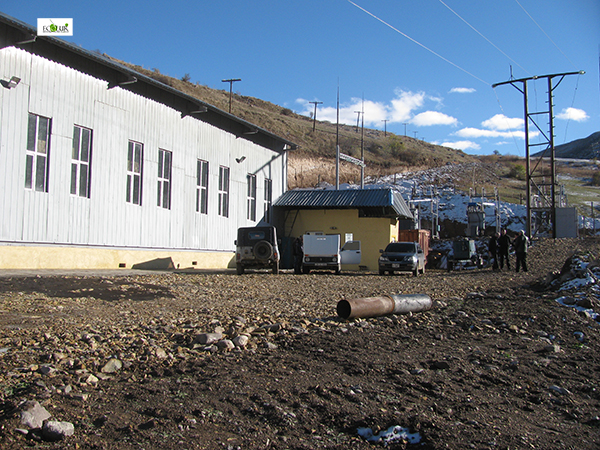
· There are four hydroaggregates of local “Khorda” production installed in the SHPP building. The turbines can operate with minimum water amount of 118 l/s. At the moment of observation it was low-water season and the turbine ensured 200 kW capacity with 60l/s. In high-water season (June) the operation of the aggregates ensured 400 kW/h electricity. As the SHPP has operated only several months, it’s not possible to make comparative analysis among the factual and projected hydroenergetic indicators.
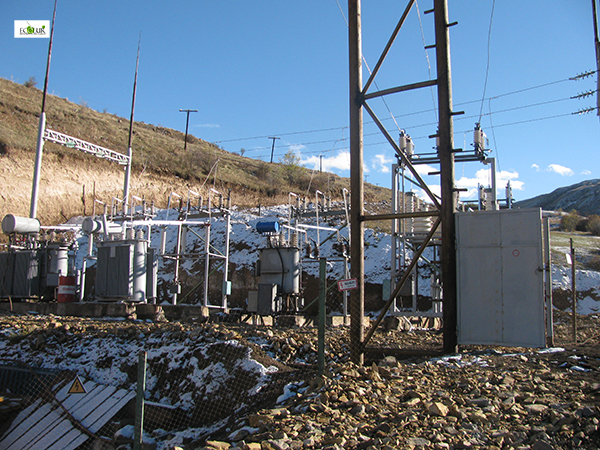
· The transformer substation is fenced, the oil-collector to be installed under the transformers is in construction stage.
· Automatic management and recording of water intake and environmental flow is not ensured.
· The SHPP has been newly put into operation: the area is still not improved and greened.
· There are toilet facilities constructed for the discharge of household wastewater, from where the wastewater is discharged into a water-proof well.
Conclusion
· As in case of all other SHPPs operated on the small rivers, the operation of this SHPP shall be stopped in low-water season, especially when there is a problem with irrigation water.
Proposals
· To ensure automatic management of environmental flow in the head section, installation of water-measuring devices and online control.
· To reconstruct the fish passway, while before the construction to open the hole and ensure continuous water into the fish passway.
· The use of the dam may be refused and to carry out the water intake in another way without blocking the riverbed.
· To review the environmental flow set in the water usage permit with the tendency to increase it, as the set environmental flow is too small and can’t ensure the natural state of river ecosystem and biodiversity.
· To improve and green the station area.
 |
 |
 |
 |
 |
 |
 |
 |
 |
 |
 |
 |
 |
 |
|
The material was developed in the frames of “Supporting reforms in the sector of small hydro power plants through enabling a dialogue between civil society and the Ministry of Nature Protection for sustainable use of river ecosystems” supported by UNDP/GEF Small Grants Programme". |
April 14, 2016 at 12:52