
EcoLur
EcoLur continues its series of short reports from the communities located near forests under a general name of “No Comments: Voices from Communities Located near Forests.” In this series we publish the report from Dilijan. Reminder: all these series are devoted to the problem of illegal felling, and in this regard a PR campaign was conducted in autumn 2010 held in the frames of ENPI-FLEG program.
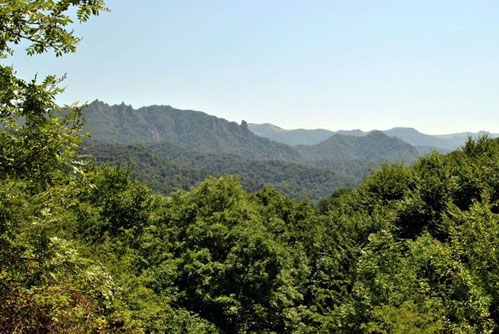
Dilijan: Dilijan is located in the territory of “Dilijan” National Park. In 1958 Dilijan Reserve was set up with a purpose of protecting biodiversity in Dilijan Forest, which changed its status in 2002 and became a National Park. More than 90% of the national park territory is forest. Approximately 40 valuable tree species and 18 bush species grow in there. You can see 300-year-old and 400-year-old junipers with a height of 25 metes and diameter of 80-100 cm growing here. The old grove located in the basin of the Getik River, the biggest in the Transcaucasia.
You can see there 1213 plant species used in food, different kinds of mushrooms, as well as various fauna, such as brown bear, wolf, marten, lynx and European wild cat.
After the National Park lost its high status and a management plan was adopted with its main objective of economic development, National Park land areas are leases with further active development of infrastructures – construction of hotels, restaurants and roads.
This means the forest is cut down in the form of sanitary felling with further use of timber for industrial purposes.
Dilijan National Park Representative and Chief Forest Officer Robert Beglaryan: “We don’t have any illegal felling, all the actions are taken in accordance with the law and the management plan.”
EcoLur President Inga Zarafyan: “Can you present this plan to us, as the management plan must be open for everybody, which land areas are leased and who are leasers, what’s going on in these land areas and where illegal felling are conducted.”
Robert Beglaryan, “These data are available, but I haven’t taken them with me.”
Discussion participant X: “Our forests are rich, and eve if they are cut down, they won’t get disappear. We need for development and recently there is some revival in Dilijan, as something is built where people can arrive at.”
Discussion participant Y: “We even don’t know where they tree felling is conducted. Even if we learn it, what will be changed? No more constructions or no more felling?”
Discussion participant Z: “We have capital investments, tourism is developed, and even a business center is to be constructed. Country leaders visit us. And what we had before? Nothing, no job, nothing at all.”
“Forests of Armenia” NGO Head Nazeli Vardanyan: “If your forest disappears, who will visit you? And still it’s a question what will remain from Dilijan Forest. At present you do have a forest and people strive for here so as to have a rest in nature. But do you know what the situation is in forest and which species have been left?”
Coordinator for Aarhus Center in Dilijan Ararat Alikhanyan: “I think that National Park Management must take care so as everything is conducted in an appropriate manner.”
February 18, 2011