
EcoLur
Interestingly, the largest mining company in Armenia, Zangezour copper and molybdenum combine, the controlling stake of which is owned by German Chronimet Company, didn’t appear at “Responsible Mining in Armenia: Opportunities and Challenges” international conference held in Yerevan on 25 and 26 March.
Reminder: German Embassy was one of the conference organizers together with the Armenian government with the support of the World Bank, EBRD, US, UK Embassies, Canadian Government, as well as mining companies.
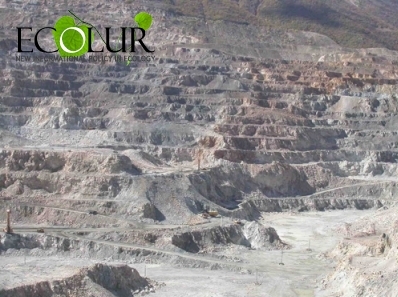
The name of Zangezour combine was mentioned in different speeches many times. The Armenian Government was particularly proud of ZCMC as the largest tax payer. The company itself didn’t present the attendees its activities, kept silent how it perceived responsibility and to what extent it expanded mining dumping million tons of wastes into mountainous gorges and rivers: officially the company annually processes 17 million tons of ore. The combine is expanding Artsvanik tailing dump at the expense of neighboring villages, where villagers don’t know what to do with polluted fields and children, who have arsenic in their hair. It pays ‘huge’ fines for the accidents occurring with the tail pipe from US $300 to US $1000 and “reclaimed” dumps go down to the river: a normal practice for Armenia, where all laws and resolutions are substituted with a political will.
This term is frequently used in a positive sense. For example, a political will was demonstrated and the law triumphed. Probably those referring to political will don’t know that the law shall triumph always irregardless of what the people possessing this political will think of that.
Environmental activists mentioned it in their speeches both at the international conference and the alternative conference, which was successfully held under the name of “Irresponsible Mining in Armenia”.
At the final press conference the invited expert Michael Burnside, who visited the tailing dumps of Akhtala ore processing combine together with EcoLur, answered the question, whether whatever he saw complied with the notion “responsible soil management”, and his answer was definitely, “No”.
March 28, 2014 at 11:45