
The political vector of Armenia practically has not changed as the May elections are drawing nearer, not counting the creation of the Free Democrats Party. The rest is the same.
Certain reshuffling is underway, namely the segment of Robert Kocharyan’s supporters is gradually marginalized by the Republican Party, individuals leave the Bargavach Hayastan Party and support Serzh Sargsyan. The closer the elections, the clearer the line between the teams of Sargsyan and Kocharyan will be visible.
But this is vanity among men which does not reflect the real public ambitions. If the current figures enter the next parliament, the public demands will not be protected no matter how the forces will be represented. So far there is no imposition of civil claims on the political agenda and this is the main paradox of the Armenian political system. Moreover, rejection is mutual. Parties consider it as “low self-esteem” to engage in civic issues, and representatives of the civil society themselves prefer not to go into power, considering it the business of careerists.
In the meantime, politics is a means of influencing decision making. And if there is no force in parliament advocating for the ecology of Armenia, it will be harder for the civil society to defend nature.
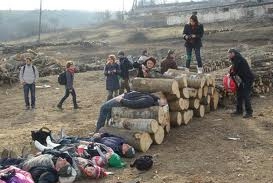
The example of the ecological sector was not accidental. Now, the opposition and civil figures say ecological colonization is underway in Armenia. The subsoil is squeezed, causing unrecoverable harm to the environment. Armenia is becoming a source of raw materials. Other branches of the economy do not develop, the environment is destroyed, harming demography, and monopolization of resources is underway.
This is the essence of the crisis in Armenia but the given issues are not reflected in the political programs of political parties. Each of them touches upon these issues but promotes its own ideology on them – the Republican and ARFD parties – dwell on the national interest, the Prosperous Armenia on the social, the Armenian National Congress speaks of democratic systemic reforms, and only the Heritage Party builds its policy on overcoming of this crisis.
Against this background, the necessity for the creation of a new political organization is maturing – the Green Party. This party has a chance to receive a lot of votes because it will defend the interest of those who suffer from Armenia’s becoming a raw material country where there is no room for the population.
The Green Party could supplement the scanty political specter of Armenia with the help of the social segment. As soon as the ecologists in Armenia who do a great job understand they represent a political force, the political system in Armenia will change. Everything will be settled when politics transforms from a profitable profession to a representative function and a tool to influence decision making. A mechanism of influence has already been worked out in the world: it is primarily the Parliament where the ecologists should try to appear.
Green parties work in the parliaments of many countries.
January 19, 2012 at 17:25