
EcoLur
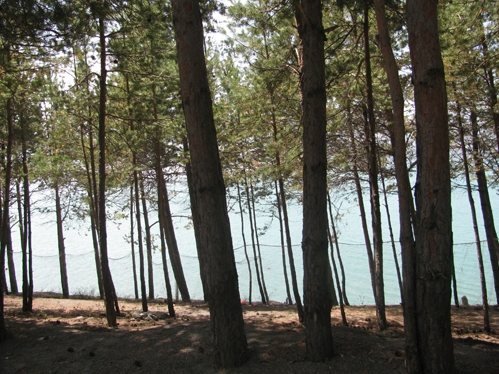
Tourist season for Sevan may turn into a disaster. Sevan shores are already occupied at all levels, including small private owners. “Wanna rest for 5000 AMD? Wanna a hut, pay 10,000 AMD.” We speak about rest for several hours, as a matter of fact, about a picnic on Sevan shore. Local “tough guys” snatched away shore areas with no buildings. They are not as tough as, for example, “Lavanda City” owners, but their grip is no worse. No can get for free to the lake, you must pay. Local guys are on the alert, and if you say you want nothing, you must either leave that place or buy troubles. (See Photos.)
What does our new “tourist service” offer? It offers a lake the state is in charge of, recognized as national and state priority and protected by special laws. “Sevan” National Park, two whole committees, a huge number of programs and significant budget allocations are designed for better conservation of Sevan.
The local population helps to develop tourism, but in its own way. Garbage heaps are left on the shore after each picnic, while holiday makers rest just next to garbage heaps with seagulls hovering above. Yes, seagulls like garbage more than their usual food – fish, as fish is getting less and less, while garbage is getting more and more in Sevan.
By the way, what about the fish: all the small and large restaurants and roadside snack bars offer any fish, including the whitefish. The same concerns to areas designed for picnic. In summer fish trade becomes more brisk due to holidaymakers’ flow. Under locals’ assessment, on average from 50 to 70 tons of fish is sold in summer months. This number includes all species, including fish grown in ponds. It should be noted the whitefish widely common in the menus of all restaurants is not grown in ponds, but in Sevan. Nevertheless, the whitefish is banned for hunting and sale. By the way, according to the assessment of the Institute for Hydroecology and Ichthyology of the National Academy of Sciences, fish reserves in Sevan make up no more than 250 tons.
What Sevan National Park can do, if, as it turned out, not only Sevan National Park, but also the community administration can issue leasing permits located in the buffer zone of the national park. When Sevan Town quickly distributed or, more precisely, sold out shore areas, other communities follow this example, moreover, their mission is not to preserve Sevan, but to survive in hard rural conditions.
This process has launched recently and you can guess what will remain from Sevan when all communities snap up the national park into bits and what the Agency for Natural Resources Management of the Nature Protection Ministry will manage instead of Sevan.
August 11, 2010