
On 16 July 2026 at 3:00 p.m., the second public hearing on the Environmental Impact Assessment (EIA) Report for the proposed battery recycling facility to be established in the industrial zone of Artashat, Ararat Region, by MEL METAL LLC, will take place at Artashat Municipality.
MEL METAL LLC has submitted to RA Ministry of Environment an Environmental Impact Assessment Report covering the modernization of its existing lead-acid battery recycling facility, the expansion of its current operations, and the installation and operation of a new processing line for spent lithium batteries.
The project includes the procurement of new equipment that will enable the recycling of lead-acid batteries, as well as batteries from electric vehicles, solar power systems, and various household electrical and electronic appliances. To this end, two enclosed processing lines for different battery types are planned to be installed within an existing building at the current production site.
The new production units will process lead-acid, lithium-ion, and other types of batteries, with metal separation carried out using mechanical and magnetic methods, without any metal refining or smelting processes.
The maximum annual processing capacity of the new lines is projected to be:
- up to 20,000 tonnes of dry batteries and energy storage systems from electric vehicles and solar power plants;
- 8,000–10,000 tonnes of dry batteries from household electrical and electronic appliances.
The total annual processing capacity is expected to reach 28,000–30,000 tonnes.
During the initial phase, the company plans to process 4–6 tonnes of electric vehicle batteries, with processing volumes to increase in subsequent stages.
The planned annual recycling capacity for lead-acid batteries, calculated on the basis of recovered lead, is up to 6,000 tonnes. The company intends to collect and recycle only lead-acid batteries from motor vehicles.
According to the EIA Report, all categories of spent batteries will be processed in enclosed production lines housed within a closed industrial building. The report further states that no water will be used during the recycling of lithium-ion dry batteries, and no industrial wastewater will be generated.
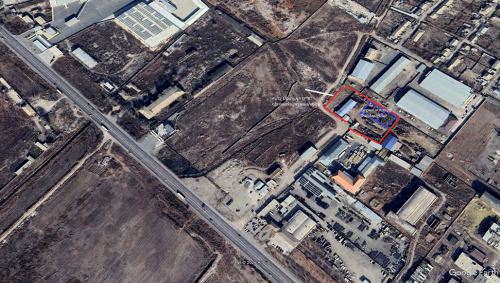
The project site is located within the industrial zone of Artashat, where other manufacturing enterprises, service facilities, and storage areas are already operating. The nearest residential buildings are situated more than 304 metres from the project site.
The planned activities will be carried out within the production facility owned by MEL METAL LLC. The site covers 1.2346 hectares and includes production, storage, and administrative buildings. The company currently receives, stores, and trades ferrous and non-ferrous metals.
The existing production facility has a maximum annual processing capacity of 2,000 tonnes of spent batteries. In December 2022, the company received a positive state environmental expert opinion (No. BP 0192-22) authorizing this activity.
As part of the proposed project, the company plans to install, in two separate sections of a newly constructed building:
- an enclosed processing line for batteries from electric vehicles, various types of solar power storage systems, and household electrical and electronic appliances; and
- an enclosed processing line for lead-acid batteries, designed using modern technological solutions.
According to the authors of the report, the significance of the project is driven by the steady increase in the number of vehicles in Armenia, particularly the rapid growth in the number of electric vehicles, which is expected to result in substantially larger volumes of spent lead-acid, lithium-ion, and other dry batteries requiring environmentally sound recycling.
July 10, 2026 at 15:25