November 05, 2010 | Waste
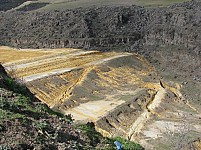
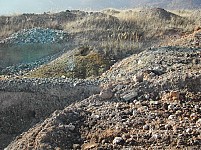
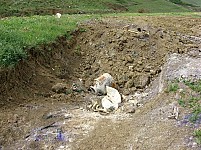
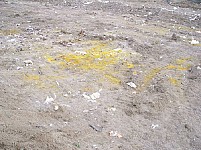
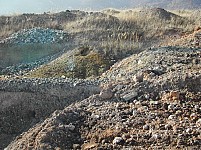
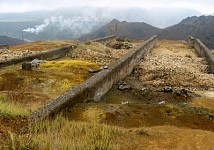
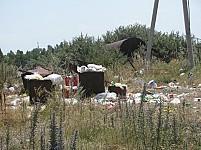
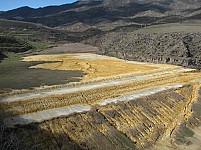
Chochkan tailing dump, belonging to Akhtala mining and concentration complex of Metal Prince Company, constitutes a serious environmental threat
November 05, 2010 | Waste
Meanwhile according to specialists, one more problem needs solution: who should bear responsibility for the strange situation emerged in the mining industry of Armenia
November 04, 2010 | Waste
On November 4 the Government of Armenia confirmed the decree on allocating 5,1 million AMD (about $ 14,000) from its reserve fund to the Police of Armenia to guard Nubarashen Waste Burial Site.
November 02, 2010 | Waste
The rod posts in different areas of neighboring territory were turned over with barbed wire, while the barbed wire was cut, while signs banning the entrance have disappeared.
October 19, 2010 | Waste
The dump for industrial wastes, Madan arsenic graveyard, can cause environmental disasters in Alaverdi Town. Larisa Paremouzyan, Supervisor of the OSCE “Safe Environment” grant program, made this statement in her interview with the ArmInfo correspondent.
October 19, 2010 | Waste
”The danger is that the repository is in the active landslide zone. We think that the landslide processes have recently become active: cracks appeared and it is not ruled out their number will grow"
October 13, 2010 | Waste
Why arsenic in the water of Madan River in within standard, while its concentration on the bottom is high? “Sulfuric acid in high concentration is present in the graveyard. Acidic environment is formed as a result of sediments, in contrast to many other heavy elements, they form insoluble substances,” said Armen Saghatelyan, Director of Center for Noosphere Studies at the press conference.
October 07, 2010 | Waste
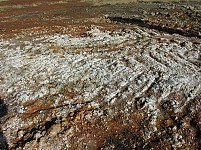
In its present state the arsenic repository more looks like ruins, if not huge piles of toxic chemicals and disgusting smell, this repository could even attract tourists as an old place. The concrete part of the burial site has cracked, while the poison has come out to the surface causing the start of toxic oxidation processes.
September 29, 2010 | Waste
The draft law "On Garbage Disposal and Sanitation", introduced by the government, which arouse serious concern in the society in view of possible increase of tariffs for garbage disposal, has become a reason for a no less serious concern of the people''''s deputies which they expressed during the
parliamentary hearings on Wednesday.
September 27, 2010 | Waste
The Regional Environmental Centre for the Caucasus (REC) together with EPTISA is launching a new campaign “Garbage Management”. This program will be implemented in Armenia, Azerbaijan, Georgia, Belarus, Ukraine, Moldova and Russia. The program will be implemented in the frames of “Waste Management” project with the financial support of the European Commission.
September 27, 2010 | Waste
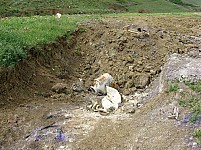
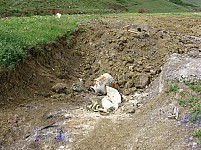
The Nubarashen waste burial site has no inlay bottom, walls and roof. Pesticides are buried 20the very ground. The length of this particular area is 100 m, the width – 20m, depth – not less than 5 m, and approximate capacity is 1000 cubic meters. The territory of the waste burial site is located in the landslip zone in Voghjaberd Village where landslip zone is active.
September 18, 2010 | Waste
It’s impermissible, as this huge waste burial site of banned chemicals has mostly transferred because of landslips. Part of underground water may reach Ararat Valley. In this case, fish farms and agricultural farms using artesian water may be affected.
September 16, 2010 | Waste
Alaverdi Mayor Artur Nalbandyan has submitted an environmental action plan draft, which must be implemented at the expense of environmental payments made by АСР Company…
September 15, 2010 | Waste
On 14 September the parliament started discussing bill “On cleaning garbage and sanitary works”. The bill proposes 4 versions of garbage cleaning: according to weight, volume, number of family members and occupied area.
September 09, 2010 | Waste
“The company has above all an obligation to hold public discussion groups and to ask local farmers whether they agree to having a dangerous new facility right under their noses,”
July 27, 2010 | Waste
Official web-sites present contradicting information in regard with Nubarashen waste burial facility.
July 19, 2010 | Waste
The Ministry of Nature protection of RA didn’t receive any documentation on conducting geological-investigative works for drawing up a topographic map for locating a radioactive waste burial facility.
July 14, 2010 | Waste
"The drainage system in the cemetery is not isolated which means arsenic and other toxic elements in the cemetry will be absorbed together with rain water to lower layers and, eventually, will appear in the Lalvar river, then into the Debed River," said Director of the Center for Ecological Noosphere Studies of NAS RA Armen Saghatelyan.