
EcoLur
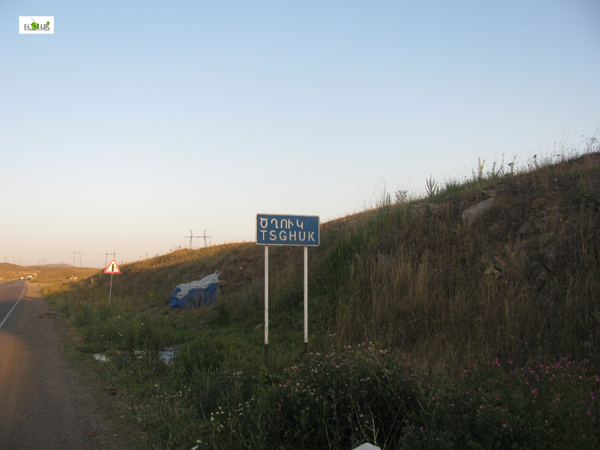
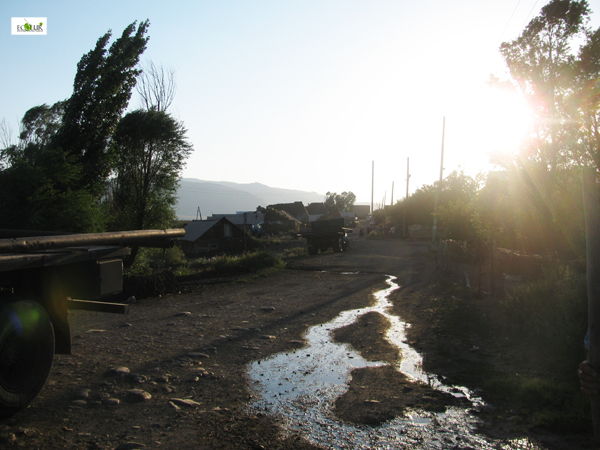
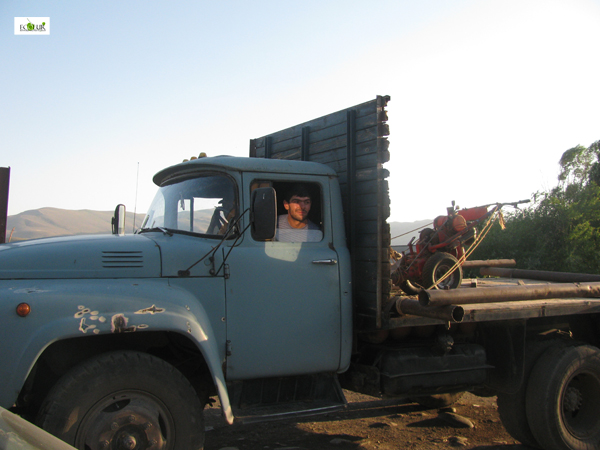
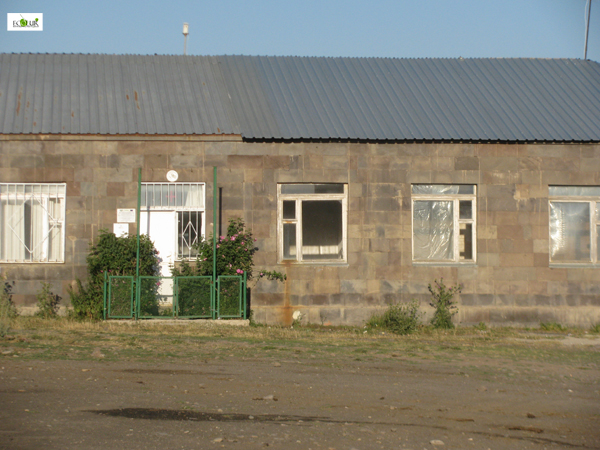
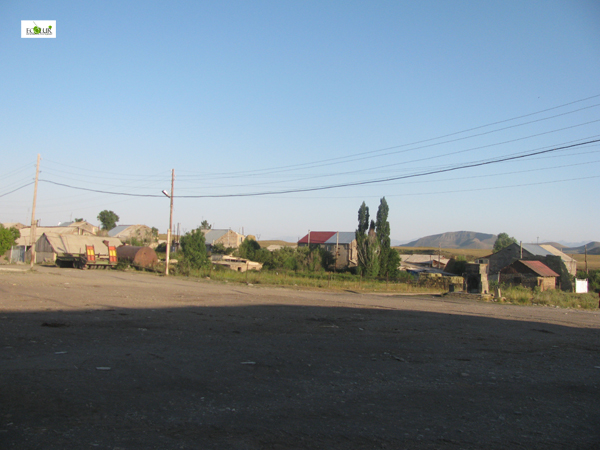
For the first time Tsghuk Village, Syunik Region, is deprived of the water, as Tsghuk Village Head Mesrop Amirjanyan told EcoLur.
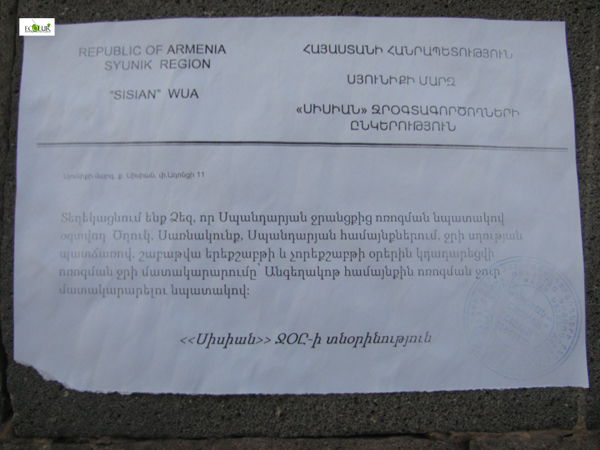
'Our village gets its water from Spandaryan reservoir; as of today, the situation is rather harsh, as the water industry employer called me and said that the water supply will be stopped two days a week with official noticing. So far we haven't recieved any complaints from villagers that there is no water, just we recieve complaints that they have to queue, they are not used to queuing,' Tsghuk Village Head Mesrop Amirjanyan said, 'Tsghuk Village is located under the impact of two SHPPs. Now these two SHPPs disturb each other as another SHPPs also operates through the Spandaryan reservoir. During recent years the SHPP didn't operate, but this year it operates. I would propose to stop the operation of the SHPP for two months for all villages to have water. We have proposed the same to the regional head.'
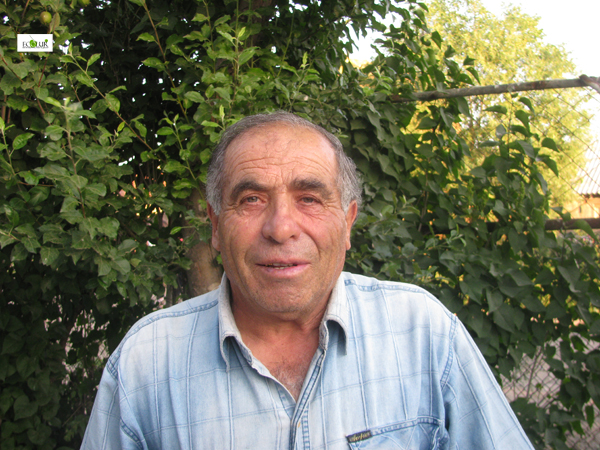
'Thousands of springs have got dried, but these springs were not miracle ones, the rivers get their water from these very springs. This phenomenon has been repeating for already 30 years, the nature does its work, the number of SHPPs has increased, which promoted quicker drying of the rivers. We used to have so much brown fish in the rivers, that you could find fish in the bucket when taking it out of the river. Now you can find none,' Tsghuk villager complained.
The main source of income in the village is cattle breeding. The cause of escalated immigration is harsh social conditions plus low price for milk purveyance.
'We produce milk and sell it to the plant. This price is very low – 120 AMD, while buyers then resell it at 500 AMD. We incur much loss,' Tsghuk villager said.
This material has been prepared in the frames of “Support to the Reforms of SHPPs through a Dialogue between the Public and The Ministry of Nature Protection of the RA for the Purpose of River Ecosystem Use” project.
 |
 |
 |
 |
 |
 |
 |
August 19, 2015 at 14:22