
Armenian civil society is preparing for the 17th Meeting of the Conference of the Parties (COP17) to the UN Convention on Biological Diversity (CBD). In this context, on June 17, Ecolur Informational NGO, in cooperation with the Fridtjof Nansen Institute, organized " Civil Society Agenda at the 17th Conference of the Parties (COP17) to the United Nations Convention on Biological Diversity" workshop.
Karen Manvelyan, Programme Manager at WWF-Armenia, delivered a presentation entitled " Challenges and Opportunities on Armenia’s Path to Achieving the 30x30 Target."
The 30x30 Target is a global biodiversity conservation goal under the Kunming-Montreal Global Biodiversity Framework (GBF), which calls on countries to ensure that at least 30% of their terrestrial and marine areas are effectively conserved by 2030.
According to "Biodiversity Conservation Targets of the Republic of Armenia and the Action Programme for 2026–2030," Armenia has committed to expanding its network of Protected Areas (PAs) to cover 20% of the country's territory.
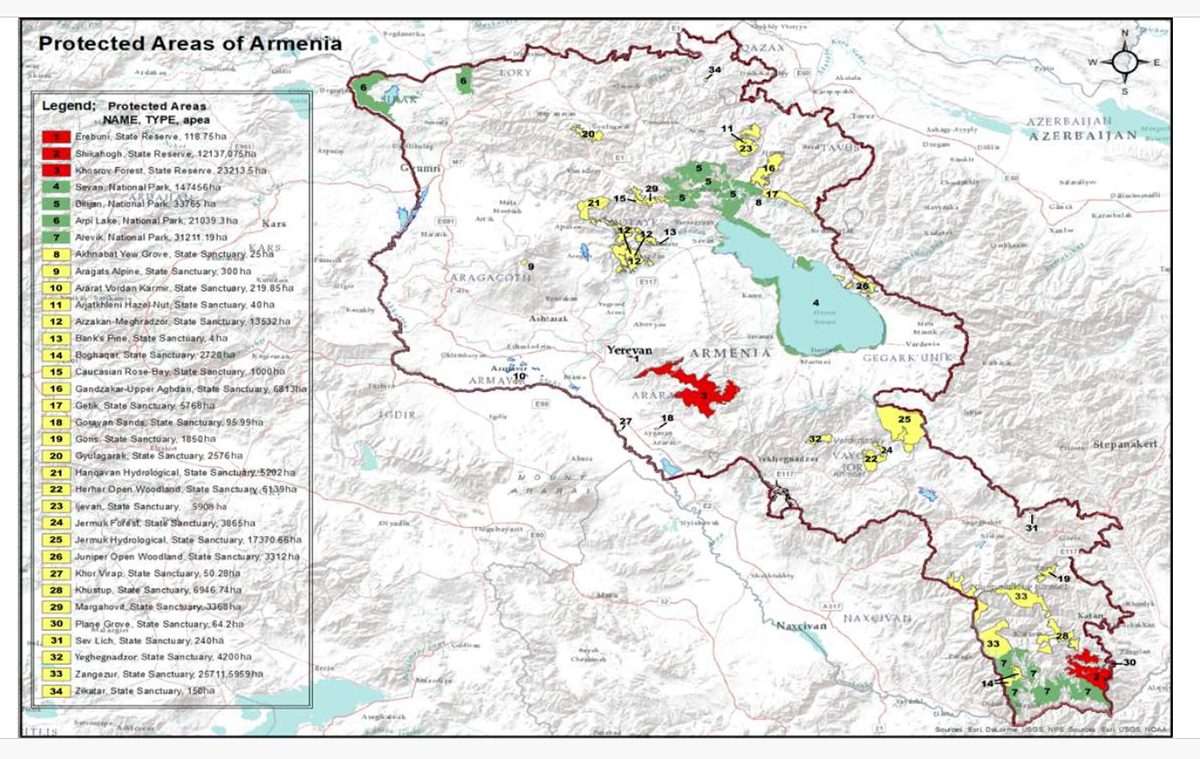
Karen Manvelyan noted that Armenia's protected areas currently cover 386,355 hectares, or approximately 13% of the country's territory. Since 2009, this network has expanded by approximately 88,600 hectares. The protected area system currently includes:
- 3 State Reserves;
- 4 National Parks;
- 27 State Sanctuaries; and
- 223 Natural Monuments.
Karen Manvelyan announced that the establishment of the Jermuk National Park and Tatev National Park is planned, which could increase Armenia's protected areas by approximately 9,800 hectares. Both parks will be created on the basis of existing protected areas.
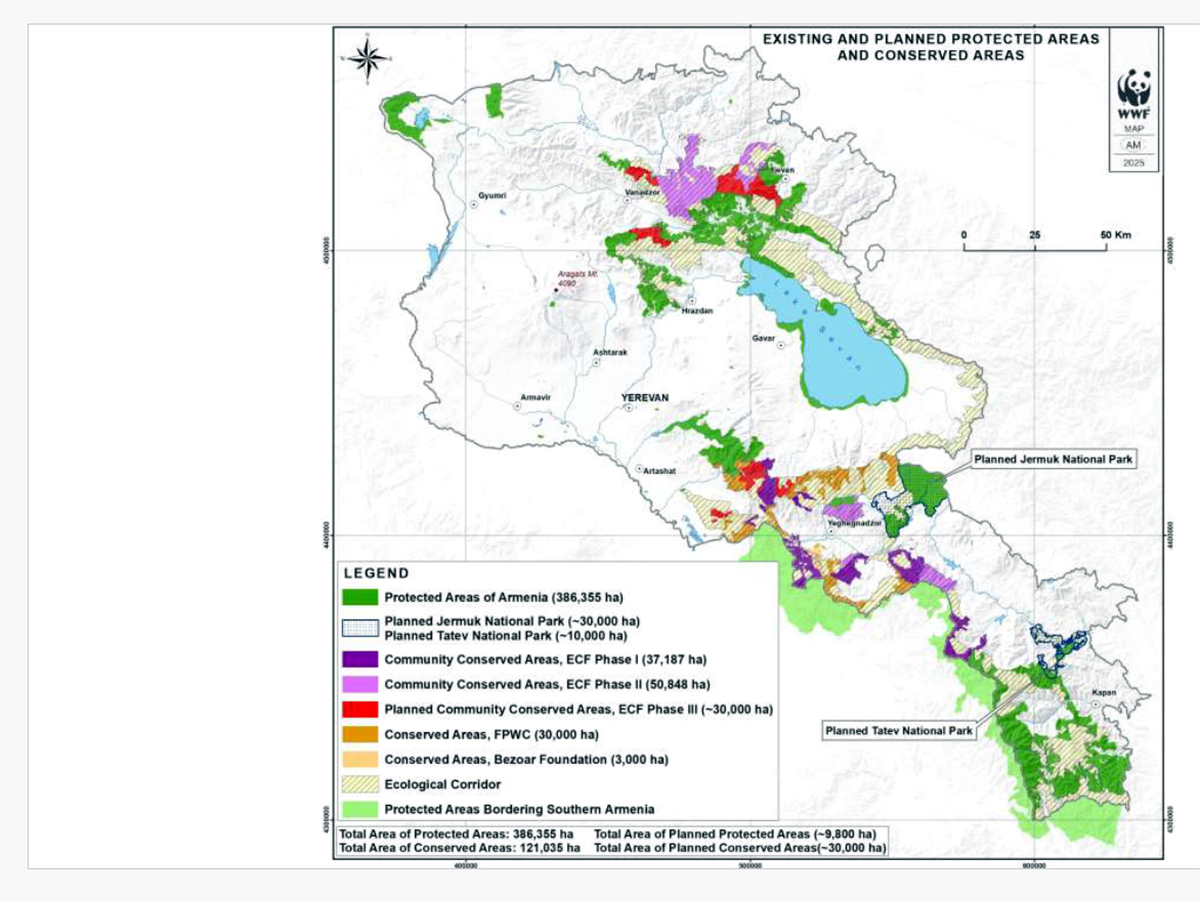
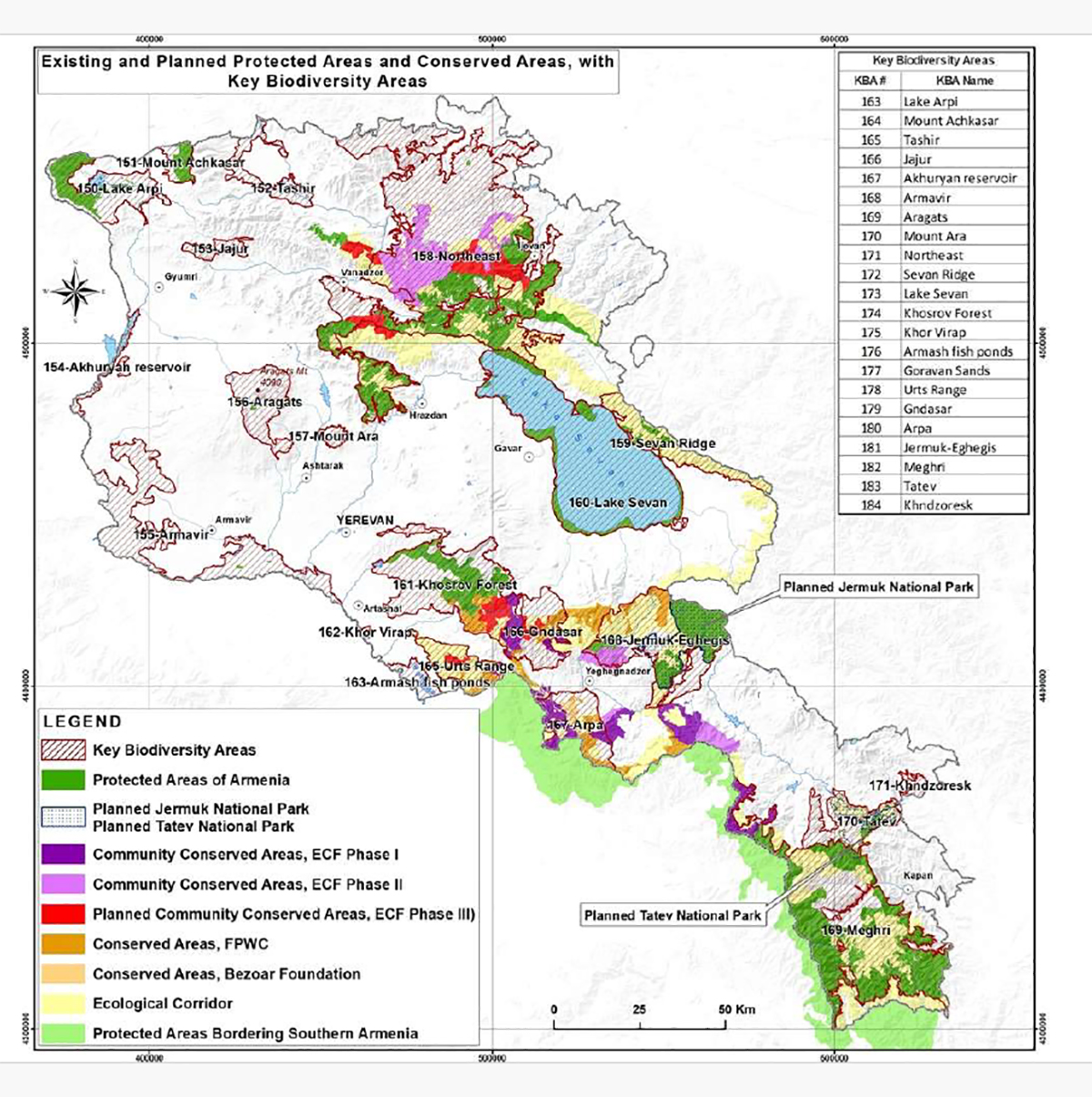
"The Jermuk National Park is planned to be established on the basis of the Jermuk Hydrological Sanctuary, the Jermuk Forest Sanctuary, the Her-Her Sanctuary, and adjacent community-owned lands. The Tatev National Park is planned to be established on the basis of the Vorotan Sanctuary, with the inclusion of part of the existing Zangezur Sanctuary. We also expect local communities to allocate additional land for the park," Karen Manvelyan noted.
As a result, by 2030 Armenia's protected area coverage could reach 13.3% of the country's territory, or 396,155 hectares, while Other Effective Area-Based Conservation Measures (OECMs) could cover 5.1%, or approximately 151,035 hectares.
According to Karen Manvelyan, additional efforts-including the establishment of OECMs by local communities and forestry enterprises-could enable Armenia to move much closer to achieving the 30% conservation target.
On June 18, the National Assembly of Armenia adopted amendments to the Law on Specially Protected Natural Areas together with a package of related legislative amendments. The revised legislation introduces provisions establishing new conservation categories, including:
- Protected Landscapes;
- Other Effective Area-Based Conservation Measures (OECMs);
- Ecological Corridors; and
- Ecological Networks.
According to Karen Manvelyan, the OECM concept has been applied internationally for the past three to four years.
"The OECM approach does not require changing either the land category or land ownership. This is particularly important because creating new protected areas is becoming increasingly difficult due to economic development pressures. That is why this concept was introduced by the International Union for Conservation of Nature (IUCN), and countries around the world are now integrating it into their national legislative frameworks," he explained.
The speaker also noted that Armenia plans to establish a new governance system for protected areas, which will coordinate the management of the country's entire protected area network while remaining accountable to the Ministry of Environment.
At present, all state non-commercial organizations (SNCOs) responsible for managing protected areas report directly to the Ministry. Karen Manvelyan recalled that, during an EU Twinning Programme implemented several years ago, experts recommended establishing a central coordinating body for Armenia's protected areas.
Under this proposal, a unified management platform or coordinating authority would be established under the Ministry of Environment-whether in the form of a committee, an SNCO, or another institutional structure. All organizations managing protected areas would operate under this coordinating body, allowing the entire system to be managed through a single coordination mechanism, which would itself remain accountable to the Ministry of Environment.
Speaking about the impact of mining, Karen Manvelyan stressed that mining continues to be one of the principal threats to biodiversity, leading to the loss of both species and habitats.
According to him, a more responsible approach is needed to ensure that mining projects are not located in biodiversity-rich areas.
The views expressed in this guide are those of the author and do not reflect the views of the Heinrich Böll Foundation’s South Caucasus Regional Office in Yerevan.
July 03, 2026 at 17:14