
Arminfo
The cases of poaching at specially guarded territories decreased over the last 2-3 years in Armenia, representative of Armenian Nature Protection Ministry Aram Agayan said at press-conference.
He said, in particular, that no case of illegal hunting has been registered in Khostov reservation. He also added that today the relevant territories are guarded rather effectively, as the conditions of the relevant services have been improved much, and salary of employees of these services has been increased. He also said that poaching cases has sharply decreased outside of the guarded territories as well.
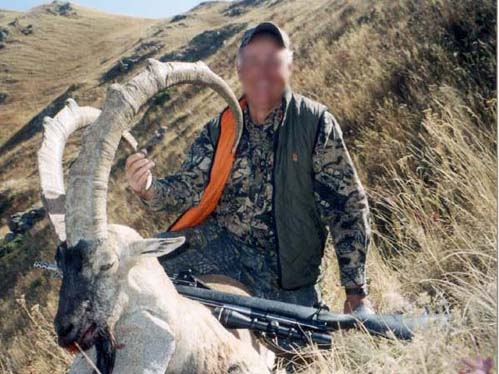
At the same time, as the head of WWF-Armenia Karen Manvelyan reiterated many times, the poaching problem is still relevant today. For instance, 1-2 leopards are killed by poachers in Armenia every year. The WWF has been implementing the programme on protection these animals since 2002, but they are still hunted outside the guarded territories. Leopard is not the only 'IUCN Red List' victim of poachers. Every year ecologists fix cases of hunting mouflons and Persian wild goats. Incidentally, it is not for the first year that local and international organizations are trying to draw the attention of Armenian Nature Protection Ministry to the fact that announcements are placed at various web sites about the hunt tours in Armenia to hunt the animals involved in IUCN Red List, for instance - www.safariinternational.com, which openly invites to hunt mouflons and Persian wild goats, which cost 7900 - 8900 EUR.
FAUNA SAFITY: OFFICIALS SAY POACHING CASES DECREASED IN ARMENIA
Siranuysh Gevorgyan, ArmeniaNow
Armenia’s Nature Protection Ministry states that cases of poaching have decreased in Armenia within recent years as a result of stricter inspection control and high fines.
“Rare cases of poaching were registered last year; four cases were registered in Khosrov Forest State Preserve,” says Aram Aghasyan, head of the department of special protected areas, Bioresources Management Agency under the Ministry of Nature Protection, at a press conference today, April 1.
Up to 3,000,000 drams (\\\\\\$ 7,500) of fine is defined for poaching of animals registered in the Red Book of Endangered Species of Armenia, and if the poaching is done in areas under special protection (state preserve, national park or nature reserve) then the amount of the fine is multiplied by five (About 99 species of the country’s fauna are registered in Armenia’s Red Book, and 37 species – in the international Red Book).
According to Aghasyan, the reason for the decreased poaching cases is, in fact, a higher salary of the Nature Protection Ministry inspectors working at the protected areas.
“If in 2000 inspectors’ salary was 10,000 -15,000 drams (\\\\\\\$ 25-\\\\\\\$ 37), now it is 50,000-60,000 drams (\\\\\\\$ 125-\\\\\\\$ 150),” Aghasyan says.
In spite of Aghasyan’s assurances, environmental NGOs in Armenia regularly alarm that various foreign organizations arrange hunting tours (of animals registered in the Red Book of Armenia) in Armenia demanding rather high payments (for example, the hunting of Bezoar goats costs \\\\\\$ 14,000, and Muflons - \\\\\\\$ 16,000). Whereas the Ministry of Nature Protection always assures that those organizations do not do hunting in Armenia.
Karen Manvelyan, Head of the World Wildlife Fund (WWF) in Armenia, says that even if those organizations get involved in illegal hunting of endangered species, they will have to pay corresponding fines.
Manvelyan and Aghasyan also spoke highly of the work done in Armenia’s natural preserves. Currently the ministry is working on promoting ecotourism at Khosrov and Shikahogh Forest State Preserves.
April 02, 2010