
At the event, Satik Badeyan, a representative of Sevan Community in Gegharkunik Region, highlighted the priorities for the conservation of Lake Sevan.
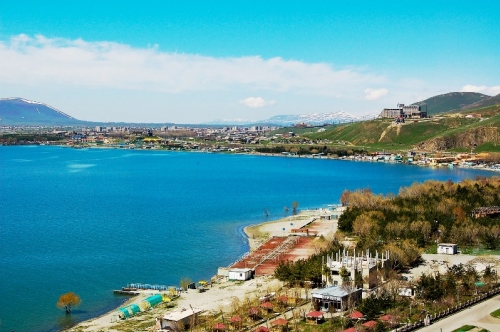
Armenia’s main freshwater basin, Lake Sevan, is currently facing serious environmental pressures as a result of climate change and human activities.
Sevan Community comprises 11 settlements with a population of approximately 45,000 and is directly connected to Lake Sevan. “The lake has shaped the history of our settlements, people’s occupations, traditions, and culture,” Badeyan noted, emphasizing that this connection also entails a responsibility to protect the lake and its biodiversity.
The speaker presented Sevan Community’s Cultural Development Strategy for 2022–2027, developed through a participatory process in 2022 with support from the EU4Culture programme. The strategy has become an integral part of the community’s five-year development plan. Under the strategy, Sevan has been designated as a community for developing and promoting a culture of eco-living and an eco-economy, making a responsible approach to nature part of everyday life and economic activity.
Alternative Income Sources and Environmental Solutions
Badeyan outlined several key areas through which the community is working to reduce pressure on the lake:
· Creating alternative sources of income to reduce pressure from fishing
· Redirecting tourist flows from coastal areas towards settlements
· Promoting sustainable agriculture by eliminating the use of chemical fertilizers and harmful substances in the lake’s catchment basin
· Developing alternative energy sources to reduce water abstraction from the lake for energy purposes
Practical Steps: Waste Management and Cultural Tourism
In 2025, Sevan launched the introduction of a household solid waste management and sorting system, with separate collection of plastic, paper, metal, and glass. As part of the programme, waste bins and a waste collection truck were provided to the town. The programme is being implemented with the support of the American University of Armenia and the Government of Sweden. The Ministries of Environment and Territorial Administration and Infrastructure are also partners.
Badeyan noted that an awareness campaign by the Sevan Youth Club had greatly encouraged residents to participate. However, proper waste sorting remains a challenge. Sustaining the results and preventing a return to previous habits will require ongoing educational programmes and community mechanisms to support them.
The community is also piloting solutions for the beneficial use of organic waste. At the initiative of the Blejan NGO, pig farming on a bacterial straw bedding system is being practiced in Tsovagyugh, with the aim of turning manure into raw material for organic fertilizer. Bacterial composting of food waste is also being piloted in kindergartens and food service establishments.
Another successful example is cultural tourism based on the archaeological heritage of Lchashen.
“Etiuni” museum-guesthouse has been established as a pilot project and demonstration model to show residents how they can generate income from their own heritage while preserving and developing it.
Experiential tourism services have been introduced there. Visitors dress up as kings or queens, palace officials, or ordinary residents of the Urartian and pre-Urartian periods, and learn about these cultures through interactive experiences.
The initiative can be considered successful: the number of visitors reaches approximately 5,000 annually. More than five guesthouses are now operating in Lchashen, along with food service establishments, and workshops introducing visitors to ancient culture and rural life are being organized.
According to the speaker, a similar approach is being pursued in Tsovagyugh, where a rural tourism, energy efficiency, and natural farming training and demonstration center is operating. Sustainable practices there are linked to ecotourism and fishing culture.
Young people are actively involved in all these initiatives. At TsovEM Youth Center, souvenirs featuring symbols of Gegharkunik’s cultural heritage are made from recycled plastic using 3D modeling and printing.
Environmental education and sustainable practices are also being promoted among schoolchildren in the community, encouraging them to take part in efforts to protect their community and the lake.
According to Satik Badeyan, all the initiatives share one common goal: to combine the sustainable development of the community with the conservation of Lake Sevan’s natural ecosystem, reducing the harmful impact of human activities and contributing to ecosystem restoration.
“Our experience shows that people become more actively involved in nature conservation when they see how it is connected to their daily lives, work, and future,” Satik Badeyan concluded, emphasizing the importance of long-term partnerships, education, local income-generating opportunities, and active community participation in protecting Lake Sevan.
October 31, 2026 at 20:57