
ArmInfo
In the last 20 years Armenia's woods have gone through a real ordeal: illegal cuttings, climate changes... These are just few of the obstacles preventing the recovery of the Armenian forests.
Experts say that as a result of the energy crisis of the 1990s Armenia's woods have shrunk from 25% to 8% of the total territory and, according to NASA's unpromising reports, this tendency continues: in 2001 the forest lands made up 8% of the country's territory, in 2006 they already made up 7.9%.
It turns out that not all of the woods are officially registered as such. Due to a series of strange governmental decisions, 50,000 h of forestry have been given the status of agricultural lands and pastures and given to communities, who have sold them to some unknown people. One of the most vivid examples is Hankavan Forest, whose 500 h are officially reported as being pastures.
Nobody except ecological NGOs cares for the future of such pastures. Tomorrow they may be turned into 50,000 h of desert while hundreds of thousands of cut trees - into the legal income of some personalities.
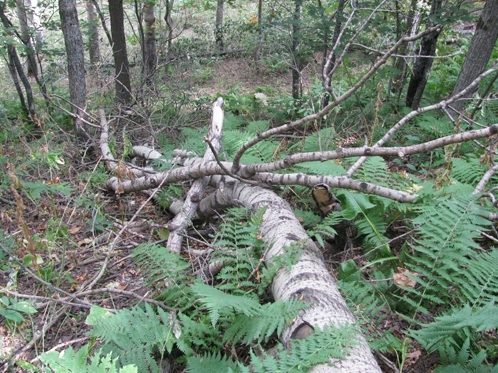
This is not the only problem though. Illegal cuttings have been one of the key concerns in the last few years. Ecologists report that truckfuls of cut trees are being taken from the wooded areas. Lori region is the leader in illegal cuttings. The last scandal took place in Aug 2010 when 116 trees were cut in Gugark forestry. Foresters give different reasons for such "green poaching" - one of them is lack of arms and transport for controlling the territories.
According to mass media, mafia is behind illegal deforestation and controls the shadow timber works. While the problems of uncontrolled deforestation remain unresolved, forests are endangered by changes in the climate. To understand the seriousness of the situation, one should follow the analysis of the situation in Syunik region. Surveys show that as compared with the average index of 1961-1990, the elements in the region have declined by 9%, and over the period from 1935 to 2007 the average annual temperature rose by 0.7%. Besides, the number of summer days with a temperature of over 25 degrees: in Meghri - by 10 days, in Kapan and Goris - by 21 days.
Specialists say that the temperature rise, alongside with reduction of elements, leads to deceleration of forest recovery processes. Over the past 30-40 years, the lower zone of oak and hornbeam-oak forests of Syunik has moved higher by 100 meters. According to the experts, creation of nursery areas for drought-resistant trees might dampen the consequences of the climate change.
So, what future will the Armenian forests have? While the state structures say that forestry in Armenia makes up 12%, American specialists are beating the alarm: if the situation does not change, by 2020 the republic risks to remain without forests at all. Ecologists say that a 5-year ban on deforestation may save forestry from destruction.
However, at present ore mining companies also start making their own contribution to destruction of green zones. For over several years ecologists have been trying to stop deforestation in Teghut aimed at developing the copper-molybdenum deposit. ACP assures that "only" 357 hectares of forests will be cut, but at the same time passes in silence by the fact that several disappearing plants of Teghut are included in the Red Book and belong to the first category of especially rare plants, among them Caucasian persimmon, orchids, galanthus. To note, the International Plant Protection Convention forbids exporting galanthus bulbs from the republic.
Today Armenia's forests seem to be at a crossroad: one path leads to their full destruction, the other one leads to their recovery, and it is for the country's government to decide which path to choose.
October 18, 2010