
Aris Ghazinyan, ArmeniaNow
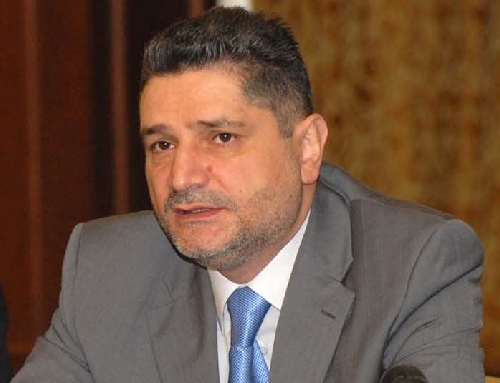
Prime-Minister Tigran Sargsyan stated during the March 23 parliament session that Armenia has learned its lessons from the nuclear energy situation in Japan as an aftermath of the recent devastating earthquake.
Sargsyan was primarily referring to the construction of the new energy block at the Armenian nuclear power plant (NPP) in Metsamor, 30 km from Yerevan; currently only one of its two energy blocks is exploited.
The first block was put to operation in December 1976, and the second block in 1980. Three years later, in 1983, the construction of the third and fourth blocks started once the NPP project was approved; however, the works were suspended in 1986 after the Chernobil meltdown.
The power plant withstood the December 7, 1988 catastrophic earthquake in Spitak and remained fully operational. Nonetheless, a government decree was passed by which both blocks of the plant were shut down by turn in February and March of 1989.
However, later, taking into account the energy crisis, blockade of communications and lack of domestic energy resources, the government of the young Armenian Republic (which had gained its independence in 1991) made a decision on April 7 of 1993 to start the rehabilitation and resume the exploitation of the second energy block, followed by its re-launch in 1995.
In 2003, the financial and economic management of the NPP was entrusted to Russian Inter-RAO UES. As a result of prolonged negotiations between Armenia and the European Union, as well as the Armenia-Russia energy-related dialogue it was decided to build the third energy block.
At the parliament session on Wednesday the prime minister stated that the emphasis now is not only the seismic resistance of the power plant, but also the protection of infrastructures from potential earthquake consequences.
“The new block will be built with calculation of all potential risks. Being a third generation energy block, it will have a high level of safety,” assured Sargsyan.
Most probably the current power plant (the second block) will be shut down in 2016. “The operating block is obsolete, and should the import of natural gas stop its capacity would not suffice to avoid a new energy crisis,” says Sevak Sarukhanyan, deputy director of Noravank scientific-educational foundation, who is also the head of the Center of Political Studies.
By its absolute GDP index Armenia is the last on the list among the states building a new nuclear power plant. Having such microeconomic indicators Armenia, obviously, cannot afford implementing such a costly project by its own means.
Bulgaria’s GDP, for example, is considerably bigger that that of Armenia, and still it had no way out but to halt the construction of Belen nuclear power plant for lack of funds. International investors were not ready to finance the construction of the energy block, as the project did not promise them any tangible profit.
Armenia is currently facing a similar challenge, as the construction of a nuclear energy block has to be economically profitable in order to encourage international investors, which it is not.
That’s the key circumstance why investors have not shown much interest in the project. The only interested country was Russia, which agreed to cover the main part of the construction expenses in accordance with the agreement signed in 2010.
Political analyst Sarukhanyan says it has sparkled many negative discussions alleging that by financing the project Moscow wants to consolidate its positions in Armenia.
“Moscow, undoubtedly, would like that, and such intentions are stemming from its fundamental interests, however, on the other hand, is there anyone who believes that the United States sponsored the construction of Baku-Tbilisi-Ceyhan oil pipeline out of purely altruistic motives?”
Some time ago the Armenian prime minister said that the project would need some \\\$ 5 billion worth of investments, and that Russia and Armenia would invest 20 percent each. The capacity of the new block would be approximately 1,200 megawatts instead of the current block’s 375 MW.
In November 2010, Daniel Rosenblum, Coordinator of U.S. Assistance to Europe and Eurasia, stated in Yerevan that the United States is also interested in related American companies’ participation in the new energy block project.
March 25, 2011