
A. Martirosyan, the Hayots Ashkharh
Here is our interview with Armen Saghatelyan, Head of Center for Ecological Noosphere Studies, Dr. in Geological Sciences, about not fully eliminated threats connected with Nubarashen Waste Burial Site for toxic chemicals.
- What are the results of your investigation?
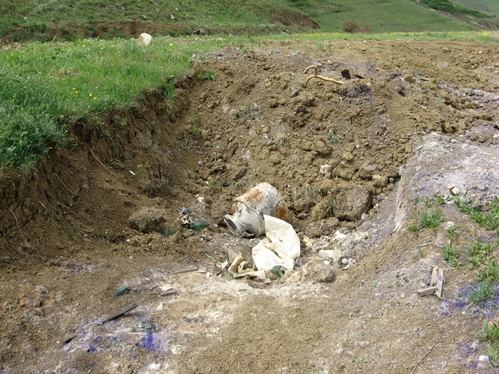
- The investigation showed covering waste burial site of toxic chemicals is insufficient. This is not a final solution to this problem, as it was not studied what was going on in the foundation of this waste burial site.
It’s impermissible, as this huge waste burial site of banned chemicals has mostly transferred because of landslips. Part of underground water may reach Ararat Valley. In this case, fish farms and agricultural farms using artesian water may be affected.
All the land areas near the waste burial site absorbed these toxic chemicals, and you can smell them when it rains: unbearable smell. It turns out the whole waste burial site was isolated, but surrounding land areas having absorbed toxic chemical turned into secondary source for pollution. They should have also been isolated from water, otherwise rain water wash and lower them and they can get to a stream which gets connected with Jrvezh River, Jrvezh with Getar, Getar with Hrazdan, while the Hrazdan flown into Yerevan Lake, where water is used for irrigation purposes.
September 18, 2010