
Siranuysh Gevorgyan, ArmeniaNow
Environmentalists are warning that the situation at a chemical waste dump on the outskirts of Yerevan that posed dangers earlier this year continues to remain threatening, amid fears that toxic waste could still surface.
Experts warn that, with Armenia predicted to face a severe winter, a spring thaw could release dangerous substances.
This year the government allocated 31.6 million drams (about \$ 85,000) to neutralize the dangers posed by about 500 tons of toxic wastes buried at Nubarashen, near Yerevan, and prevent the situation from turning into an environmental catastrophe.
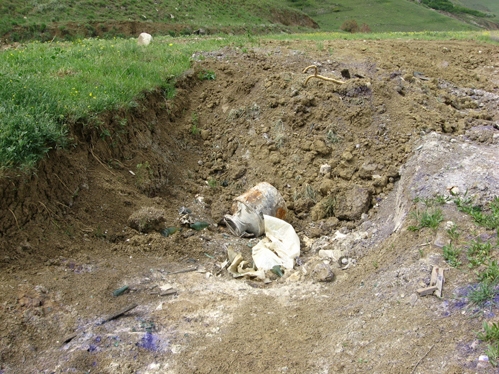
At the beginning of this year unknown persons trespassed on the 1980s-built chemical cemetery and with the use of heavy engineering equipment leveled the ground, uncovering and leaving in the open air sacks and bottles containing toxic wastes. The situation was aggravated because of a wet spring in Armenia this year as the contents of the toxic waste dump built in a landslide-prone area began to slide down towards the nearby villages, Mushakan and Jrashen, causing a public health scare among its residents.
Due to funds allocated by the government in July the area of the dump was cleaned and covered with a water-proof layer, it was surrounded with barbed wire and warning signs and check-points have been installed. Still at that time representatives of NGOs requested that Prime Minister Tigran Sargsyan give a final solution to the problem, since the chemical waste dump had been built in an area subject to landslides and therefore danger always remained.
Armenian Women for Health and Healthy Environment NGO expert Lilik Simonyan told ArmeniaNow that the dump had been brought to the state it had before heavy equipment passed over it.
“Earth from adjacent areas was taken and poured on the dump, which has consolidated the external layer, that is, the landslide is now moving more quickly,” says Simonyan, who about three weeks ago visited the ground.
The course of the work on covering the dump was also assessed by a World Bank expert. In his report, he noted that the company engaged to cover the dump “needs significant improvement in job performance.” Apart from other shortcomings, the report notes that the company hired to do the work did not have a detailed project that would mention how to avoid the spread of toxic chemical wastes and the mixture of clean and polluted earth.
Ministry of Emergency Situations spokesman Nikolay Grigoryan says that the problem of the Nubarashen dump was discussed earlier this month at the first meeting of the ministry’s committee on emergency response. The meeting, he said, was attended by representatives of different NGOs and international organizations.
“The Committee is to submit reports to further develop the concept,” says Grigoryan.
While Emergency Situations Ministry officials give assurances that the issue will remain the focus of the ministry’s attention and that it will be given a comprehensive solution, environmentalist Simonyan warns that the situation will become more acute when winter snow and rain begin.
November 24, 2010