

Armenia is preparing to introduce an Extended Producer Responsibility (EPR) system in the country.
The EPR system makes producers or importers of specific products responsible for the environmentally safe management of the special waste generated from the consumption of those EPR products. Companies will establish Producer Responsibility Organizations (PROs) through which they will carry out the separate collection, recycling, or neutralization of special waste.
The Ministry of Environment of the Republic of Armenia, with the technical support of the American University of Armenia’s Acopian Center for the Environment, has developed and already circulated on the www.e-draft.am online platform a draft Law “On Extended Producer Responsibility” along with the related draft legal acts.

The EPR system has been operating in Bulgaria for 20 years already. During a study visit to Bulgaria in November, Victoria Burnazyan, Vice President of the “EcoLur” Informational NGO, and the NGO’s journalist Kristina Ter-Matevosyan, became acquainted with Bulgaria’s EPR practices with the support of the CEE Bankwatch Network.


CEЕ Bankwatch Network’s “Cities for People” initiative lead, Evgenia Tasheva—who had been a member of the “Zero Waste” team of Bulgaria’s leading environmental association “Za Zemiata” for 15 years—presented the system in a conversation with EcoLur.
In 2024, “Za Zemiata” published the report “Parallel Realities: Managing Plastic Packaging Waste in Bulgaria Beyond Official Statistics”.

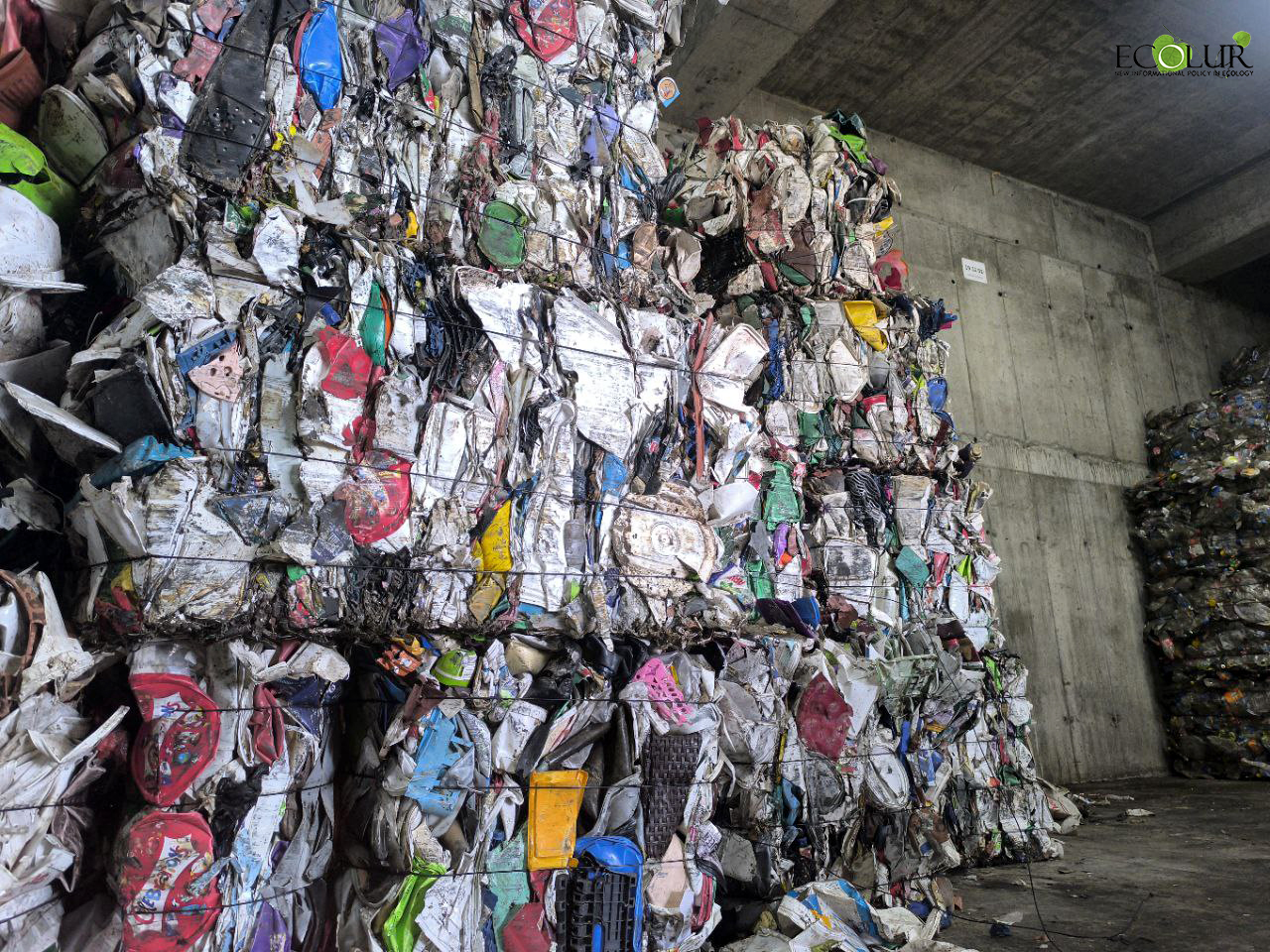
Speaking with EcoLur, Tasheva noted that within the framework of the EPR system, four PROs operate in Bulgaria for managing packaging waste. “One PRO uses only two containers—one for glass and another for paper, plastic, and metal—while another organization uses three containers. These differences, even within the same city, Sofia, confuse people and make proper sorting more difficult,” she said.


In Bulgaria, PROs have their own sorting facilities where the collected packaging waste is separated. However, PROs typically send non-recyclable waste found in their collection bins to the municipal landfill. Because of this, the Sofia City Council adopted a decision requiring PROs to pay for waste sent to the landfill and to increase the number of sorting containers. The PROs are contesting this decision in court, claiming that they were not properly informed about the draft decision and did not participate in the discussions. “If Sofia local authorities succeed in negotiating better coverage, accessibility and equity of waste packaging collection with the PROs, this will give a positive sign for increasing the standards and results from cities' separate collection and waste management systems across Bulgaria,” says Evgenia Tasheva.

The EPR system, in addition to packaged products, also covers electronic goods, batteries, end-of-life vehicles, motor oils, tires, etc. “I think it's been difficult for people to see and to understand how to use these systems, because apart from the colorful bins in the streets for packaging, the other kinds of wastes are not necessarily collected in a way that is very easy to find out,” said Evgenia Tasheva.

According to Tasheva, one of the key weaknesses of the system as a whole is the quality of the statistical information on waste available. For instance, there are significant discrepancies between the data about packaging put on market as reported by the packaging waste recovery organizations (PROs), and the same data collated at the national level. Different institutions collecting data on the same material flows often state different numbers - a flaw that has already been identified in institutional analyses, but remains unresolved. While Bulgaria's official reports to Eurostat claim that a higher-than average EU recycling rate for plastic packaging waste is achieved, the latest publically available data from 2019 show that the reuse and recycling rate for municipal waste is below 10% in half of the country's municipalities. Even some regional city centers and popular tourist settlements lack a functioning separate waste collection system. The natural conclusion is that a significant portion of plastic packaging waste is not being collected separately. but is discarded with mixed municipal waste. Thus, the responsibility for its final treatment (either incineration or landfill) is passed on to the municipalities, which are not only financially constrained, but also fail to adopt optimal, cost-effective waste management methods.

“Тhe minimum requirements for the capacity and density of the network of separate waste collection bins in larger cities are very low, compared to the quantities of packaging waste reported by the National Statistical Institute. In practice, in order to be able to absorb the amount of packaging waste actually being generated - and if the PROs adhered only to the minimum standards -separate collection bins would have to be available in each locality and they would have to be either emptied daily or their number should be increased by 2.5 to 3 times, in order to provide sufficient population coverage and be more convenient for households. These two conditions are a world away from the current situation where separate waste collection bins are primarily placed in densely populated urban centres, while smaller settlements and remote areas are largely ignored,” said Tasheva.

PROs do not operate in settlements with fewer than 5,000 residents. This creates another problem. It is clear that with the introduction of the EPR system, the product fees paid by producers have been included in the consumer prices of products covered by the system, in order to ensure proper waste management by the PROs. As a result, residents of small settlements end up paying the product fees for these products, yet they are not provided with the opportunity to have the waste generated in their communities separately collected and recycled, as PROs do not operate in those settlements.

“This needs to change. We hope that the Ministry of Environment will raise the requirements, and they have promised to do so. We expect stricter requirements mandating that every settlement must be serviced. This is also connected to another amendment to Bulgarian legislation that is very important for everyone. The ‘Pay-As-You-Throw’ principle will be introduced, which will determine waste collection fees for households,” said Evgenia Tasheva.

Another issue, according to the expert, is that PROs in Bulgaria meet their targets mainly by working with businesses - hotels, retail, shopping malls - while collecting far less packaging waste from households via the special street containers. “This problem has long been solved in other countries, such as Austria, where organizations are simply required to report separately the waste collected from businesses and the waste collected from households. PROs must also have separate, higher targets they need to meet, which in turn would motivate organizations to conduct more awareness campaigns and install more sorting containers,” said Evgenia Tasheva.

In response to the question of what advice she would give to countries preparing to introduce an EPR system, Tasheva said: “For me, the most important thing is transparency. The data must be accurate and reliable, and verified by a third party. By data, I mean all information regarding the amount of packaging products placed on the market, because this is the basis for calculating the final amount of waste that must be recycled.

In addition, legal requirements should take into account whether a specific type of packaging on the market is recyclable or not, or if it is difficult to recycle. In such cases, different fees should be set, which are paid by the producers who finance the system. Every producer must pay the PRO according to the quantity and type of packaging they have on the market. The less recyclable the packaging is, the higher the fee they should pay.
We need to insist on having more recyclable packaging, but I also think that there should be requirements to increase the amount of reusable packaging, because it is much better to reuse materials than to recycle them.”

This material was created within “Waste Policy Armenia” (WPA) program, funded by Sweden and implemented by the AUA Acopian Center for the Environment.
The views, conclusions, and opinions presented belong to the author(s) and do not necessarily reflect those of the program, the American University of Armenia, or the Government of Sweden.
December 23, 2025 at 14:36