
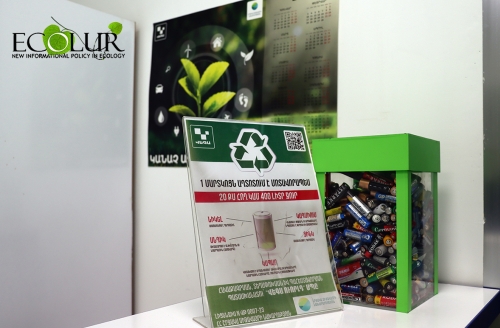
EcoLur has released a new video highlighting the challenges of managing battery and electronic equipment waste in Armenia.
The use of battery-powered devices is increasing day by day — from household appliances and toys to books. However, once these products reach the end of their service life, most of them end up in landfills. Batteries are considered hazardous waste: they contain heavy metals that pollute soil and groundwater and, by entering the food chain, affect human health.
The video presents the steps being taken in Armenia to address this problem. In particular, a legislative package on Extended Producer Responsibility (EPR) has been developed. If adopted, it will require importers and producers to take responsibility for managing waste generated from their products.
VEGA, a company specializing in the sale of electrical appliances, is one of the few organizations in Armenia that, on its own initiative, collects used batteries and electronic waste and organizes their recycling. The company has obtained a hazardous waste management license and installed special collection devices in its stores, allowing citizens to hand in used batteries and receive cashback on the company’s card.
In the video, Arthur Chobanyan, Development Director at VEGA, presents the company’s experience and discusses the changes expected once the law comes into force.

This material was produced within the framework of “Waste Policy Armenia” (WPA) program, funded by Sweden and implemented by the AUA Acopian Center for the Environment, with financial support from Sweden and technical support from AUA.
The views, conclusions and opinions expressed belong to the author(s) and do not necessarily reflect the positions of the program, the American University of Armenia or the Government of Sweden.
May 25, 2026 at 17:23