
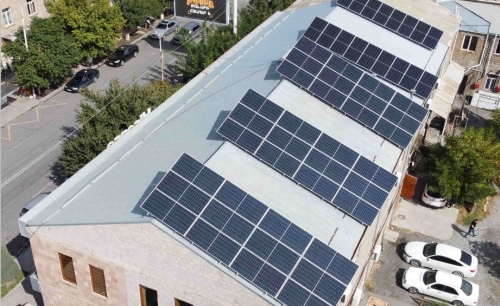
In 2025, solar power plants in Armenia generated 1.2 GW of electricity. As of August 2026, there were 54,400 electric vehicles in Armenia. Once solar panels and electric vehicle batteries reach the end of their service life, they become hazardous waste that poses a risk to the environment and requires strict oversight to ensure safe storage.
Since 2018, large numbers of solar power plants have been installed in Armenia through government support programmes. In 2018, solar panels generated 16 MW of electricity; by 2025, this figure had reached 1.2 GW. There are now also more than 50,000 producers with autonomous/small-scale solar power plants, mainly household and small-business installations, with a combined capacity of approximately 640–650 MW.
There are claims that large solar power plants affect biodiversity and the vegetation cover of the soil.
The number of electric vehicles reached 54,400 in August 2026. The Government of Armenia has set a target of increasing the number of electric vehicles to 100,000 by 2030. The Armenian authorities are focusing on both sectors and encouraging the installation of solar power plants as well as the import of electric vehicles.
Both sectors generate hazardous waste, the storage of which must be subject to state oversight.
Solar Power Plants
To understand the environmental risks posed by discarded solar panels, we first need to understand what materials typical solar panels contain.
The approximate structure of crystalline silicon panels consists of glass, a polymer encapsulant, silicon cells, and an aluminium frame.
Crystalline silicon panels are widely used and may contain:
- lead,
- tin,
- silver,
- copper,
- other metals.
Thin-film panels
Some thin-film technologies use materials such as:
- cadmium telluride,
- copper indium gallium selenide,
- indium,
- gallium,
- selenium.
The environmental hazard posed by solar panel waste cannot be determined simply by looking at the panels. An operating solar panel is generally not considered a significant source of metal leakage. Its cells and potentially hazardous substances are encapsulated and protected.
To understand the environmental risks posed by discarded solar panels, we first need to understand what materials typical solar panels contain.
The situation changes when a panel is:
- cracked or broken,
- delaminated,
- burned,
- dismantled,
- crushed,
- improperly recycled,
- left outdoors for an extended period.
When the protective structure is damaged, leakage becomes inevitable.
In 2026, unprecedentedly large hailstones fell in various regions of Armenia and could have damaged solar panels, potentially resulting in the release of hazardous substances.
Some solar panels that have reached the end of their service life may release hazardous substances. The level of hazard depends on their composition and the results of waste-characterization tests.
Environmental Problems When Solar Panels Become Waste
Essentially, there are four distinct environmental concerns:
- Leaching
If damaged panels are placed directly on the ground and exposed to rain and weather conditions, potentially hazardous components may eventually become mobilized.
- A Broken Panel Can Produce:
- sharp glass fragments,
- exposed electrical components,
- damaged polymer layers,
- potentially exposed cells and metal contacts.
- Landfill Disposal and Resource Loss
Solar panels can contain substantial quantities of recoverable materials. Recycling can recover valuable materials and reduce the amount of waste sent to landfills.
- Pollution During Recycling
A solar panel is not simply a sheet of glass that can be broken up and recycled. The glass is bonded to the cells with polymer encapsulants. Separating these materials may require mechanical, thermal, or chemical processes. Improper dismantling can therefore lead to environmental problems.
According to Inga Zarafyan, President of EcoLur Informational NGO, a systematic approach is necessary.
Electric Vehicle Batteries Pose Serious Risks
By 2030, the number of electric vehicles in Armenia is expected to reach 100,000, but this does not mean that all these vehicles will be imported in a single year. Of that projected total, 54,000 are already in Armenia, and the number continues to increase every year. This means that the batteries in some electric vehicles have already completed half or more of their service life, and the day when these batteries reach the end of their first life is not far off.
Lithium-ion batteries are the most widely used and contain:
- lithium compounds,
• nickel,
• cobalt, in many battery chemistries,
• copper,
• aluminium,
• graphite,
• organic electrolytes,
• plastics and other materials.
These batteries pose serious fire safety risks. A short circuit in battery cells can cause a fire that is theoretically impossible to extinguish. In addition to air pollution, fires can contaminate the environment through the water used in firefighting.
Lithium batteries can retain significant amounts of electrical energy even after being taken out of service. Used batteries may still contain enough residual energy to cause injury or start fires.
Large numbers of batteries are damaged in accidents, making it very important to have answers to several questions following an accident:
• Where does a damaged electric vehicle go after a serious accident?
• Who is authorized to determine whether its battery is safe?
• Where is the battery stored if it is removed?
If Armenia reaches 100,000 electric vehicles, their combined battery packs could weigh approximately 35,000–50,000 tonnes, assuming an average pack weight of 350–500 kg. Once the vehicle fleet reaches a mature replacement cycle, approximately 2,300–3,300 tonnes of battery packs could reach the end of their first service life annually, excluding second-life applications, exports, and other factors.
Some of these batteries will be given a second life. The fate of the rest remains unknown. We have no statistics on how many batteries have become waste as a result of mechanical damage or where they are.
Inga Zarafyan, President of EcoLur Informational NGO, will speak about this issue.
November 03, 2026 at 14:05