
On May 22, the world marks the International Day for Biological Diversity. According to the United Nations, around one million species of plants and animals are currently at risk of extinction, while biodiversity loss continues to accelerate due to human activity.
Biodiversity is one of the fundamental conditions for sustaining life on Earth. It underpins ecosystem stability, maintains food chains, and ensures clean air and water, fertile soils, and overall ecological balance.
The resilience of this system is especially critical for future generations. Protecting biodiversity helps create a healthy, safe, and enabling environment where children can grow, develop, and benefit from natural resources within a sustainable future. In Armenia, biodiversity conservation carries a particular importance, as it is directly linked to shaping a healthy, secure, and sustainable future for children and young people.
According to Arsen Gasparyan, a biodiversity expert at the Acopian Center for the Environment and a lecturer at the Zaven P. and Sonia Akian College of Science and Engineering at the American University of Armenia, one of Armenia’s defining features is its remarkable biodiversity within a relatively small geographic area.
What makes Armenia’s biodiversity unique
As part of the Caucasus region, Armenia is recognized as one of the world’s 36 biodiversity hotspots, rich in species yet highly vulnerable. Within its compact territory, the country hosts a wide range of ecosystems - from sandy deserts to alpine and subalpine zones, as well as forests and steppes.
Armenia’s Red Book of Plants (2010) lists approximately 452 species of vascular plants (11.89% of the flora) and around 40 species of fungi (about 1% of fungal biota). The Red Book of Animals includes 155 invertebrate species and 153 vertebrate species.
“Armenia’s geographical location, diverse landscapes, and rapid shifts across natural zones make it unique. This diversity is reflected in its species composition: more than 130 endemic plant species have been recorded here, along with a number of endemic animal species, making the country biologically significant,” Gasparyan noted.
What challenges does biodiversity face in Armenia?
Despite this rich natural heritage, biodiversity in Armenia faces serious threats. Mining, agricultural expansion, deforestation, household pollution, climate change, wildfires, and the overexploitation of biological resources are driving habitat loss and species decline.
Gasparyan emphasized that the issue is not limited to visible threats such as deforestation or poaching, but also includes slower, often invisible processes that gradually degrade natural ecosystems.
Globally, agriculture is one of the sectors exerting the greatest pressure on biodiversity, as natural habitats are converted into farmland, disrupting ecological balance. In addition, overuse of biological resources and the impacts of climate change are affecting species distribution, altering habitats, and weakening ecosystem resilience.
Biodiversity loss is often seen as purely an environmental issue, but its impacts are far broader. When humans alter or encroach upon natural habitats, new risks emerge, including increased human–wildlife conflict: for example, wild animals are more likely to appear near human settlements.
What actions are needed to protect biodiversity?
In this context, Gasparyan highlighted the importance of viewing environmental protection and economic development not as opposing forces, but as complementary systems. Strengthening collaboration between business, industry, and environmental actors is essential to minimize harm and to localize and apply proven sustainable solutions.
In 2022, at the 15th Conference of the Parties to the Convention on Biological Diversity, the Kunming-Montreal Global Biodiversity Framework was adopted, calling for urgent and effective action to halt biodiversity loss. Under Target 3, countries committed to ensuring the effective conservation of at least 30% of the world’s terrestrial and inland water ecosystems by 2030. Each country is expected to contribute to this global goal.
Armenia has set a national target to ensure the effective conservation of 20% of its terrestrial and freshwater ecosystems by 2030. To achieve this, the country plans to expand its network of protected areas to cover 20% of its territory. Currently, these areas account for 13.1%.
Biodiversity is more than an environmental agenda
Biodiversity cannot be separated from human well-being. Food, water, a healthy environment, and quality of life all depend directly on functioning ecosystems. This is closely linked to children’s health, well-being, and future prospects.
It is important to recognize that human health, animal health, and environmental health are interconnected and must be addressed as one. This is the foundation of the One Health approach, which highlights how biodiversity loss, environmental degradation, and challenges affecting wildlife directly impact human health, including that of children.
For example, many infectious diseases and viruses originate in animals and can be transmitted to humans, posing risks to public health. Protecting biodiversity is therefore not only an environmental priority, but also a critical measure for safeguarding health. The One Health approach brings these dimensions together under a shared vision, emphasizing that the well-being of people, animals, and the planet are inseparable.
Within this interconnected system, special attention must be given to children’s health and protection. Children are particularly vulnerable to environmental and health risks, and they will carry the primary responsibility for advancing sustainable development in the future.
As Gasparyan noted, biodiversity loss does not discriminate by age; its consequences affect everyone, including children who are the most vulnerable due to their age. Deforestation can trigger soil erosion that threatens community safety; polluted rivers can harm health; and declining biodiversity can reduce both the quality and availability of food.
The unique role of children
Children can become one of the most powerful forces for protecting biodiversity. While biodiversity loss affects all age groups, working with children from an environmental education perspective is often more effective than with adults.
“With children, change is much easier to achieve: they are more open, more motivated, and more ready to adopt new behaviors,” the expert explained.
He believes the challenge is not the lack of isolated seminars or short-term initiatives, but rather the absence of a systemic approach. If societies aim to raise more responsible generations, environmental education must become a continuous, long-term process that nurtures respect for nature from an early age.
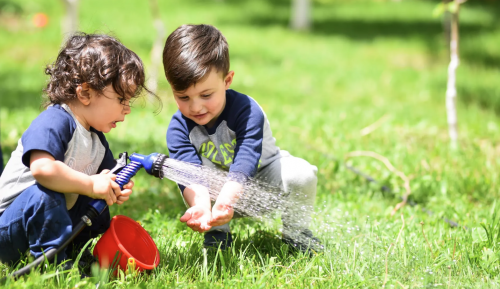
At the same time, education cannot be confined to the classroom. According to Gasparyan, it is impossible to fully understand nature through theory alone. “You cannot teach nature to children within four walls. Until they experience it firsthand, until they see it in its real environment, that connection is not formed,” he emphasized.
Spending time in nature also plays a vital role in children’s physical and cognitive development. Green spaces, forests, and open areas support not only healthy lifestyles but also mental well-being.
“Even something as simple as birdsong in the morning, access to natural surroundings, or time spent outdoors can foster positive emotions and strengthen a child’s connection with the environment. Today, when access to information is greater than ever, especially for younger generations, it is important to turn that access into meaningful engagement,” he added.
Families, schools, and communities can encourage children’s participation in environmental initiatives, hiking and outdoor activities, nature-based learning programmes, and responsible consumption practices.
“Every person is a consumer, and positive change can begin with rethinking consumption patterns. Using resources efficiently, choosing reusable solutions, and spending more time in nature can help build a more responsible society,” he said.
According to Gasparyan, if we want to foster a responsible, informed, and caring relationship between Mother Nature, it must begin in childhood, through experiencing, appreciating, and valuing the natural world.
May 21, 2026 at 16:46