
EcoLur
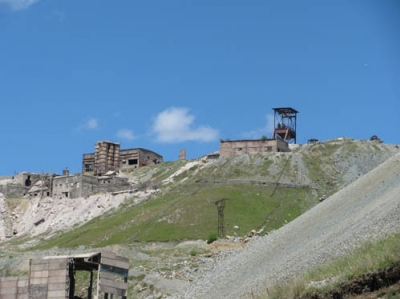
20 licenses have been issued for mining in Gegharkounik Region and still 27 licenses have been issued for the prospecting of natural resources. Among current mining are Sotq gold-bearing mine and nonmetal mines where tuff, basalt, peat, perlite and sand are mined. Many of these minings directly affect on the ecosystem of Lake Sevan and on the quality of freshwater in the lake. First, these are toxic elements and heavy metals, such as chromium, nickel, cadmium, arsenic, antimony etc. These metals are present together with gold in Sotq mine, while chromium is available in nonmetal mines, such as Shorzha and Jil chromium-containing and dunite-periodite mine. Sand is mined mainly near the shores of Sevan, near Shorzha, on Ardanish Peninsula. In parallel with sand mining the lake ecosystem is changing and biodiversity is getting extinct, while Nature Protection Ministry as represented by “Sevan” National Park is assumed to protect it.
Most frequently, gold is mined in Gegharkounik Region. Out of 27 licenses issued for the prospecting of natural resources, 6 licenses are for gold prospecting. Besides golf, lead, copper and molybdenum are also prospected for, i.e. metals characteristic to our soil. If to map prospecting areas, it can be concluded that precious metals seize the territory of Sevan drainage basin.
It should be noted that Energy and Natural Resources Ministry determine soil management policy and this very Ministry issues licenses for prospecting without any environmental impact assessment. If any company decides it’s profitable to develop whatever it has been prospecting at any costs, Gegharkounik Region will turn into a single ore processing enterprise, as it is in Syunik.
October 05, 2011 at 12:43