

EcoLur
Amulsar's positive EIA opinion contradicts the Armenian legislation: numerous red-listed species have been detected in mine area: this opinion belongs to WWF Armenia Director Karen Manvelyan, which is mentioned in his professional opinion entitled 'Expert Opinion on Biodiversity, Its Conservation and Biodiversity Offset in EIA and Appendixes of Amulsar Gold Quartzite Deposit in the Republic of Armenia'
Reminder: the working group adjunct to RA Environmental and Mining Inspection Body established by Armenian PM's order submitted 8 different expert opinions on Amulsar gold-bearing quartzite deposit.
WWF Armenia Director, PhD, expert opinion particularly says:
Expert Opinion on Biodiversity, Its Conservation and Biodiversity Offset in EIA and Appendixes of Amulsar Gold Quartzite Deposit in the Republic of Armenia
Preface
Being a part of the Caucasus ecoregion, Armenia is one of 35 richest spots in terms of biodiversity according to the criteria developed by Conservation International. Armenia is also one of 34 regions accepted by the WWF, which is rich in biodiversity.
The Republic of Armenia (hereinafter RA) ratified a number of international environmental agreements relating to biodiversity (conventions and their protocols) and the performance of the international commitments undertaken under these agreements promote effective conservation of the environment and biodiversity.
In line with the requirements on the Convention of Biological Diversity, "Strategy and State Program on Conservation, Protection, Use, and Reproduction of Biodiversity in Armenia for 2016-2020" was developed in 2015.
Attaching importance to the conservation of biodiversity in Armenia and international commitments undertaken by RA, over the recent years a number of countries and international bodies have been financing and implementing projects in cooperation with RA Nature Protection Ministry aimed at the conservation of biodiversity and its reasonable use. Over the recent years, significant success has been recorded in biodiversity conservation, particularly new specifically protected areas of nature have been established (mainly in Syunik and Vayots Dzor Regions) and the establishment of new ones is planned, particularly Jermuk National Park in Vayots Dzor Region and Tatev National Park in Syunik Region.
Amulsar gold-bearing quartzite deposit is located on the borderline of RA Vayots Dzor and Syunik Regions, within the ridge area of north, north-western branching of Zangezur Range, at the elevation of 2500-2988m.
The mine is located in one of the most important areas for biodiversity, which has been outlined by leading botanists and zoologists in the Republic of Armenia (Appendix 1).
Based on the aforementioned, it turns out that the area of Amulsar gold quartzite deposit has a high significance in terms of biodiversity and in case of mining operations, the planned measures should, to the maximum, minimize the lost of flora and fauna species and their habitats.
Methodology
The following documents have been studied to find out the impact of Amulsar gold quartzite deposit on biodiversity:
The EIA
APPENDIX 1: Studies on Amulsar Flora (May-October 2013)
APPENDIX 2: Studies on Amulsar Flora (October 2013 – June 2014)
APPENDIX 3: Ornithological Studies in Amulsar (Spring 2013)
APPENDIX 4: Ornithological Studies in Amulsar (Spring 2014)
APPENDIX 5: Potentilla Porphyrantha in Amulsar
APPENDIX 6: Annual Report of Scientific and Research Program on Potentilla Porphyrantha
APPENDIX 7: Studies on Current State of Individual Fauna Groups in HLF Area of Amulsar Mining Project
APPENDIX 8: Studies on Current State of Individual Fauna Groups in HLF Area of Amulsar Mining Project (Final Report) October 2013- June 2014
APPENDIX 11: Biodiversity Offset Strategy
Apart from the EIA and its appendixes, certain documents provided by RA Nature Protection Ministry have been studied such as the statement of Bioresource Management Agency on the EIA, the agreement signed between "Geoteam" CJSC and RA Nature Protection Ministry on the displacement of individuals of new populations of plant species red-listed in Armenia, Biodiversity Action Plan for Amulsar, Armenia, “Natural and Critical Habitat Assessment for Amulsar, Armenia” (hereinafter - NCHAA).
In the course of the studies, the following documents were also used: Red Book of Plants of RA and Red Book of Animals of RA, "Strategy and National Action Plan on Conservation, Protection, Use, and Reproduction of Biodiversity in the Republic of Armenia", and WWF data on biodiversity.
Based on the examination of the aforementioned documents it can be concluded that Lydian Armenia CJSC investigated the biodiversity in the area in details, measures have been proposed for the conservation of the Potentilla Porphyrantha growing in the area and the conservation of the Brown Bear inhabiting in the area, as well as biodiversity loss offset program. Despite this, we have a number of problems in regard to the investigation, conservation and offset of the biodiversity, which are presented below:
Studies on Biodiversity
The data on the biodiversity in Amulsar and adjacent areas have been collected and analyzed by "Botany Institute" SNCO of NAS RA and "Scientific Center for Zoology and Hydroecology" SNCO of NAS RA, Armenian Society for the Protection of Birds (ASPB) Public Organization, "TreWeek Environmental Consultants" Company (UK) and Cambridge University scientists (UK). Special focus was paid to the availability of red-listed animals and plants in the areas (listed in Red Book of Armenia, 2010) and the development of necessary environmental measures.
Analysing the investigations of plants, it can be concluded that rather large works have been carried out aimed at detection of species, their occurence and habitats. Main scientific studies have been carried out on red-listed Potentilla Porphyrantha. Page 220 of the EIA says that a new subpopulation of red-listed Potentilla porphyrantha was recorded in the upper zone of the mountains in Amulsar in 2012 and it doesn't say who had detected it. In fact, this subpopulation was first detected by Pavel Hambaryan and Anush Nersisyan, PhDs in Biological Sciences, taxonomists headed by well-known botanist Professor Eleonora Gabrielyan in 2012 when the WWF organized a field trip to Amulsar and its adjacent area.
WWF staff Alexander Malkhasyan, an expert in reptiles and mammals and ornithologist Vasil Ananian, also took part in this field trip, who detected 3 red-listed reptile species, 15 red-listed bird species and two red-listed mammals (red-listed in Armenia) as a result of their investigations. I should mention here that before this fact the company had denied the availability of any red-listed species in Amulsar area. After detecting red-listed species, the WWF organized a press conference at EcoLur Press Club and publicised the findings. The recording of this press conference is available at: http://ecolur.org/hy/news/mining/redlisted-species-in-amulsar-territory-revealed/4886/.
Page 220 of the same EIA says that "Under the data of Red Book of Plants of RA and the ERE of Institute of Botany of NAS RA, Acantholimon caryophyllaceum and Cicer anatolicum plant species should have been seen in the surroundings of Gndevaz Village, which had been gathered very long ago and, naturally, exact coordinates are missing, nevertheless, these plant species haven't been found in the course of the field-trip observations."
The statement issued by Bioresources Management Agency of RA Nature Protection Ministry on the EIA of Amulsar project also mentions these two plant species, which says the following, "The following fact that red-listed Cicer anatolicum Alef. and Acantholimon caryophyllaceum Boiss (red-listed in Armenia) haven't been detected in the course of the field trip in the area of Gndevaz Community is not reliable so we find that it is necessary to carry out additional investigations aimed at detecting the aforementioned species.
All this is mentioned only due to the fact that in the course of the recent visit of RA Nature Protection and Inspection Body botanist Anush Nersisyan most probably detected Acantholimon caryophyllaceum (VU) red-listed in Armenia, while zoologists Vasil Ananian and Alexander Malkhasyan detected Apollo butterfly (Parnassius apollo kashtshenkoi Sheljuzhko, VU) red listed in Armenia.
As it happened in 2014, this time again some Lydian employees started denying the availability of these species and, at the same time, insults were addressed to the specialists having taken part in this visit (see here: https://www.facebook.com/Yerkirmedia/videos/2206342042946963/;
https://www.facebook.com/lydianarmenia/posts/530995240678056?__tn=K-R)
All this shows that the company doesn't accept another professional opinion, which doesn't suit a company operating with international standards, among whose institutional shareholders are the IFC and EBRD. An additional field trip is necessary to be paid to Amulsar area for the final specification of Acantholimon caryophyllaceum and, if the company doesn't object, a joint field trip can be organized together with the botanists and the company specialists to make a final decision on the species. Page 220 of the EIA also says that "... the Agaricomycetes red listed in Armenia (2010) are missing in the observed areas."
Based on the absence of investigation on the fungi in the documents, it can be concluded that these investigations haven’t been carried out showing the incomplete implementation of the EIA.
The fauna was mainly studied in 2013-2014. Examining the EIA documents, it can be concluded that, in general, rather large work has been carried out to examine hydrobiological and invertebrate, fish, amphibian, reptile, bird and mammal species, their occurence and habitats.
Nevertheless, it should be mentioned that the studies on biodiversity didn’t pay attention to a number of red-listed species: the Eastern Spadefoot (Pelobates syriacus VU) out of amphibians, the Transcaucasian ratsnake (Zamenis hohenackeri) out of reptiles and Apollo butterfly (Parnassius apollo kashtshenkoi) out of invertebrates.
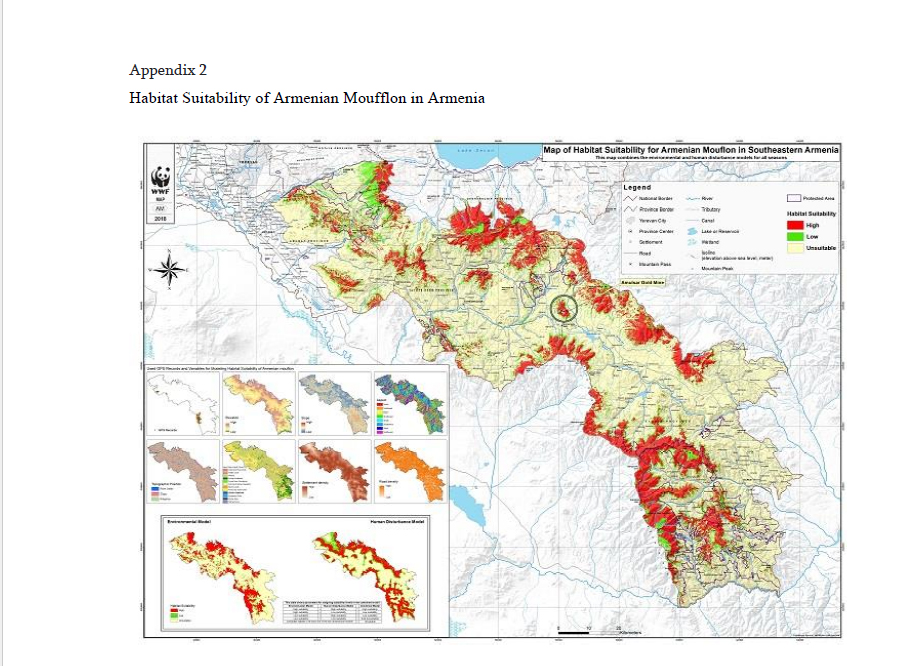
The habitats of the Bezoar goats (Capra aegagrus, VU) residing on the left bank of the Arpa River were insufficiently studied, as well as the probable impacts of the mining on the habitats and the number of this animal. What about the Armenian moufflon, this species is so sensitive that its absence is natural when there are so many people and machines in this area. Nevertheless, the modeling of the moufflon habitats carried out by us shows that Amulsar and its adjacent areas can be a habitat for this species, as well as they can be a migration corridor from Zangezour mountain range to Karabagh mountain range (Appendix 2), which is confirmed with a number of field trips.
Biodiversity Conservation
The biodiversity conservation program is laid down in the main document of the EIA, Environmental and Social Management Plan of Amulsar Gold Mine (EISA), as well as in Biodiversity Action Plan for Amulsar, Natural and Critical Habitat Assessment for Amulsar.
Conservation management plans for Potentilla Porphyrantha and Brown Bear have been developed quite in details, a special program on the set-aside, translocation, ex situ conservaton of the Potentilla porphyrantha has been submitted, which is very welcomed.
An intact area is planned to establish for the conservation of the viable population of the Potentilla porphyrantha, the living environment of the brown bear, the reproduction areas in sub-alpine meadows and mountainous birds: the precise boundary of the set-aside will be confirmed following consultation with local communities and the Ministry of Nature Protection. Such an approach is applied for the first time in Armenia by a mining company, which is also welcomed and can be applied in other mines as well. Despite in-detailed developed biodiversity management plan, there are several observations regarding the biodiversity conservation.
The sentence on page 247 of the EIA saying, “One of effective environmental measures during area operation is the gathering and translocation of rare reptile species into safe sections, which is implemented in the activity period of the reptiles (mainly early spring) and the action laid down under “BIO6” ID in Amulsar Gold Project Environmental and Social Management Plan (ESMP) “Small mammals, reptiles and amphibians will be excluded from working areas. Any individuals that become trapped within working areas will be removed by a suitably qualified ecologist.” arise a number of questions:
• Whether the resettlement and translocation of these animals have been accomplished, as there are quite wide-scale soil and constructions works accomplished, as a result of which a definite loss of these animals could have been recorded.
• If the translocation of the reptiles, including that of the endangered species, have been carried out, whether there is a relevant governmental resolution on the translocation and resettlement of red-listed species.
• All the examined documents don’t have any project developed on the translocation and resettlement of small mammals, reptiles and amphibians, whether there is such a project available, if yes, why it hasn’t been presented in the EIA and the appendixes.
• If such translocation has, anyway, taken place, where these animals have been resettled and who has carried out translocation. Whether are relevant protocols, photos and other documents available?
These questions have emerged, because due to the performance of soil and construction works there will be losses of high number of the aforementioned animals, including such species occurring in the area as the Transcaucasian ratsnake (Zamenis hohenackeri, VU), Vipera raddei (Montivipera raddei, VU), Vipera (Pelias) eriwanensis, and European cat snake (Telescopus fallax, VU) red listed in Armenia. These animals won’t have any opportunity to move to other habitats and their populations available in this area will be eliminated as a result of heavy machinery, construction etc.
Biodiversity Offset
The biodiversity offset strategy has certain omissions and drawbacks: the document says, “The objective of the biodiversity offset measures is not to have any loss in biodiversity and preferably to ensure increase in the balance in terms of the population of the species, structure of living habitats, ecosystems and their use by people, cultural values related to biodiversity.' It also says that ''There are spacious and various sub-Alpine and mountainous meadows on Amulsar, which are considered as natural living habitats under criteria KS6/KP6. Obviously, it is impossible to ensure no losses of biodiversity in the case of open-pit mining because the natural habitat in that area will be completely destroyed. At the same time, any offsetting measure, including the establishment of the Jermuk National Park or the restoration of any other degraded area will never recreate the national habitats with their specific biodiversity and complex links between species that will suffer “permanent and irreversible impacts” as a result of the project.
In addition to the establishment of the Jermuk National Park, the offsetting strategy talks about other conservation activities only for the brown bear and the lesser kestrel with those activities largely being monitoring measures. The creation of the national park and the aforementioned additional activities are clearly inadequate in terms of damage to be caused to the biodiversity of the area and offsetting the losses. Setting up a national park is a good initiative but it may not offset the loss of the biodiversity of the Amulsar project area.
The distribution of funds allocated for the establishment and operation of the national park needs to be reviewed as there are no projects for communities’ development of the buffer zone of the national park. The amount allocated for the establishment of the national park is an exaggerated figure, while the funds foreseen for the maintenance and specific conservation/restoration activities are very small. This will lead to the ineffective operation of the national park and the incomplete conservation of the biodiversity. Operation cost of the park should be estimated again and be foreseen for at least 10 years. Although, it is preferable to have this done for a longer period – for up to 25 years.
According to Company's Biodiversity Policy, 'The objective of the biodiversity offset measures is not to have any loss in biodiversity and guarantee that there won't be any systematic degradation or loss of biodiversity and ecosystem functions as a result of project works.
It's understandable that the company considered only the habitats of Potentilla Porphyrantha and Brown Bear to be critical guided by the European Bank for Reconstruction and Development (EBRD) Performance Requirement 6 (PR 6), (where the Brown Bear is listed in Appendix 4, which means that the degradation of its living habitat is banned), nevertheless, it is not clear why the company hasn't been guided with the Armenian legislation – RA Code on Subsoil, RA Laws on Flora and Fauna.
Table 5.7.10 of the IEA about offsetting the probable impacts on the red-listed species in Armenia says that additional living habitat may be established for Vipera raddei, Vipera (Pelias) eriwanensis, and European cat snake in Herher open woodland sanctuary through fires, harvesting and lessening trees. This provision is not acceptable either, as here we speak about the artificial disturbance of the natural environment, moreover, when it is proposed to be carried out in the specifically protected areas of nature.
The ecological service is also well expressed in the document, but it would be better to present the financial part of the ecosystem services. For example, it would be good to have the financial expression of Table 5.11.3. – the loss of agricultural land areas according to the cadastre classification (ploughland areas - 17,5%, meadowlands - 21,8%, orchards - 35,6%, pasture - 11%). The same refers to the categories of other environmental services.
Eventually, the document mentions in Chapter 4 that the data relating to the biodiversity have been collected since 2008. The investigation included also the data submitted by the local experts and international specialists. State and public organizations have been involved – particularly, Institute of Botany of NAS RA and Scientific Center for Zoology and Hydroecology of NAS RA, Armenian Society for the Protection of Birds (ASPB) Public Organization, the Caucasus Nature Fund and WWF. All this doesn't comply with the reality, as the WWF hasn't ever been involved in the activities of the company.
Legal Issues
The area of the Amulsar gold deposit has species of animals and plants registered in the Red Book of Armenia. Open-pit mining and the operation of its adjacent structures will lead to the loss or at the minimum deterioration of the habitat for those species thus inevitably reducing their numbers. This is in direct contradiction with the following provisions of the Republic of Armenia Mining Code, RA Law on Fauna, and RA Law on Flora, as well as the provisions of the Bern Convention on the Conservation of European Wildlife and Natural Habitats and the Convention on Biological Diversity.
a) Article 26 of the RA Mining Code stipulates the grounds for the prohibition of mining: The use of separate subsoil allotments shall be prohibited in a manner prescribed by Republic of Armenia Law aiming to ensure national security, protection of human life and health, historical and cultural values or nature and the environment, if the land plot on the claimed subsoil allotment:
1) Has cemeteries on it
2) Accommodates natural, historical or cultural monuments
3) Accommodates plants or animal settlements registered in the Red Book of Armenia, or if it is on migration routes of animals.
b) Article 18 of the RA Law on Fauna stipulates: The users of natural resources, who harm the species mentioned in the Red Book of the Republic of Armenia during economic or other activities, must undertake measures for their protection. Any activity that will result in the decrease of the quantity of animal species registered in the Red Book of the Republic of Armenia or will deteriorate their habitat is prohibited.
c) Article 17 of the RA Law on Fauna stipulates: All the objects of fauna are subject to legal protection in the Republic of Armenia. Economic, constructional and social activities envisaged for provision of security of fauna objects and their habitat, as well as the continuity of their existence, will be implemented in accordance with procedures defined by the Republic of Armenia.
d) Article 17 of the RA Law on Flora stipulates: Those land users who have species of plants registered in the Red Book of the Republic of Armenia growing on their plots must undertake measures for the protection of such plants in a manner defined by Republic of Armenia Law. Any activity that will result in the decrease of the quantity of plant species registered in the Red Book of the Republic of Armenia or will spoil their habitat is prohibited.
e) Article 18 of the RA Law on Flora stipulates: All the objects of flora are subject to legal protection in the Republic of Armenia.
f) According to Article 3 of the Bern Convention on the Conservation of European Wildlife and Natural Habitats:
1. Each Contracting Party shall take steps to promote national policies for the conservation of wild flora, wild fauna and natural habitats, with particular attention to endangered and vulnerable species, especially endemic ones, and endangered habitats, in accordance with the provisions of this Convention.
2. Each Contracting Party undertakes, in its planning and development policies and in its measures against pollution, to have regard to the conservation of wild flora and fauna.
g) According to Article 14 of the Convention on Biological Diversity,
Each Contracting Party, as far as possible and as appropriate, shall:
(a) Introduce appropriate procedures requiring environmental impact assessment of its proposed projects that are likely to have significant adverse effects on biological diversity with a view to avoiding or minimizing such effects and, where appropriate, allow for public participation in such procedures;
(b) Introduce appropriate arrangements to ensure that the environmental consequences of its programmes and policies that are likely to have significant adverse impacts on biological diversity are duly taken into account;
Conclusion:
1. The studies on the biodiversity of Amulsar Gold Quartzite Deposit project has been carried out quite well, nevertheless, there are some omissions, such as not investigating the fungi occurring in the area, several red-listed animal and plant species need additional investigations (Acantholimon caryophyllaceum Boiss (VU), Eastern Spadefoot (Pelobates syriacus VU), the Transcaucasian ratsnake (Zamenis hohenackeri), Bezoar Goat (VU) and Apollo butterfly (Parnassius apollo kashtshenkoi).
2. Individual species, their state, occurence, habitats have been assessed, nevertheless, the impact of the mine on the general biocenosis, as well as the impact of the dust saturated with cyanide and heavy metals on the flora and fauna.
3. The biodiversity conservation program of Amulsar Gold Quartzite Deposit project refers mainly to one plant species - Potentilla Porphyrantha and one animal species – Brown Bear. The conservation measures for other red-listed species are mainly restricted with the establishment of Jermuk National Park.
4. The biodiversity offsetting strategy of Amulsar Gold Quartzite Deposit is mainly restricted with the establishment of Jermuk National Park.
5. The positive statement of the EIA contradicts the Armenian legislation, particularly 26 Article of RA Code on Subsoil, Articles 17 and 18 of RA Law on Fauna, Articles 16 and 17 of RA Law on Flora, as there are numerous red-listed animal and plant species detected in the area of Amulsar Gold Quartzite Deposit.
Karen Manvelyan,
Director of WWF Armenia
PhD in Biological Sciences
30.08.2018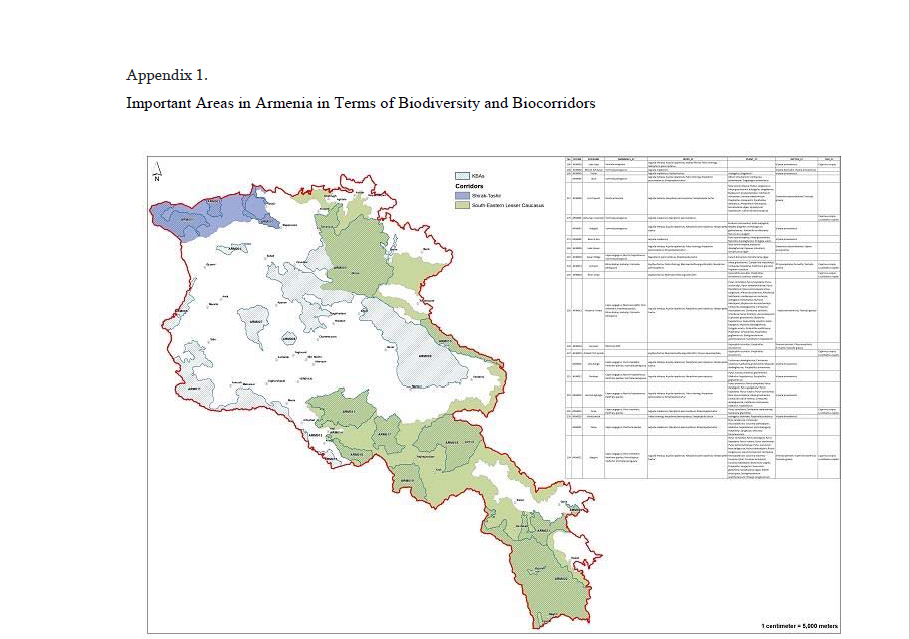
October 29, 2018 at 18:12