
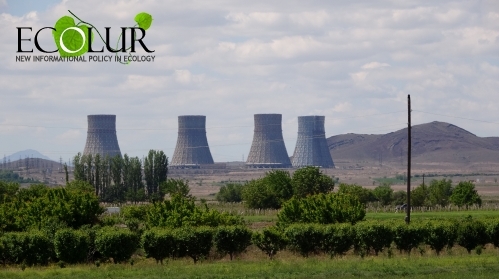
Armenia is considering options for the construction of a new nuclear power plant. In a conversation with journalists, Prime Minister Nikol Pashinyan did not rule out that a 1,000 MW nuclear power plant could be the most logical solution.
During his visit to Armenia on September 29, Rosatom Director General Alexey Likhachev officially proposed to the Government of Armenia the construction of a VVER-1000 power unit.
Why is the approach changing?
On October 1, Prime Minister Nikol Pashinyan stated that a modular nuclear power plant would most likely no longer be sufficient to meet Armenia’s future energy demand. He did not rule out that the construction of a 1,000 MW nuclear power plant could be the most logical solution.
According to Nikol Pashinyan, just one year and four months ago Armenia had a surplus of electricity, and the task was to find ways to consume it. However, the situation has changed due to increased energy demand associated with major investment projects and the establishment of two artificial intelligence factories.
The Prime Minister noted that investors are submitting written inquiries asking how Armenia will provide the electricity they need. According to him, the government currently finds it difficult to give a clear answer.
Nikol Pashinyan stressed that both the possibilities for importing electricity and the development of domestic generation capacity need to be considered simultaneously. In his assessment, the issue is not only to meet today’s demand but also to forecast the country’s energy needs for the next ten years.
Thus, the Prime Minister’s latest statement indicates that the small modular reactor option, which had previously been considered preferable, is no longer the only solution under consideration. However, no final government decision has yet been announced.
The Russian Proposal
On September 29, Alexey Likhachev, Director General of the Rosatom State Corporation, arrived in Yerevan. He discussed with Prime Minister Nikol Pashinyan and Deputy Prime Minister Mher Grigoryan the extension of the operating lifetime of the Armenian Nuclear Power Plant’s Unit 2 and the construction of a new power unit.
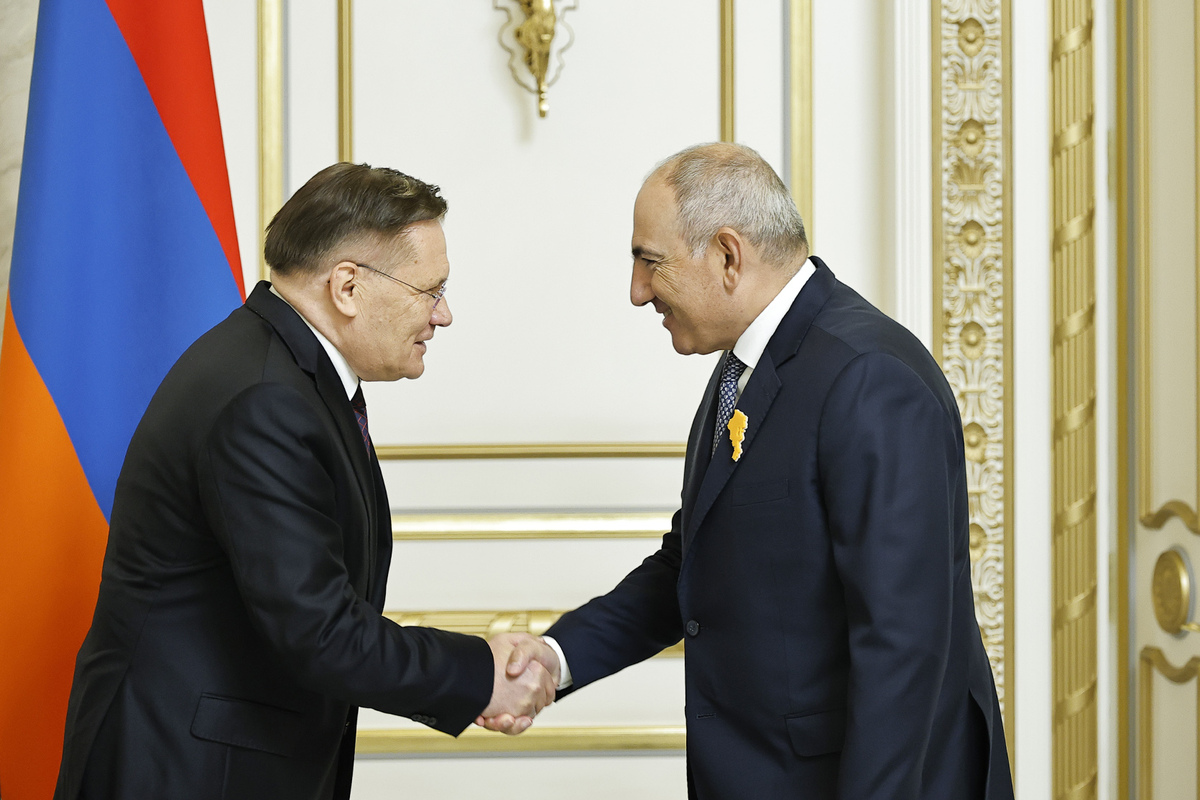
During the visit, Alexey Likhachev announced that Rosatom had officially proposed to the Government of Armenia the construction of a 1,000 MW VVER-1000 power unit.
The Russian side expressed its readiness to implement the project through an international consortium, involving manufacturers from other countries as well. According to Likhachev, cooperation with French, South Korean and Chinese companies would be possible if the Armenian side expressed such an interest.
At the same time, he stressed that the choice of the technology, capacity and construction partner for the new plant falls within the authority of the Government of Armenia.
Pashinyan had previously also stated that the government was considering proposals from various international partners regarding the choice of technology for the new nuclear power plant. According to him, the decision should be based on a combination of economic efficiency, cost, quality, safety, implementation timelines and guarantees.
Operating Lifetime of Armenian Nuclear Power Plant and Costs of Extension
According to Alexey Likhachev, operation of Unit 2 of the Armenian Nuclear Power Plant is planned to continue until 2036. After that, additional major investments would be required to technically maintain the possibility of operating the unit until 2046.
According to the head of Rosatom, the required investment would amount to hundreds of millions of dollars. The necessary work includes upgrading safety and automation systems, technical measures related to the reactor vessel, and expanding spent nuclear fuel storage capacity.
Alexey Likhachev warned that these investments would affect the cost of electricity. In his assessment, if the full scope of work is implemented, the cost could even double.
Taking this circumstance into account, he proposed also considering an alternative approach: limiting operation of the existing plant until 2036 and making a decision on the construction of a new power unit as soon as possible.
For the previous stage of extending the operating lifetime of the Armenian Nuclear Power Plant, Russia provided a $270 million loan and a $30 million grant in 2015. In December 2023, an agreement worth approximately $165 million was also signed to extend the reactor’s operating lifetime by another ten years.
What Is Known About the American Option?
Armenia is also developing cooperation with the United States in the field of nuclear energy.
The 123 Agreement signed between the two countries establishes the legal basis for peaceful nuclear cooperation. It provides an opportunity to discuss U.S. nuclear technologies, including small modular reactors.
Nikol Pashinyan presented the agreement as an opportunity to obtain comprehensive information about U.S. technologies and assess their applicability to Armenia.
However, signing the agreement does not mean that Armenia has selected U.S. technology or decided to build a nuclear power plant with a U.S. supplier.
When Will the Decision Be Made?
The Government of Armenia has not yet made a final decision on the technology for the new nuclear power plant or its construction partner.
According to Alexey Likhachev, the technical specifications of the new power unit need to be clarified and the construction partners determined in the coming months. Meanwhile, the Government of Armenia’s published programme sets the end of 2027 as the deadline for making a decision on the technology.
According to expert assessments, if electricity consumption grows by approximately 4% annually, Armenia may need base-load generation on the order of 1,000 MW by 2036.
This forecast, however, depends on actual growth in energy consumption, the implementation of new investment projects, the pace of renewable energy development, and the possibilities for importing electricity.
At this point, Armenia faces not only the task of selecting the technology for a new nuclear power plant, but also the challenge of revising the country’s long-term energy strategy.
October 02, 2026 at 11:22