
EcoLur
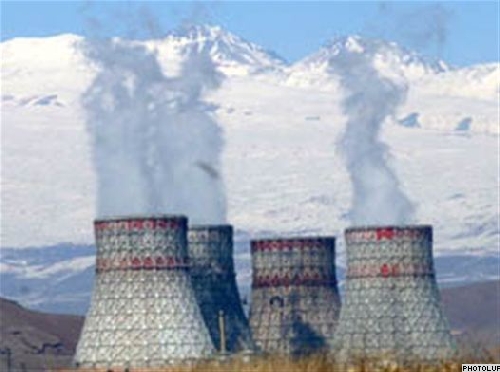
Armenian nuclear power plant turns out to be the most stable to risks. Even if everything surrounding the plant collapse, the plant will stay on its spot. One may come to such a conclusion, if one listens to officials responsible for nuclear energy in Armenia. Ashot Martirosyan, Chairman of RA State Nuclear Safety Regulatory Committee by the Government turned out to be the most demanded official after the explosion at the Japanese plant. He was committed to answer the questions which are solved at political level though Ashot Martirosyan is not accountable for this area.
The press of our neighboring countries regularly publishes information connected with threats which the Armenian nuclear power plant poses for the region, once about radiation leaks occurs, then about burial of nuclear wastes in the liberated territories, then about contamination of underground waster etc. The Armenian party regularly rejects these hearsays mainly by making a reference to International Atomic Energy Agency examinations. Energy and Natural Resources Minister Armen Movsisyan likes talking about nuclear energy advantages, while Russian top officials like talking how RAO UES helps Armenia to solve energy problems, as they took the Armenian plan under their financial management and leaving risks and responsibilities to us – Armenia.
At now when the whole world realized no country, no nuclear power plant, no technology applied and no highly qualified staff is insured from any type of catastrophe, Russians keep silence about the Armenian plant, the AEIA does as well.
Here is how Russia reacts to this world shock: immediately after the explosion on 14 March, the first public channel showed “Judge Yourself – Price for Tsunami” talk show, where during the whole show anchorman Maksim Shevchenko almost didn’t allow Greenpeace Russia representative Ivan Blokov to speak by stopping him as soon as he starting talking about facts, and then his opponents has more than enough opportunities to express their thoughts. One of the most known nuclear energy supporters Yevgeniy Adamov, Nuclear Energy Minister of Russian Federation from 1998 to 2001, said the following so as to justify nuclear energy, “During the whole existence of nuclear operation in the Soviet period less than one thousand people became casualties, including the Chernobyl case. Many people got sick as a result of Chernobyl catastrophe not from the real exposure of radiation, but as a result of phobias.” While Co- of the National Strategy Council Chairman and Public Chamber Member Joseph Diskin accused the greens that the world will pay with millions of starving people for refusal from nuclear energy.’
After the explosion at Fukushima Prime Minister Vladimir Putin stated though the nuclear power plants in Russia are located in seismic zones, he orders to re-examine the technical situation of the plants. And what about the Armenian power plant, as the Russian party gets profit from selling electricity. It would be fair to include the Armenian plant into the list of re-examination for risk reduction. It may happen so that the Armenian party will decide a part of income may be spent on up-to-dating of electrical and technical part of the plant or cooling systems which are more than 30 years old. Probable their degree of dilapidation may lead to more hazardous risks, than, for example, earthquake. While the RAO UES decides it is better not to do.
It became clear from the statement made by PM Tigran Sargsyan some experts will probably come from Germany in April. It’s still unknown what they are going to check, as all the issues connected with the Armenian nuclear plant are closed for public.
The issue of risks can’t be considered on the background of those paradoxical announcements that follow each other. For example, that Armenian nuclear power plant is more stable to seismic hits as it has been constructed before than the Japanese one without any contemporary technologies and durability was calculated according to Soviet standards, i.e. it has a great reserve, just in case. Or that the Armenian nuclear power plant experienced the earthquake in Spitak witnesses the fact that our plant is very stable and can stand a strong quake.
March 22, 2011