
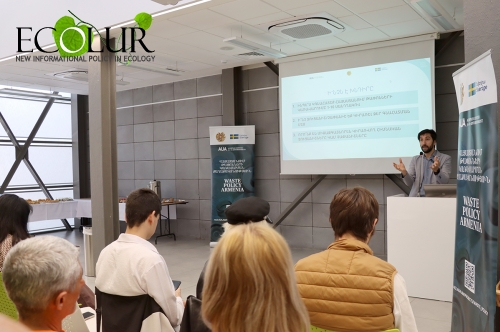
On May 13, the American University of Armenia hosted the conference “Armenia on Path Toward Introducing the Extended Producer Responsibility System.”
During the conference, experts and civil society representatives discussed the challenges facing Armenia’s waste management sector and the prospects for introducing the Extended Producer Responsibility (EPR) system.

Inga Zarafyan, President of EcoLur Informational NGO, noted that, with the aim of introducing EPR, Armenia’s Ministry of Environment, with the support of the American University of Armenia, has drafted the RA Law on Extended Producer Responsibility. EcoLur is currently conducting awareness campaigns on the EPR system in communities across Armenia.
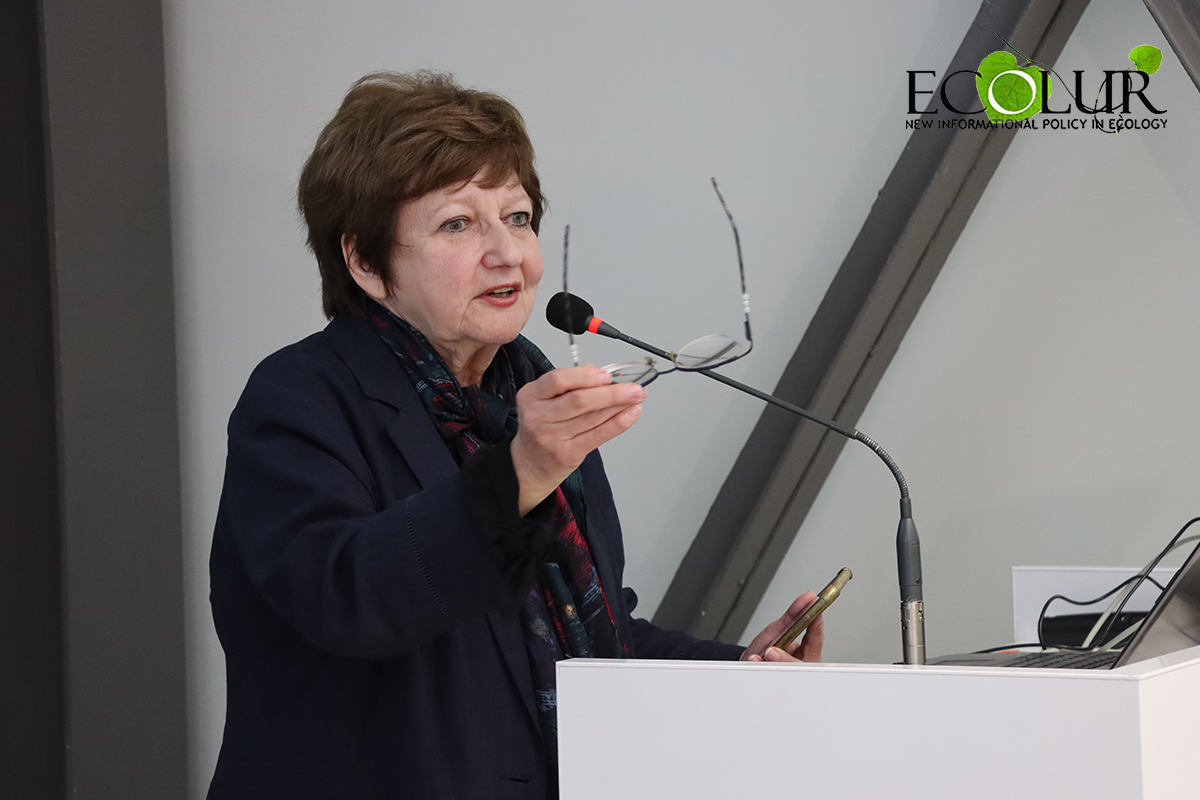
“This is a process that concerns all of us our health and our environment. We must be active participants in this process, voice our opinions, and submit proposals,” Inga Zarafyan noted.
Harutyun Alpetyan, Head of “Waste Policy Armenia” program, and Victoria Burnazyan, Deputy President of EcoLur Informational NGO, presented the key challenges in Armenia’s waste sector, the environmental and economic impacts of the EPR system, and the preconditions for introducing EPR in communities.
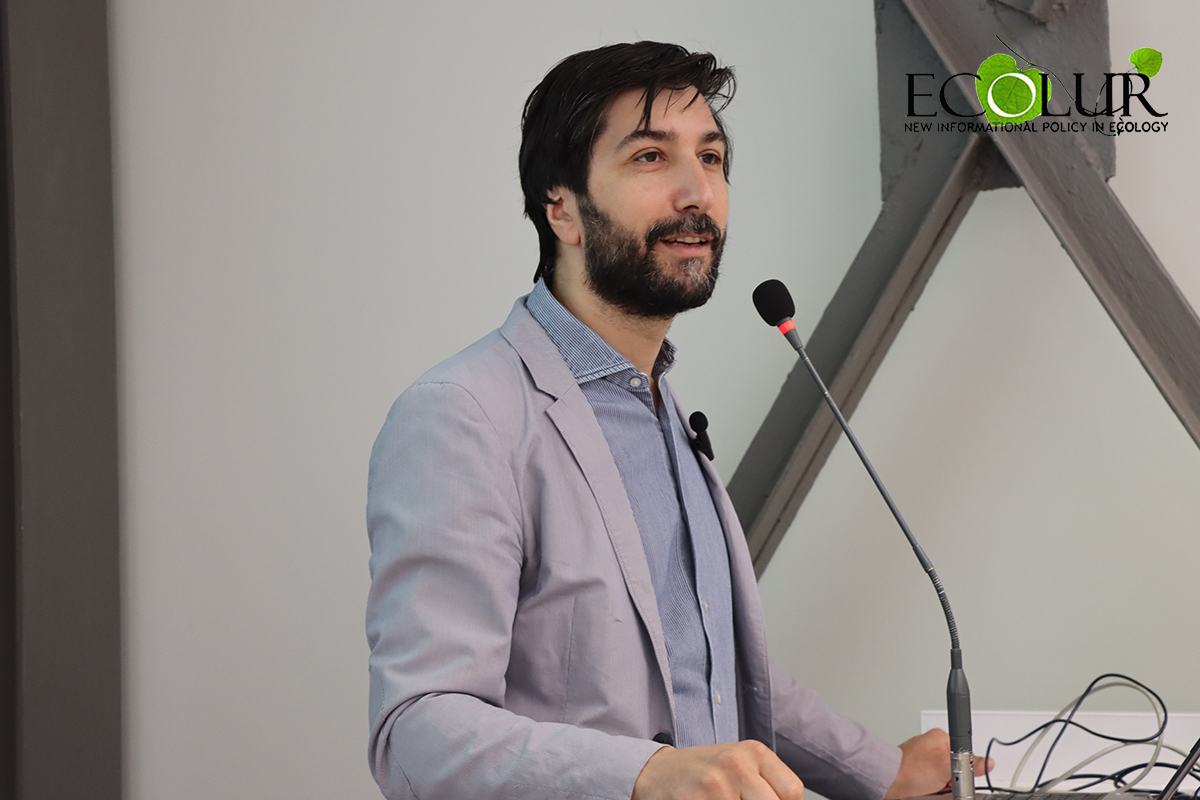
Harutyun Alpetyan noted that around 700,000 tons of municipal solid waste are generated annually in Armenia’s settlements, most of which is disposed of in operating dumpsites.
The consumption of alcoholic and non-alcoholic beverages alone generates around 12,000 tons of PET plastic waste annually in the country - approximately 450 million plastic bottles. In addition, Armenia generates 19,000 tons of waste tires, 220 tons of household battery waste, and around 300,000 lead-acid battery wastes each year.
Thanks to partially introduced waste sorting systems in several communities, only 5% of recyclable waste is collected at the source. Meanwhile, 95% of recyclable waste is sorted directly at dumpsites by informal groups. Although Armenia has recycling enterprises for certain waste streams, there is not enough raw material for them to operate at full capacity.
Under the EPR system, producers and importers of certain products will assume responsibility for the sorting, reuse, recycling, and recovery of waste generated after the consumption of those products. Armenia’s Ministry of Environment, with technical support from the AUA Acopian Center for the Environment, has already drafted the EPR law, which is currently undergoing regulatory impact assessment.
The EPR obligation will apply to products that generate glass, paper, plastic, and metal packaging waste, as well as waste primary batteries and accumulators, vehicle tires, oils, filters, and electrical and electronic equipment.
“There is a misconception that waste management is profitable, but in reality, waste collection, transportation, and final treatment are very costly. Even the income generated from selling packaging waste with market value never covers the costs of collection and transportation. In other words, if we want the waste management value chain to function, additional financing is needed, and that financing must come from "the polluter must pay" principle. The introduction of EPR will be the most significant reform in the country’s waste management sector,” said Harutyun Alpetyan, emphasizing that EPR makes producers and importers responsible for the entire lifecycle of certain products.
According to Alpetyan, the EPR system has both socio-economic and environmental dimensions. It will stimulate the development of the recycling sector, create new jobs, reduce the volume of waste sent to landfills and environmental pollution, improve Armenia’s environmental standing, and serve as a tool in the fight against climate change.
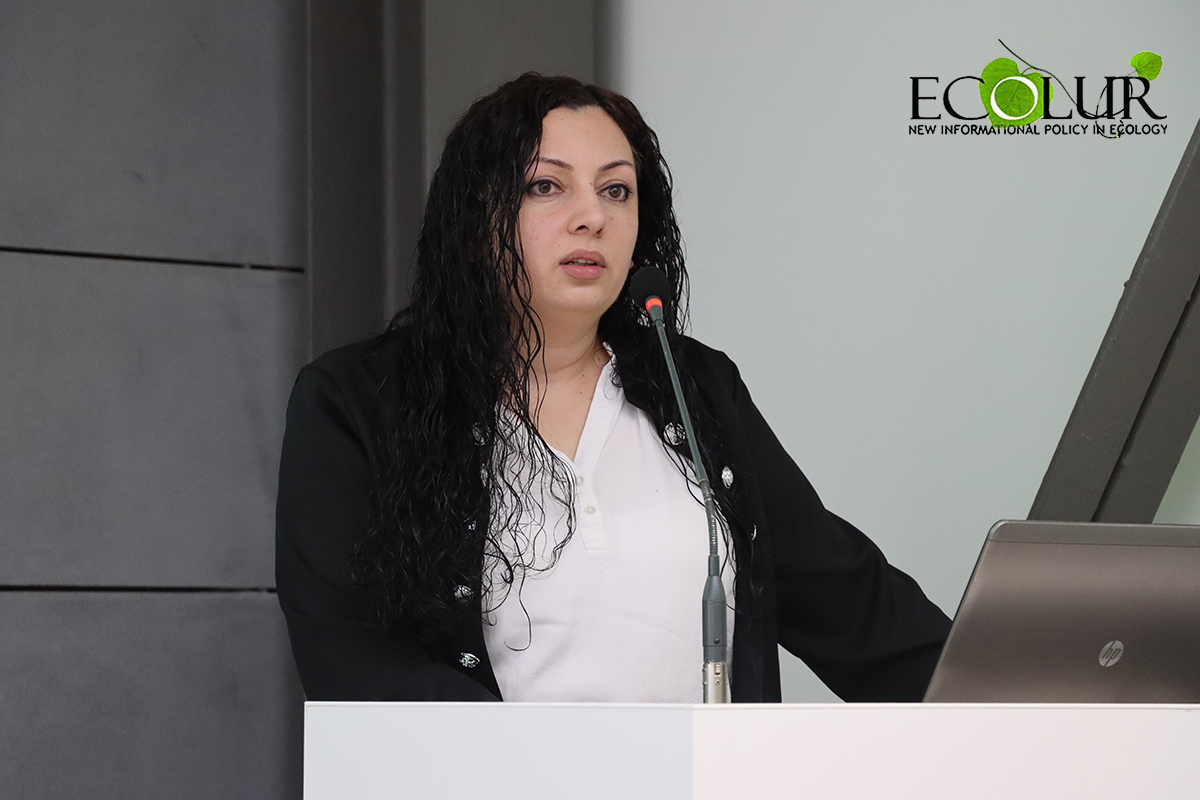
Victoria Burnazyan noted that, within the framework of “Get Informed and Support Introduction of Extended Producer Responsibility System in Armenia” project, studies were conducted to assess the preconditions for introducing EPR in the communities of Abovyan and Hrazdan in Kotayk Region, as well as Metsamor in Armavir Region.
Hrazdan hosts Armenia’s first sanitary landfill, which serves the Kotayk and Gegharkunik Regions. To reduce the amount of waste sent to the landfill, the Hrazdan Municipality has begun cooperating with the Eco Pack Armenia Foundation, and waste sorting has been introduced in the Microdistrict neighborhood of Hrazdan city.
In Abovyan community, municipal solid waste is disposed of at the community landfills of Akunk, Aramus, and Balakhovit, which do not meet sanitary landfill standards. Waste sorting is not carried out in the community, despite the presence of recycling companies.
Metsamor community, meanwhile, has positive experience in sorting plastic and paper waste. According to data from Metsamor Municipality, 15% of the city’s municipal solid waste - plastic, paper, and cardboard - is sorted. The proceeds from the sale of sorted waste are directed toward the treatment of children with cancer.
Victoria Burnazyan emphasized that NGOs can become important partners in the implementation of the EPR system.
“Public organizations often serve as a bridge between residents, local self-government bodies, and producers. They carry out awareness and educational programs, as well as public oversight. NGOs also shape public opinion on the importance of EPR and the circular economy. In this regard, civil society can contribute significantly to the introduction of the EPR system,” Victoria Burnazyan noted.
The conference featured active discussions, during which participants presented opinions and proposals for the successful implementation of the system.
The conference was organized by EcoLur Informational NGO within the framework of “Get Informed and Support Introduction of Extended Producer Responsibility System in Armenia” subproject, part of the Sweden-funded “Waste Policy Armenia” program.

The program is implemented by the Acopian Center for the Environment of the American University of Armenia in cooperation with Armenia’s Ministry of Environment and the Ministry of Territorial Administration and Infrastructure.
May 19, 2026 at 14:22