
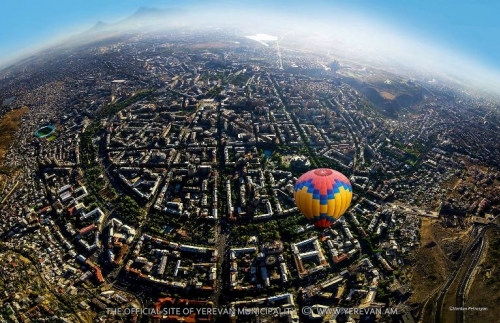
The production of epoxy prepregs based on carbon and glass reinforcement materials is planned at 33/27 Manandyan Street, in the Shengavit Administrative District, Yerevan. The initiator of the proposed activity is RAYDENA LLC.
The first public hearing will take place on November 18, 2026, at 11:00 a.m. at the office of the Head of Yerevan’s Shengavit Administrative District (address: 26 G. Nzhdeh Street, Yerevan).
According to data from Karg.am business platform, RAYDENA LLC was registered on February 2, 2024. The company's shareholders are Ruben Dishdishyan, with a 51% stake, Dmitry Kogan, with a 24.5% stake, and Alexander Shleynikov, with a 24.5% stake. The platform's data is obtained from the State Register of Legal Entities of the Republic of Armenia.
According to Karg.am, the company's field of activity is the manufacture of other textile products for technical and industrial purposes.
On August 27, 2026, with its Decision No. 1283-A, the Armenian Government approved the application submitted by RAYDENA LLC to benefit from tariff exemptions, specifically exemption from import customs duties, for technological equipment, its component and accessory parts, and/or raw materials and materials imported as part of an investment program implemented in a priority sector. The relevant exemption was granted in accordance with the established procedure. The company had applied to the Armenian Government for an exemption from import customs duties on 35 product categories. The raw materials and materials include phenol-formaldehyde-based resin, epoxy resin in primary forms, high-strength polyacrylonitrile-based carbon fiber, a hardener based on diethylmethylbenzenediamine, an aromatic polyamine, polysulfone powder, and others.
According to the rationale accompanying the decision, RAYDENA LLC is a foreign-invested company and the only engineering and technology startup in Armenia specializing in the development and production of composite materials—prepregs—for the aerospace, automotive, and other innovative industrial sectors. Prepregs are considered economically complex products to manufacture.
The project will be implemented in Yerevan. The company was established in 2024. Under the project, total investments of approximately AMD 3 billion are planned for the procurement of raw materials.
Information available online concerning similar enterprises indicates:
Such production facilities must not be established in the immediate vicinity of residential buildings.
Sanitary Protection Zone Requirements
Manufacturing facilities that use chemical and composite materials, particularly epoxy resins and carbon/glass fibers, are classified among the higher hazard categories.
· According to sanitary standards, there must be a sanitary protection buffer zone of at least 300–500 meters (and sometimes up to 1,000 meters) between such factories and residential buildings.
· The presence of any residential building, school, kindergarten, or hospital within this zone is prohibited.
Spread of Air Pollution
Even when the most powerful industrial filters are installed, traces of volatile organic compounds (VOCs) are released into the atmosphere through ventilation systems. Carried by the wind, these toxic vapors and the finest dust particles from carbon/glass fibers can reach residential buildings, potentially causing chronic coughing, allergies, and asthmatic symptoms among residents.
Explosion Hazards and Fire Risks
Uncontrolled chemical reactions (exothermic effects) during epoxy resin production can lead to sudden ignition. A fire or the spread of toxic smoke near residential buildings poses an immediate threat to human life.
Noise
Powerful ventilation systems, drying ovens, and refrigeration units in production facilities operate around the clock, generating intense industrial noise and vibrations that disrupt residents' peace and quiet.
Hazardous Waste That Is Difficult to Manage
Prepreg scraps, defective products, and offcuts are classified as thermosetting plastics. Unlike ordinary plastic, they cannot simply be melted down and reused. They take hundreds of years to decompose in nature.
Containers that have held resins and hardeners, as well as chemical solvents used to clean equipment (such as acetone and toluene), are considered highly hazardous waste. If improperly disposed of, they contaminate soil and groundwater.
Main photo: Yerevan Municipality
November 04, 2026 at 21:50