

EcoLur
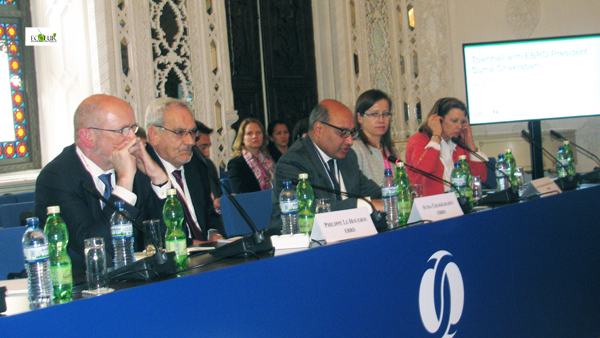
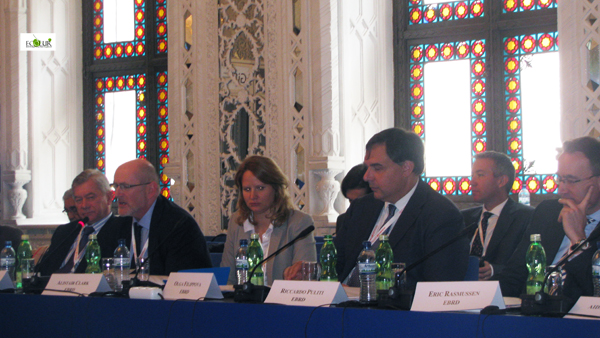
The questions connected Amulsar open pit mining project and the construction of a heap leach facility in Armenia were raised at special session “EBRD Projects and Nature Recourses” held on 14 May. The session was organized in the frames of the EBRD Annual Meeting.
Remaind: Amulsar project, which includes open pit gold mining and the construction of a heap leach facility in Armenia, proceeded to its active stage. Lydian International Company promises to start the construction in 2015 and gold mining in 2016.
EBRD owns Lydian chartered capital by 6.9%. The company assets comprises only Amulsar project. The company website doesn’t contain any information about other projects.
The public and the local population impacted by Amulsar project protest to it, as the project bears high risks for the strategic water systems in Armenia, red-listed species, threatens the brand of Jermuk mineral resort. Gndevaz Village is particularly hard situation, where the company is going to construct the heap leach facility. Nevertheless, neither the company nor its investors want to listen to the voice of the public and the local population.
Inga Zarafyan, President of EcoLur particularly mentioned: “These risks have been presented in the EBRD forum many times. They found their reflections in the three complaints by public representatives, 210 Gndevaz villagers and the activists of 41 littoral communities in Lake Sevan lodged to PCM. All three complaints were declined. The substantiation of the declination put forward by PCM assessors that the bank funded only the investigation stage of the project showed that EBRD represented by PCM demonstration worrying discrepancy and isolation from the public and local population. It should be noted that similar complaints were lodged to the Ombudsman Office САО/IFC, which replied though IFC also funded the investigation stage, but pointed out that IFC has a clear objective to fund Amulsar project and CAO think it’s reasonable to start the investigation on the compliance of the complaints to the standards and procedures of the IFC.
We are going to ask for a special meeting with PCM, as we think that this declination is non-substantiated, money is interchangeable and the declination contradicts to the RoP procedures.”
Inga Zarafyan paid the attention that neglecting evident risks leads or may lead to financial losses:
1. In April 2014 the bank obtained 3 million shares of Lydian at US $ 3 million, the price of which fell down from US $1 to US$ 0.5. Thus, the bank lost half of this money. As the company has only one project, there are no doubts that decrease in share price is connected with Amulsar risks.
2. РСМ assessor stated in their declination that Lake Sevan in Gegharkounik Region is too remote from the project area and can’t be affected by the project. The assessors reduced the impact frames in an arbitrary manner don’t paying attention to the positive opinion of the Nature Protection Ministry on the project EIA. The opinion contains 6 mandatory requirements. The first two state that the drainage basin of Lake Sevan is an immediate impact project zone. It means that the project can be stopped at any time with any inspection. And that the residents of 41 communities can demand by court to include these communities into the impact zone and apply for compensations.
3. In compliance with the third requirement – relocation of red-listed plant Potentilla Porphyrantha, the company stated that this problem had been solved and presented a register of expenses in the amount of 400,000 pounds. Nevertheless, the company didn’t mention that these expenses are designed for the studies of the plant only and not for the relocation, moreover, the requirement of the ministry says that the Ministry shall give its consent.
4. And eventually, the problem of compensations to the local population. Requirement 5 of the Ministry says that this problem must be solved by the company itself. In the examples we know such issued are solved with a governmental resolution. But here, the government has undertaken a role of a controller. Taking into consideration high-level corruption of the Armenian authorities, high corruption risks comprise here and probable pressure both on the residents and the company is possible.
In the context of these requirements, any decision on the project may be threatened, as favourable investment climate for the mining in Armenia is arranged with the authorities being far from law. Afterwards pressure is exercised by the authorities backed by the absence of legal relations.
‘We have information from Gndevaz Village that the company had starting giving compensations in the amount of 10% of promised sum, which caused tense conflict.”,- she said.
“Teghout Support” civic initiative activist Anna Shahnazaryan outlined that two NGOs and Gndevaz villagers issued a claim to Administrative Court of Armenia on Amulsar project, where the Armenian Government is the respondent, which has issued an illegal permit for Amulsar mining project.
 |
 |
 |
 |
 |
 |
May 19, 2015 at 13:31