
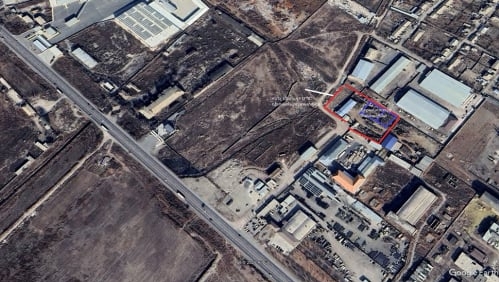
RA Environment Ministry has issued a positive conclusion on the Environmental Impact Assessment (EIA) report (No. 118-26) for the upgrade and expansion of a battery recycling facility operated by Mel Metal LLC in the industrial zone of the Artashat settlement, Ararat Region. The facility will recycle spent lead-acid batteries, batteries used in electric vehicles, and batteries from household electrical appliances. The activity is classified as Category B. The production facility is located 304 metres from the nearest residential house.
According to the project, two modern enclosed production lines are planned to be installed:
Production Line No. 1 — for recycling dry-type batteries used in electric vehicles, solar power plants and household electrical appliances. Its maximum capacity will be 28,000–30,000 tonnes per year, including 20,000 tonnes per year of dry batteries/accumulators from electric vehicles and solar power plants and 8,000–10,000 tonnes per year from household electrical appliances.
Production Line No. 2 — for recycling lead-acid batteries, with a capacity of 6,000 tonnes per year in terms of recovered lead. Mel Metal plans to collect only lead-acid batteries from motor vehicles.
The recycling process will generate 35–50% black mass, 8–15% copper, 10–20% aluminium, 5–15% plastic and 10–25% steel/iron.
Environmental Risks
From an environmental perspective, battery recycling involves a number of risks directly related to air, soil and water pollution, as well as the protection of the health of employees and nearby residents.
Hazardous chemicals and electrolytes: Lead-acid batteries contain a sulphuric acid solution and lead compounds (lead dioxide). Uncontrolled leakage or improper neutralisation of the electrolyte may result in soil and water pollution.
Emissions of dust and metal particles: The dismantling and grinding of dry-type batteries (lithium-ion and electric vehicle batteries) generates so-called “black mass” (35–50%), as well as fine fractions of copper, aluminium and steel. Mechanical processing carries a risk of the release of harmful dust into the ambient air.
Large volumes of waste: According to the report, the production process will generate 5,400 tonnes of plastic residues, 9,000 tonnes of steel waste and up to 36 m³ of household waste annually, all of which will require proper management.
Noise and vibration: The operation of the equipment will be accompanied by noise and vibration.
Technological Solutions for Risk Mitigation
The project provides for the following technological and environmental measures to reduce risks:
Enclosed production lines and buildings: Battery dismantling and recycling will be carried out entirely in enclosed systems and inside an enclosed building, preventing the direct release of dust and emissions into the ambient air.
Automated electrolyte neutralisation: The electrolyte drained from lead-acid batteries will be neutralised using a sodium hydroxide (NaOH) solution, with automatic pH monitoring. Only after neutralisation and dilution will it be discharged into the sewerage network.
Desulphurisation and closed-loop water circulation: Desulphurisation of lead paste will be carried out in a reactor, while the wash water will be filtered and reused in a closed production cycle.
Safe storage: Spent batteries will be stored in an enclosed warehouse equipped with a concrete floor, ventilation and a fire alarm system. Raw materials will be transported in enclosed-body trucks.
Waste recovery: The plastic generated (5,400 tonnes/year) and steel (9,000 tonnes/year) will be sold to licensed recycling organisations.
Landscaping: The existing green areas will be expanded over an area of up to 5,500 m².
EIA Requirements and Monitoring
Environment Ministry has made the positive conclusion conditional upon compliance with the following mandatory requirements:
1. During the implementation of the activities, strictly comply with the environmental requirements and measures specified in the EIA report, in accordance with the plan presented in the report. If these measures prove insufficient, additional measures shall be incorporated while ensuring mandatory compliance with environmental standards.
2. During the implementation of the proposed activity, comply, in accordance with the procedure established by the legislation of the Republic of Armenia, with the rules and standards governing emergency response and safety.
3. During the implementation of the activities, comply, in accordance with the procedure established by the legislation of the Republic of Armenia, with permissible levels of emitted dust and generated noise and vibration.
4. Store and transport waste in accordance with the legislation currently in force in the Republic of Armenia.
5. Ensure that the permissible standards for wastewater discharged into the sewerage network comply with the legislation currently in force in the Republic of Armenia.
6. Ensure the implementation of all necessary fire safety measures at the production facility, including the installation of a fire hydrant.
7. During the operational phase, regularly conduct monitoring to ensure compliance with the maximum permissible concentrations of atmospheric emissions.
8. Comply with the requirements of Order No. 27 of the Minister of Health of the Republic of Armenia of 2010 approving sanitary rules and standards N 2.2.5-004-10 “Maximum Permissible Concentrations of Chemical Substances in the Air of the Working Zone at Workplaces of Organisations.”
The company plans to allocate 720,000 AMD annually for measures to mitigate harmful impacts on the environment and 360,000 AMD annually for monitoring.
Public hearings on the project were held at Artashat Community Municipality, during which participants approved the proposed activity.
September 22, 2026 at 13:43